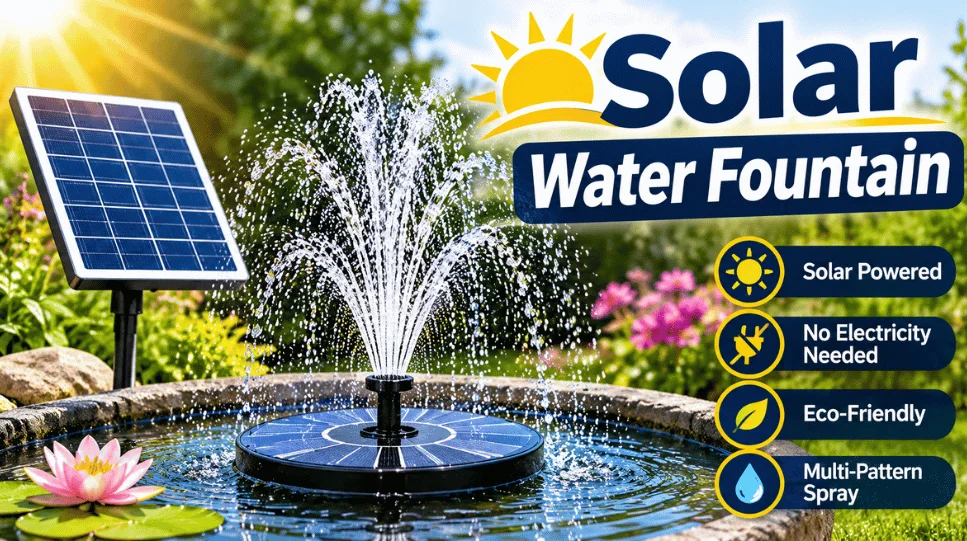
A solar water fountain can add movement and sound to a garden without needing a nearby mains socket. The right model depends on sunlight, available space, water capacity, and how reliably you want it to run. UK buyers should pay particular attention to battery backup because cloud can reduce direct-solar performance.
A solar fountain uses a photovoltaic panel to power a small pump that circulates water. For UK gardens, a separate solar panel and battery backup usually offer the most flexible setup. This lets you position the feature attractively while placing the panel where it gets stronger sunlight.
| Buying factor | What to look for in a UK garden | Why it matters |
|---|---|---|
| Solar panel | Separate or adjustable panel | Easier to position for stronger sunlight |
| Battery backup | Useful but not essential | Helps during cloud and can support evening use |
| Reservoir | Larger capacity for exposed areas | Reduces frequent topping up |
| Fountain type | Floating, pump kit, cascade or freestanding | Changes cost, appearance and installation |
| Pump access | Easy removal and cleaning | Makes maintenance simpler |
| Material | Resin, ceramic, stone-effect or metal | Affects weight and winter care |
| Spray height | Match it to the basin size | Reduces water loss in windy weather |
| Lighting | Optional LED lighting | Useful if you want an evening feature |
Key Takeaways
- Direct-solar models are cheapest but depend strongly on current sunlight.
- Battery-backed models offer more consistent performance in changing UK weather.
- Separate solar panels give you greater freedom when positioning the feature.
- Compact floating pumps suit bird baths and smaller ponds.
- Freestanding cascades create a stronger garden focal point.
- Pumps need regular cleaning because debris can restrict water flow.
- Follow the manufacturer’s instructions before winter.
How a Solar Water Fountain Works in UK Weather
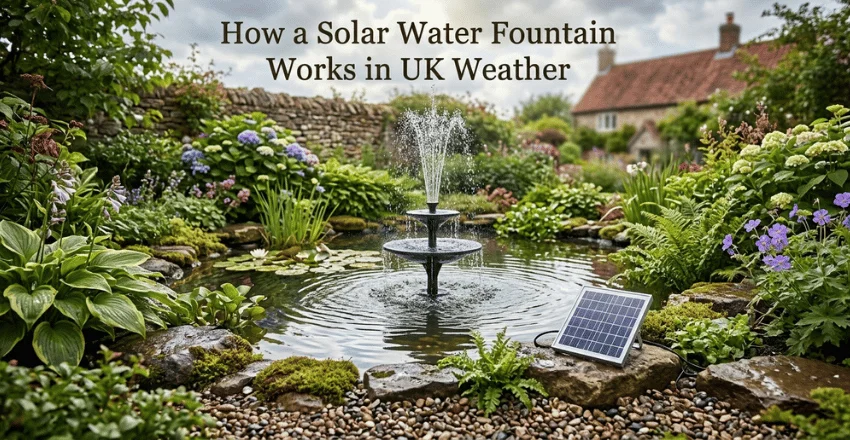
A solar water fountain usually combines a photovoltaic panel with a low-voltage pump. Sunlight generates electricity, which powers the pump and moves water through a nozzle or cascade. Self-contained designs recirculate the same water, so they don’t require a permanent water connection.
Basic direct-solar models normally run best when the panel receives strong sunlight. Clouds, shadows, trees, fences, and buildings can reduce the available power. A fountain may therefore slow down or stop even though daylight remains.
Battery-backed designs store some surplus solar energy for later use. Current UK products use this approach to support operation through cloud or after sunset. Some models advertise several hours of evening operation after a strong charge.
Which Type Should You Choose?
Current UK retailers sell everything from inexpensive floating pumps to large decorative cascades. Small solar pumps can cost roughly £20 to £40, while substantial freestanding features can exceed £150. Premium battery-backed designs can cost several hundred pounds.
| Type | Best for | Main advantages | Main drawbacks |
|---|---|---|---|
| Floating solar fountain | Bird baths and small ponds | Low price, simple setup, easy to move | Spray may drift and operation depends on sun |
| Separate-panel pump | Existing ponds and DIY features | Flexible panel placement, varied nozzles | Pump and cable remain visible |
| Self-contained cascade | Patios and borders | Attractive focal point, recirculates water | Usually costs more and needs topping up |
| Battery-backed feature | Changeable UK weather | More consistent flow and evening use | Higher price and battery eventually ages |
| Large freestanding fountain | Larger gardens | Strong visual impact and deeper sound | Heavier, pricier and harder to store |
For most UK households, a battery-backed feature with a separate panel is the strongest all-round choice. You can position the fountain where it looks right while moving the panel towards better sunlight. The battery also reduces frustration during brief cloudy periods.
A floating model makes more sense when you want an inexpensive addition to a bird bath. These products need little installation and can be moved between containers. Choose a lower spray pattern if the basin is shallow or exposed to wind.
A decorative cascade suits patios, seating areas, and borders where appearance matters most. Many are self-contained, so the pump repeatedly circulates water from an internal reservoir. This arrangement avoids permanent plumbing and keeps installation relatively simple.
Check the Sunlight Before You Buy
Solar performance depends more on panel location than many product photographs suggest. Watch your garden at midday before choosing the fountain position. A sunny patio can perform differently from a border shaded by fences during the afternoon.
Separate panels solve part of this problem because the fountain and panel do not need identical positions. You can keep the water feature beside a seating area while placing the panel several metres away. Check the supplied cable length before buying because it controls that flexibility.
Integrated-panel models are simpler but need the entire unit to occupy a reasonably bright position. This can become restrictive in compact urban gardens. A separate panel is therefore worth considering when walls or mature planting create moving areas of shade.
If you’re planning a wider outdoor refresh, Wrytra’s grey fence paint guide for UK gardens can help coordinate surrounding colours and finishes. Dark grey fencing can create a strong backdrop for lighter stone-effect features. Softer greys work well when you want the water feature to remain visually understated.
Battery Backup: Is It Worth Paying More?
Battery backup is especially useful in Britain because sunshine can vary considerably in a single day. The battery stores surplus power when conditions allow it. Stored energy can then support the pump when light drops or during the evening.
It does not make a solar system independent of daylight. A battery still needs enough incoming energy to recharge effectively. Several dull days can therefore reduce both daytime and evening performance.
Check whether the battery can be replaced before buying a higher-priced model. Also check whether lights and the pump share the same stored power. Decorative LEDs may reduce the available evening runtime on some products.
Fountain Size, Spray Height and Water Loss
A dramatic spray looks appealing, but a high jet can empty a small bird bath surprisingly quickly. Wind can carry droplets beyond the bowl, while warm weather increases evaporation. A wider basin and restrained nozzle usually make daily care easier.
Choose the fountain sizeto size to suit surroundings. A compact bowl or floating disc usually suits a small patio better than a tall multi-tier feature. Larger gardens can handle bolder shapes without the water feature dominating the space.
For other practical outdoor equipment decisions, Wrytra’s garden shredder buying guide explains a similar principle. Start with the conditions in your own garden rather than the biggest specification. That approach also prevents overspending on fountain power you will never use.
Is a Solar Fountain Good for Birds?
Moving water can make a bird bath more noticeable to visiting birds. A gentle flow also prevents the surface from remaining completely still. Still keep the basin clean and replace dirty water regularly.
Wildlife-friendly setups need safe access and attractive movement. Choose shallow edges or stable landing points where birds can drink and bathe comfortably. Avoid a powerful nozzle that sprays most of the water outside a small basin.
A solar pump doesn’t eliminate the need for normal bird-bath hygiene. Leaves, feathers, algae, and other debris can still collect in the water. Regular cleaning also protects the pump intake from blockages.
Installation and Everyday Maintenance
Most compact solar fountains are straightforward to install. Fill the reservoir, connect the pump and panel if required, then position the panel towards good sunlight. Always follow the instructions for your specific model.
Keep the pump fully covered by water while it operates. Running a small submersible pump dry can damage it. Check the reservoir more frequently during warm or windy weather because water levels can fall quickly.
Clean leaves and debris from the pump intake before they restrict the flow. If performance drops despite strong sunlight, inspect the impeller and tubing for sediment or limescale. Current manufacturer guidance lists pump blockages as a common cause of poor fountain performance.
Garden maintenance becomes easier when water features sit within a planned outdoor area. WrWrytra’s some improvement guides cover related garden and household projects. They can help if the fountain forms part of a wider patio, fencing, storage, or planting update.
What Should You Do With a Solar Fountain in Winter?
Frost deserves more attention than reduced winter solar output. Water expands when it freezes and can damage pumps, bowls, pipes, and decorative finishes. Manufacturers and specialist retailers commonly recommend draining vulnerable fountains and protecting removable pump parts during freezing conditions.
Follow the instructions for your specific material rather than assuming every resin or stone-effect feature behaves the same way. Some fountains can remain outside after being emptied and covered. Others should be moved to a sheltered, frost-free location.
Late autumn is also a convenient time to clean the pump before storage. Remove debris and limescale as the manufacturer’s instructions say. Reassemble and test the fountain once the risk of hard frost has passed.
How Much Should You Spend?
The UK market covers a broad price range. Current listings show compact solar pumps from below £20, while decorative self-contained products commonly sit around £70 to £200. Larger battery-backed pieces can reach £300 or more.
Price should reflect the result you want, not the largest panel or tallest feature. A £20 floating pump may be enough for a small bird bath. A patio focal point usually warrants a stronger structure, larger reservoir, and more flexible power setup.
Spend extra on features that solve genuine problems in your garden. Battery backup, replaceable parts, useful cable length, and accessible pump components can improve ownership more than decorative extras. Compare those details before paying more for lighting or an elaborate finish.
Our Recommendation for Most UK Gardens
Choose a separate-panel, battery-backed model if you want dependable performance and flexible positioning. This combination suits Britain’s changeable daylight better than a basic integrated direct-solar unit. It also gives you more freedom to keep the fountain in the most attractive part of the garden.
Choose a direct-solar floating pump instead when budget and simplicity matter most. It works well for experimenting with a bird bath or small pond before buying a larger feature. Accept that output will change more noticeably with sunlight.
A freestanding cascade is the better option when the fountain itself needs to become a visual focal point. Measure the intended area before buying and check the reservoir capacity, panel position, weight, and winter-care requirements. Those practical details matter more than the product photograph.
Frequently Asked Questions
Does a solar water fountain work on cloudy days?
A solar water fountain may still operate in light cloud, but direct-solar performance usually drops as available sunlight falls. Battery-backed models can use stored energy to maintain steadier flow. Several cloudy days can still reduce performance because the battery receives less energy to recharge.
Does a solar fountain need direct sunlight?
Strong direct sunlight generally gives the most reliable performance. A separate panel lets you place the water feature in one location and the panel in a brighter spot. Check for nearby trees, walls, fences, and buildings that cast midday and afternoon shade before installation.
Can a solar fountain run at night?
A basic direct-solar model normally stops when usable sunlight disappears. Night operation requires stored battery power or another supported power source. Some current battery-backed products are designed to keep running after sunset.
Do solar fountains need plumbing?
Most self-contained decorative fountains do not need permanent plumbing. They hold water in a built-in reservoir and circulate it repeatedly through a pump. You still need to top up the water lost through evaporation and splashing.
Can you leave a solar fountain outside in winter?
That depends on the product and its materials. Hard frost can damage water-filled pumps, reservoirs, and narrow channels, so follow the manufacturer’s winter instructions. Common guidance is to drain the fountain and store vulnerable pump components somewhere frost-free.
Choose for Your Garden, Not the Product Photograph
The best solar water fountain matches your sunlight, available space, and expectations for daily operation. A small direct-solar pump is ideal for a low-cost bird bath, while battery-backed systems provide better flexibility. Larger self-contained cascades suit gardens where appearance and sound matter most.
Check sunlight first, then compare the panel, battery, reservoir, pump access, material, and winter requirements. Positioning these features correctly can matter more than spending another £50 on a larger model. A carefully chosen fountain should be simple to run, easy to clean, and proportionate to the garden around it.