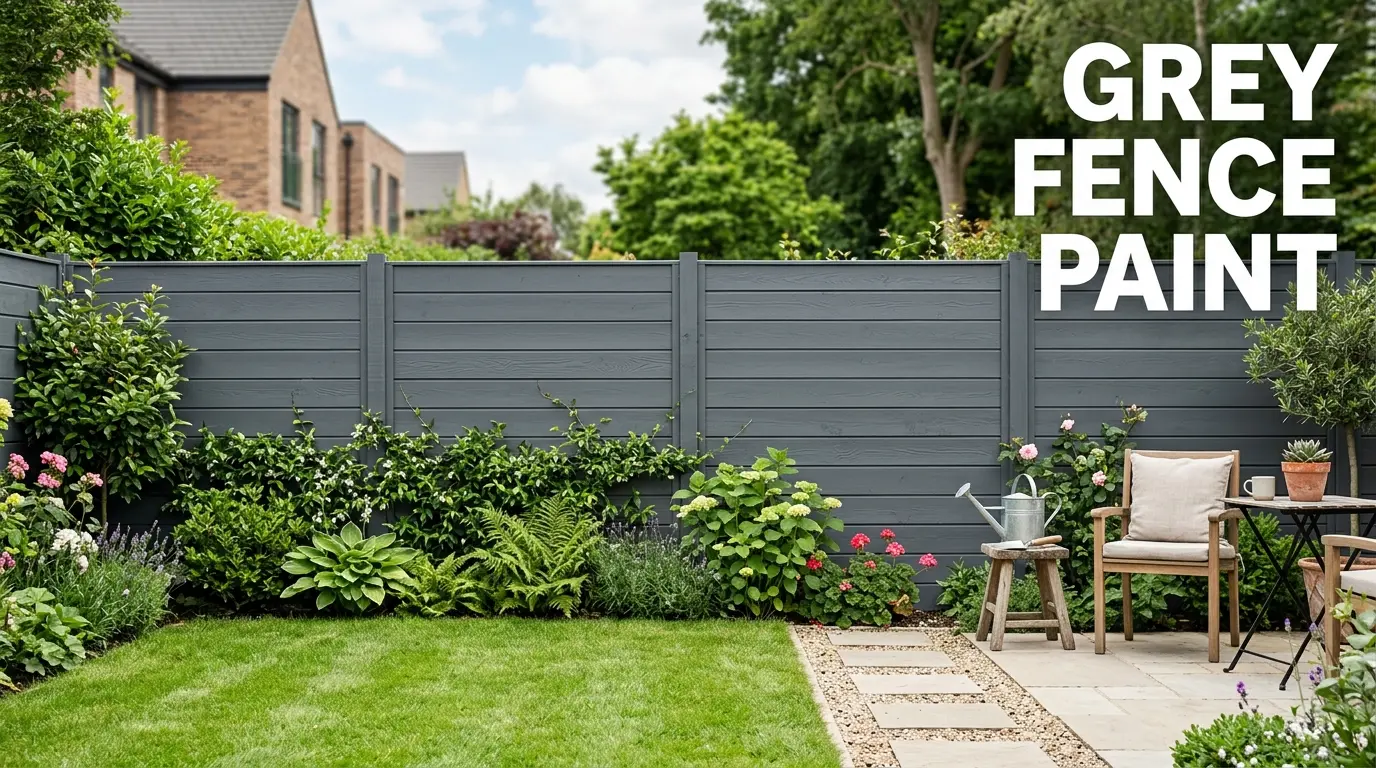
Grey fence paint can give a UK garden a cleaner, calmer backdrop without making the space feel plain. The right shade depends on your garden size, planting, paving, and nearby brickwork. Product choice matters too, because different coatings suit rough-sawn and smooth timber.
| Key point | What to consider |
|---|---|
| Popular shade families | Charcoal, anthracite, slate, silver grey, warm grey and greige |
| Best for small gardens | Light or mid-grey shades usually feel less visually heavy |
| Best for modern schemes | Charcoal, anthracite and deep slate |
| Typical application | Brush, roller or compatible garden sprayer |
| Coverage | Varies widely with timber texture and application method |
| Preparation | Clean timber and remove loose, flaking coatings |
| Weather | Follow the product temperature and rain guidance |
| Finish | Matt and low-sheen finishes dominate exterior timber products |
Quick answer: Choose a grey that works with your paving, planting and exterior materials rather than judging the tin alone. Match the coating to your timber type before buying. Careful cleaning, suitable weather and the recommended number of coats usually matter more than choosing the darkest or most expensive option.
How to Choose Grey Fence Paint for a UK Garden
Start with the mood you want the boundary to create. Dark greys can make planting appear brighter and give contemporary spaces stronger definition. Lighter greys create a softer background and may suit compact gardens better.
Next, check the timber and existing coating. Rough-sawn panels absorb coatings differently from smooth planed timber. A product designed for one surface may perform differently when used outside its stated application.
Finally, consider how much maintenance you accept. Some shed-and-fence treatments focus on quick application and weather protection. Decorative garden paints often offer broader colour choices but may need different preparation or more coats.
Which Shade of Grey Works Best?
Grey changes noticeably with daylight, surrounding colours and wet weather. A sample that looks neutral indoors can appear blue, green or warm outside. Test a small section before coating every panel.
Charcoal and anthracite grey
Charcoal and anthracite create the strongest contrast against foliage. They work particularly well beside pale paving, contemporary furniture and black exterior details. RAL 7016 anthracite is also a familiar choice for modern windows and doors.
A deep grey can make a boundary appear visually solid. That effect suits structured gardens with architectural planting. Smaller shaded gardens may feel enclosed if every large surface uses the same dark tone.
Slate and mid-grey
Slate sits between dramatic charcoal and pale silver tones. It works with timber furniture, stone paving and both bright and muted planting. This makes it a practical starting point when several exterior materials already compete for attention.
Mid-greys are also forgiving when garden light changes throughout the day. They can appear cooler under overcast skies and softer in warm evening light. Testing remains worthwhile because individual products use different undertones.
Silver, stone and warm grey
Paler greys reflect more light than charcoal shades. They can make fencing feel less dominant around a narrow patio or compact lawn. Warm stone colours also work well with beige paving and traditional brick.
Warm grey contains brown, beige or taupe influences rather than a strong blue undertone. If you are comparing warm and cool neutrals, Wrytra’s guide to Skimming Stone and similar neutral shades explains how undertones react to surrounding materials. The same principle helps when judging exterior samples.
Fence Coating Types Compared
Not every grey coating sold for garden use does the same job. Check the stated surface, coverage, coats, and weather protection before comparing prices. The table below shows the main differences.
| Type | Best suited to | Main advantage | Main consideration |
|---|---|---|---|
| Shed and fence treatment | Large timber panels | Fast coverage and practical weather protection | Colour range may be narrower |
| Decorative garden paint | Fences, furniture and garden features | Wider colour choice | Coverage varies greatly by timber texture |
| Opaque exterior woodstain | Smooth or rough exterior timber | Solid colour with exterior protection | Preparation requirements can be more involved |
| Sprayable treatment | Large fencing runs | Faster application | Overspray needs careful control |
Ronseal states that Fence Life Plus covers up to 6m² per litre and can be brushed or sprayed. Its current guidance also says the coating becomes showerproof after one hour. The manufacturer lists charcoal grey and slate among the available colours.
Cuprinol gives different figures for some products. Its 5 Year Ducksback guidance says a 5-litre container can cover up to 24 m² with one coat. It recommends two coats and states that coverage changes with surface condition and application method.
Decorative products can behave differently again. Cuprinol lists substantially higher coverage on smooth timber than rough-sawn wood for Garden Shades. This difference shows why multiplying litres by a single universal coverage figure can leave you short.
How Much Paint Will You Need?
Measure the total fence length and multiply it by the panel height. This gives the approximate surface area for one side. Double that figure if you’ll coat both faces.
Then divide the area by the manufacturer’s stated coverage per litre. Multiply the result by the required number of coats. Add a sensible allowance for rough timber, edges and absorbent areas.
For example, ten panels measuring 1.8 metres by 1.8 metres create 32.4 m² on one side. A coating rated at 6 m² per litre would need about 5.4 litres for one theoretical coat. Real consumption may be higher on weathered or rough surfaces.
How to Paint a Fence Properly
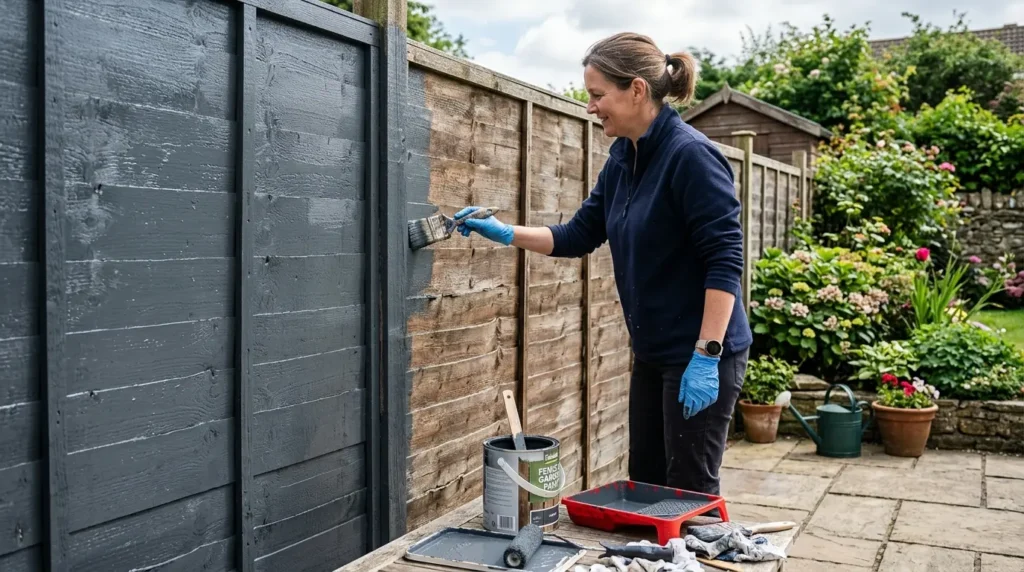
Good preparation prevents several common finish problems. Loose material underneath a fresh coat can peel away later. Dirt and organic growth can also interfere with adhesion.
- Inspect the panels. Repair loose boards, protruding fixings, and damaged sections before painting.
- Clean the timber. Remove dust, dirt, cobwebs and surface growth with a stiff brush.
- Remove failing coatings. Scrape or sand loose and flaking material where required.
- Protect nearby surfaces. Cover paving, plants and neighbouring features before brushing or spraying.
- Stir the product thoroughly. Pigment can settle during storage, changing the colour between sections.
- Apply the first coat evenly. Work along the timber grain and follow the stated spreading rate.
- Allow the stated recoat time. Cooler or damp conditions can extend drying times.
- Apply further coats if required. Strong colour changes and porous timber may need extra material.
- Check the finish after drying. Touch up missed edges only when the coating is ready.
If your project also includes benches or outdoor furniture, coating requirements may differ from fencing. Wrytra’s furniture paint guide explains why substrate and expected wear should guide product selection. Never assume an indoor furniture coating is suitable for outdoor use.
Pick the Right Weather for Painting
UK weather can change quickly, so follow product instructions to time your work. Cuprinol advises against applying Ducksback below 5°C or during damp conditions. It also says not to apply when rain may arrive before drying.
Ronseal’s own preparation guidance recommends a warm, dry day for some shed-and-fence products. Its Fence Life Plus can be applied to damp timber under stated conditions. That does not mean it should be used during rainfall.
Avoid treating every quick-drying claim as a universal weather guarantee. “Showerproof” and “fully dry” describe different stages. Give the coating enough time before exposing it to prolonged rain.
What Colours Look Good With a Grey Fence?
Green planting is the simplest partner because grey creates a restrained background. Ferns, grasses and broad leaves gain stronger definition against darker panels. White flowers can create a crisp contrast without adding another dominant colour.
Pink, coral, blue and purple flowers can provide brighter accents. Timber planters and natural rattan soften cool grey schemes. Terracotta adds warmth if the garden feels too monochrome.
Consider the house before choosing the final tone. Brick, render, paving, doors and window frames all affect how a grey reads. Repeating one existing exterior colour usually creates a more connected result.
Common Mistakes to Avoid
Buying by colour alone is the first mistake. Two similar greys can have different surface requirements, coverage and protection claims. Read the technical information before comparing tin sizes.
Skipping preparation is another common problem. Painting over loose material cannot make the underlying layer sound. Cleaning and repairing first gives the new coating a better foundation.
Spraying without protecting nearby surfaces can create extra work. Fine droplets can reach paving, walls and neighbouring features. Use suitable masking and follow the sprayer manufacturer’s instructions.
Buying exactly the theoretical quantity can also cause problems. Rough timber may absorb more material than expected. Keeping a small amount for later touch-ups can also help maintain a consistent colour.
Our Recommendation for Most UK Gardens
Choose the shade first, then narrow the products by surface compatibility. For rough-sawn fencing, a dedicated shed-and-fence treatment is often the simplest option. Decorative garden paint suits projects where a broader colour palette matters more.
For most gardens, a mid-grey or slate offers a flexible balance. It creates contrast without the visual weight of near-black anthracite. Large contemporary gardens can carry deeper charcoal shades more easily.
The best grey fence paint is therefore not one universal product or colour. It is the coating that suits your timber, weather window and preferred appearance. Check current technical instructions before buying because formulations and product claims can change.
Frequently Asked Questions
What is the best grey fence paint for UK weather?
Look for an exterior coating approved for your timber and designed for changing weather. Check its drying temperature, rain guidance and expected protection period. Compare brand claims using current technical information rather than colour names alone.
Is light grey or dark grey better for a small garden?
Light and mid-grey shades usually create less visual weight in compact areas. Dark charcoal can still work when used with pale paving and plenty of planting. Test a section because shade, aspect and surrounding walls change the result.
Can you paint grey over a brown fence?
You can often change from brown to grey when the existing surface is sound and compatible. Remove loose material and follow the new product’s preparation instructions. A strong colour change may require additional coats for an even result.
Can fence treatment be applied to damp wood?
This depends on the specific product. Ronseal currently states that Fence Life Plus can be applied to damp, but not dripping wet, timber. Other products may require dry conditions, so always check the label and technical sheet.
How long does an exterior fence coating take to dry?
Drying time varies by formula, temperature and moisture. Some current UK products become showerproof within one hour but take longer to dry fully. Recoat times may also differ from touch-dry times.
Plan the Whole Garden Before Choosing the Colour
A fence occupies a large part of many gardens, so treat its colour as part of the wider design. Compare samples beside your paving, plants and exterior walls before buying the full quantity. That small test can prevent an expensive colour change later.
For more decorating, colour and DIY guidance, browse Wrytra’s Home Improvement guides. Choose an exterior product that matches your timber and follow its current application instructions. Careful preparation will do more for the final result than rushing to finish in one afternoon.