Choosing the best sparkling wine for Christmas depends on when you plan to open it, what you are eating, and how much you want to spend. Champagne and English sparkling suit special meals, while Cava and Crémant often offer strong value. Prosecco works well for relaxed celebrations and Buck’s Fizz, while Franciacorta suits drinkers who want a richer Italian alternative.
Quick answer: For Christmas dinner, choose a Brut Champagne, English sparkling wine, Cava Reserva, Crémant or Franciacorta with enough acidity for food. Prosecco suits Christmas morning, parties, and lighter dishes better. Expect broad UK prices from under £10 for simple fizz to £35–£60 or more for premium bottles.
| Style | Typical character | Good Christmas use | Rough UK price range |
|---|---|---|---|
| Champagne | Toasty, citrusy, structured | Dinner, gifts, special toast | £25–£60+ |
| English sparkling | Crisp, fresh, often biscuity | Dinner, seafood, British celebration | £20–£50+ |
| Cava | Dry, citrusy, savoury | Canapés, dinner, value buying | £7–£20 |
| Prosecco | Fruity, floral, soft | Christmas morning, parties, Buck’s Fizz | £7–£18 |
| Crémant | Fresh, creamy, traditional method | Canapés, dinner, value alternative | £10–£25 |
| Franciacorta | Fine bubbles, citrus, brioche | Dinner, gifting, Italian menu | £20–£40+ |
Prices are broad UK buying ranges, not current supermarket quotes. Promotions and availability can change significantly during the festive season.
Best sparkling wine for Christmas by style
No single bottle suits every Christmas occasion. The useful approach is to match the production style and sweetness to what you are serving. Your budget can then narrow the choice without forcing you into Champagne.
Champagne: for the classic Christmas celebration
Champagne remains the obvious choice when the bottle itself is part of the occasion. Most familiar non-vintage versions are labelled Brut, giving them enough freshness for smoked salmon, shellfish and many Christmas starters. Their yeasty, toasted flavours can also sit comfortably beside richer dishes.
Moët & Chandon Brut Impérial is a dependable example of a widely available house Champagne. Other established names include Laurent-Perrier La Cuvée and Veuve Clicquot Yellow Label. Use those as style examples rather than fixed recommendations at a particular price.
A sensible broad budget is around £25–£60+ per bottle. Smaller houses and seasonal promotions can sit lower, while vintage and prestige cuvées rise much higher. For food, standard Brut is usually the safest starting point.
English sparkling wine: a strong choice for a British Christmas
English sparkling wine has become a serious alternative for festive tables. Many leading bottles use Chardonnay, Pinot Noir and Pinot Meunier, with secondary fermentation taking place in the bottle. That combination often produces high acidity, citrus fruit and savoury or biscuity notes.
Nyetimber Classic Cuvée Multi-Vintage and Chapel Down Brut are established examples that are produced and sold in the UK. Nyetimber describes its Classic Cuvée as a blend of Chardonnay, Pinot Noir and Pinot Meunier. Chapel Down Brut combines those grapes with Pinot Blanc.
Plan on roughly £20–£50+ for a standard bottle, with premium releases costing considerably more. English fizz makes particular sense with smoked salmon, oysters and seafood starters. It also feels appropriately local for a British Christmas menu.
Cava: traditional-method fizz on a tighter budget
Cava deserves more attention if you want structure without paying Champagne prices. It undergoes its second fermentation in the bottle, giving better examples a savoury dimension alongside apple and citrus flavours. Brut Cava is especially versatile around salty appetisers and festive nibbles.
Freixenet Cordón Negro Brut Nature is a long-established example. It is made from the traditional Cava grapes Parellada, Macabeo and Xarel-lo. Reserva styles are worth considering when you want extra depth for the dinner table.
Basic bottles can begin around £7–£10, while better Reserva examples often fall around £10–£20. Spend towards the upper part of that range when the wine will accompany dinner. Cheaper bottles can work well for parties or sparkling cocktails.
Prosecco: easy-going fizz for Christmas morning
Prosecco usually gives you softer bubbles and more obvious pear, apple,e or floral fruit. Most examples use the Glera grape and create their bubbles in pressurised tanks rather than individual bottles. That makes the style particularly approachable for casual festive drinking.
Prosecco is a good fit for opening presents, brunch and pre-lunch drinks. La Gioiosa produces established Prosecco DOC examples, while many dependable supermarket and producer labels sit in the same broad category. Look for Brut when you want a drier finish.
A realistic broad range is around £7–£18. Spending more can bring greater precision and better fruit, particularly from recognised quality areas. It is rarely necessary to buy an expensive bottle if most of it will become Buck’s Fizz.
Crémant: one of the smartest festive value options
Crémant is French sparkling wine made outside Champagne in recognised regions. It generally uses the traditional bottle-fermentation method, although the permitted grapes depend on its origin. Loire, Burgundy, Alsace and Jura are among the names you may see in UK shops.
A bottle such as Langlois Crémant de Loire is an established example of the category. Crémant de Loire works especially well with canapés, smoked fish, and light starters. Its traditional-method character can make it feel more substantial than simple tank-fermented fizz.
Expect roughly £10–£25 for most accessible bottles. Around the middle of that range, Crémant can be one of the easiest ways to serve convincing festive fizz without moving into Champagne prices. It is also useful when you need several bottles for guests.
For more party-food ideas, Wrytra’s Greek starters guide includes several salty and creamy small plates. Those flavours can work well with dry traditional-method sparkling wine.
Franciacorta: Italian fizz for a more serious dinner
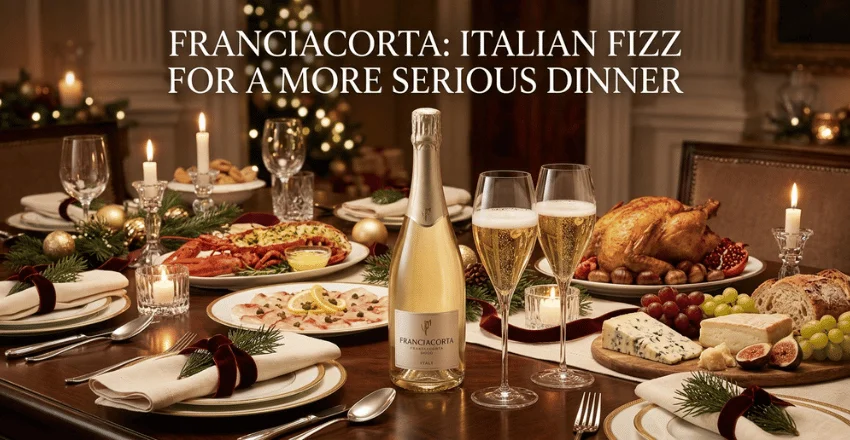
Franciacorta comes from Lombardy in northern Italy and uses bottle fermentation. The style can offer fine bubbles, fresh acidity and flavours that move from citrus towards bread and nuts. It is a useful alternative when you like Champagne’s structure but want something less expected.
Berlucchi ’61 Brut is an established Franciacorta example made largely from Chardonnay with Pinot Nero. Brut versions are particularly straightforward at the table. They can handle fish, white meats, cheeses and richer first courses.
Allow roughly £20–£40+ for Franciacorta in the UK. Distribution is narrower than Prosecco or Champagne, so that choice may vary. It makes most sense for a smaller Christmas dinner where the wine will be noticed.
Which fizz is best for Christmas morning and Buck’s Fizz?
For Christmas morning, keep the wine light, fruity,y and easy to drink with brunch. Prosecco Brut or Extra Dry is usually enough for this job. A simple Cava also works if you prefer a sharper, less floral style.
Buck’s Fizz traditionally combines sparkling wine with orange juice. Using costly Champagne tends to hide the qualities you paid extra for. Choose a clean Prosecco, Cava or inexpensive dry sparkling wine instead.
If brunch includes spicy bites, look at Wrytra’s Thai starters guide for serving ideas. A slightly softer sparkling style can be more forgiving with sweet chilli, aromatic herbs and moderate heat.
What should you serve with Christmas dinner?
Dry sparkling wine is far more useful with food than many people expect. High acidity refreshes the palate between rich mouthfuls, while bubbles help with fried, creamy and salty foods. The right bottle can therefore stay on the table beyond the opening toast.
For smoked salmon, prawns or oysters, try Brut Champagne, English sparkling, Crémant or Franciacorta. Cava works particularly well with salty canapés and cured meats. Prosecco suits lighter starters where strong toasted flavours might dominate.
Turkey is trickier because the plate can include gravy, stuffing, bacon, cranberry sauce,ce and roast vegetables. A fuller Brut Champagne, English sparkling rosé or mature traditional-method wine has a better chance of coping. Very delicate Prosecco can become lost beside a full roast.
Cheese changes the calculation again. Dry fizz can cut through creamy cheeses, while a sweeter sparkling wine can work with fruit-based desserts. Keep sweetness in mind rather than assuming every bottle marked “dry” tastes the same.
Brut, Extra Dry and other sweetness labels explained
Sparkling-wine terminology can be confusing because Extra Dry is sweeter than Brut. Champagne’s official classification places Brut below 12 grams of sugar per litre. Extra Dry sits between 12 and 17 grams per litre.
The usual order from driest to sweetest is:
- Brut Nature / Zero Dosage: up to about 3 g/l
- Extra Brut: up to about 6 g/l
- Brut: below 12 g/l
- Extra Dry: 12–17 g/l
- Dry / Sec: 17–32 g/l
- Demi-Sec: 32–50 g/l
- Doux: above 50 g/l
These categories also appear across Cava, Prosecco and other sparkling wines, although rules can vary slightly by appellation. For a typical Christmas meal, Brut is the easiest all-round choice. Demi-Sec works better with desserts or for guests who prefer a noticeably sweeter wine.
Nyetimber Cuvée Chérie is one example of an English Demi-Sec. It is noticeably sweeter, which makes it quite different from the drier English sparkling styles commonly served as aperitifs.
Best sparkling wine for Christmas on a budget
You do not need Champagne to put good sparkling wine on the Christmas table. At around £7–£12, look first at Brut Cava, simple Prosecco or entry-level French sparkling wine. These are practical choices for larger gatherings and mixed drinks.
At around £12–£25, Crémant, better Cava and some entry-level English sparkling wines become realistic. This range offers the best balance of quality and quantity for a family gathering. It is where careful label reading pays off most.
From roughly £25–£50, Champagne and established English producers become much easier to find. Franciacorta also sits comfortably in this bracket. Spend here when the wine will be served neat and is an important part of the meal.
Beyond £50, you are usually paying for a more prestigious producer, extra ageing, a vintage, a special vineyard,d or limited production. Those features can matter to enthusiasts but are not essential for a good Christmas lunch. Buy them because you value the wine itself, not because December requires a certain price.
How to serve sparkling wine properly
Most sparkling wines taste best well chilled, but freezing-cold wine can mute flavour. Around 6–10°C is a useful serving zone for many styles. Richer or more complex bottles can warm slightly in the glass.
Chill bottles in the fridge in advance rather than relying on a last-minute freezer session. An ice bucket filled with both ice and water cools wine efficiently. Dry the bottle before opening so it does not slip in your hands.
Remove the foil and keep a thumb over the cork as you loosen the wire cage. Hold the bottle at about 45 degrees and turn the bottle slowly, rather than twisting the cork. Aim for a quiet sigh rather than a flying cork.
Flutes preserve bubbles well, but a small white-wine glass gives aromas more space. That matters more with Champagne, Franciacorta and mature English sparkling wine. For simple Prosecco at a busy party, use whatever clean wine glasses are practical.
A simple Christmas buying plan
For a mixed household, buying by occasion is easier than hunting for one universal bottle. Start with affordable Prosecco or Cava for Christmas morning and cocktails. Keep your more complex bottles for food.
Then choose Brut Crémant, Cava Reserva, or English sparkling for starters and the main meal. Add Champagne or Franciacorta if you want one bottle to feel more ceremonial. This approach keeps the budget focused on moments where the difference is easiest to appreciate.
If beer will also be part of the celebrations, Wrytra’s guide to calories in a pint of Guinness covers serving sizes and related drink information. Offering water and alcohol-free options alongside alcoholic drinks also makes hosting easier for everyone.
Verdict: Which sparkling wine should you buy?
The best sparkling wine for Christmas fits the moment, not the most expensive label. Champagne or English sparkling wine suits a special meal, while Crémant and Cava offer strong value. Prosecco remains an easy option for parties, brunch and Buck’s Fizz.
If you want one versatile bottle, choose a Brut traditional-method sparkling wine within your budget. Its dryness and acidity make it easier to serve from canapés through much of dinner. Buy a few bottles early if you are hosting, because festive availability can change.
Drink responsibly, pace servings across the day, and provide water and alcohol-free choices for guests.
FAQs
What is the best sparkling wine for Christmas dinner?
The best sparkling wine for Christmas dinner is usually Brut Champagne, English sparkling wine, Crémant, Cava Reserva, or Franciacorta. These styles have enough acidity and structure to stand up to richer food. Choose fuller bottles when serving turkey with several strongly flavoured trimmings.
Is Champagne worth buying for Christmas?
Champagne can be worth buying when you value its character, reputation or role in a special toast. It is not necessary for a successful festive meal. Good English sparkling wine, Crémant, Cava and Franciacorta offer credible alternatives across different budgets.
Is Brut or Extra Dry sweeter?
Extra Dry is sweeter than Brut, despite the wording. Brut generally contains less than 12 g/l of sugar, while Extra Dry sits around 12–17 g/l. If you prefer a noticeably dry finish, start with Brut or Extra Brut.
What sparkling wine is best for Buck’s Fizz?
Use an affordable Prosecco, Cava, or straightforward dry sparkling wine. Orange juice covers many subtle flavours, so premium Champagne is usually unnecessary. Chill both ingredients before mixing to keep the drink fresh.
How many glasses do you get from a bottle of sparkling wine?
A standard 750 ml bottle gives around six 125 ml servings. Smaller pours may stretch it further during a toast. For a large Christmas gathering, calculate bottles from your planned serving size and include non-alcoholic alternatives.