Floorboards can define the look, comfort, and character of a UK home. They may be original softwood boards, solid hardwood, reclaimed timber, or engineered wood. Choosing well means balancing appearance, moisture, heating, maintenance, and the condition beneath the surface.
Wooden boards in UK homes may be original structural timber, new solid wood, or engineered planks. The right choice depends on room moisture, subfloor, heating, budget, and desired character. Older timber often deserves repair before replacement, while engineered wood usually offers greater stability for modern installations and underfloor heating.
| Key point | What to know |
|---|---|
| Common types | Original softwood, solid hardwood, engineered wood, reclaimed timber |
| Cost pattern | Softwood generally costs less than engineered or solid hardwood |
| Sanding | Professional sanding can cost far less than replacing sound timber |
| Underfloor heating | Engineered wood is often easier to specify, but product approval still matters |
| Repair first? | Local damage, squeaks, and surface wear often suit repair or restoration |
| Replace when | Rot, severe moisture damage, or structural failure affects a wide area |
Key takeaways
- Identify whether the timber is structural, decorative, or both before planning work.
- Check moisture and ventilation before spending money on sanding or finishes.
- Compare repair, restoration, and replacement costs before lifting sound original timber.
- Confirm heating compatibility with the flooring manufacturer before installation.
- Treat persistent damp as a building problem, not a cosmetic flooring problem.
What Are Wooden Boards in a UK Home?
In many older British homes, timber boards sit directly across joists above a ventilated void. Newer homes may use sheet subfloors with a separate decorative surface above. Structural boards and decorative wood flooring therefore do different jobs.
Traditional boards were often softwood, especially pine, while modern finished floors offer more species and constructions. Engineered products use a real wood top layer over a stable core. Laminate can imitate timber, but its visible surface is not solid hardwood.
Floorboards: Main Types Used in UK Homes
The right construction depends on the room, subfloor, heating system, and desired finish. Older properties often reward careful restoration, while modern rooms may suit engineered products. The table below shows the practical differences between common choices.
| Type | Best suited to | Main strength | Main drawback |
|---|---|---|---|
| Original softwood | Period rooms and suspended timber floors | Character and easy local repair | Softer surface marks more easily |
| Solid hardwood | Long-term decorative flooring | Can usually be refinished many times | Moves more with humidity changes |
| Engineered wood | Modern homes and many heated floors | Greater dimensional stability | Sanding depends on wear-layer thickness |
| Reclaimed timber | Period-style renovations | Mature appearance and matching potential | Sourcing and preparation can cost more |
Original Softwood Boards
Pine and similar softwoods are common in older British houses with suspended timber floors. Dents, nail marks, patches, and colour variation may be cosmetic rather than structural. Softwood sands quickly, so careful restoration helps preserve usable thickness.
Solid Hardwood
Solid hardwood uses one timber species through the full board thickness. Oak combines durability with a familiar grain and can often be refinished repeatedly. Humidity changes can still cause seasonal gaps or edge movement.
Engineered Wood
Engineered wood combines a real wood surface with stabilising layers underneath. The construction usually limits movement and suits many modern subfloors or heated rooms. Wear-layer thickness determines how much future sanding is possible.
What Do Timber Floors Cost in the UK?
UK pricing varies by species, grade, fitting method, and regional labour rates. Checkatrade’s June 2026 guide gives useful ballpark averages for common wood flooring. These figures help with early budgeting, but they are not fixed project prices.
| Work or material | Typical 2026 UK guide figure | Source |
|---|---|---|
| Softwood material | About £30/m² | Checkatrade |
| Softwood installation | About £45/m² | Checkatrade |
| Engineered wood material | About £50/m² | Checkatrade |
| Engineered wood installation | About £45/m² | Checkatrade |
| Solid hardwood material | About £80+/m² | Checkatrade |
| Solid hardwood installation | About £35–£60/m² | Checkatrade |
| Professional sanding and refinishing | Roughly £20–£45/m² | Recent UK guides |
Board grade, room shape, subfloor work, access, and finish can change the final total. London and the South East often cost more for specialist work. Written quotes should separate repairs, preparation, sanding, finishing, and materials.
Repair, Restore, or Replace?
Start with the cause of the problem, not the surface appearance. A dull finish needs a different solution from rot or structural movement. Repairing the cause first prevents fresh finishes from hiding a worsening defect.
Repair When the Structure Is Sound
Old floorboards with isolated splits, loose fixings, or local damage may only need targeted repair. A joiner can often secure movement or replace damaged sections. This approach keeps more original material and limits disruption.
Squeaks can come from movement between timber, fixings, and joists. Repairs can be simple when you know joist positions and nearby services. Never add screws blindly where pipes or cables may run below.
Restore When the Surface Is Tired
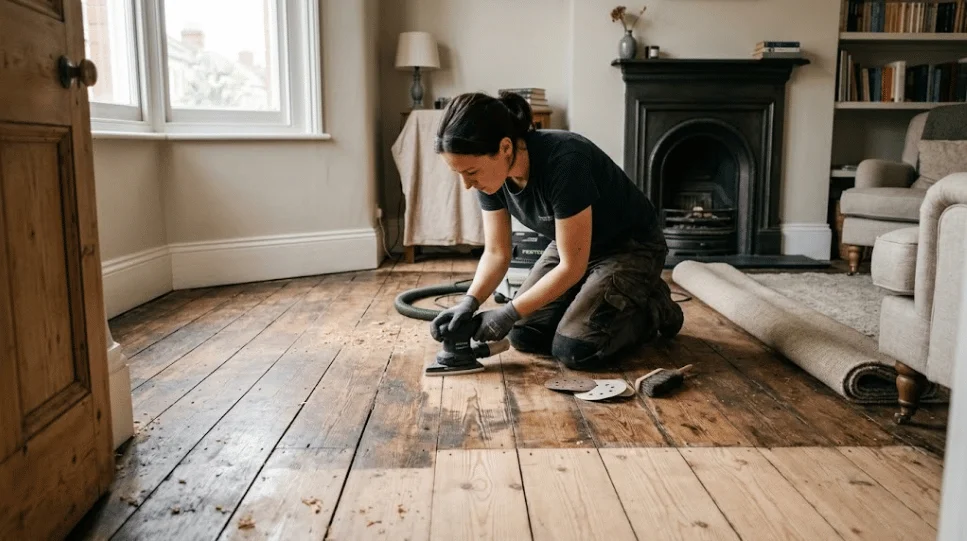
Restoration suits timber that is stable but scratched, stained, painted, or worn. The process usually combines repairs, sanding, filling where appropriate, and a protective finish. Good preparation matters more than choosing the darkest stain.
Recent UK guides commonly quote around £20–£45 per square metre for straightforward sanding. Heavy paint, adhesive, repairs, stairs, and awkward edges can raise the price. Very thin boards may not tolerate another full sanding cycle.
Replace When Damage Is Widespread
Replacement becomes more sensible when large areas are rotten, structurally weak, or repeatedly wet. New timber won’t fix an active leak, blocked ventilation, or a persistent damp source. Correct the moisture problem before closing the floor again.
Older properties deserve extra care before wholesale removal. Historic England recommends understanding the causes of deterioration and repairing sound traditional fabric where practical. Local replacement can preserve character while removing unsafe sections.
Common Problems and What They Usually Mean
- Squeaks: movement may exist between boards, fixings, joists, or adjacent timber.
- Seasonal gaps: dry indoor air can shrink timber during heated winter months.
- Cupping: moisture imbalance may be affecting the board.
- Soft patches: decay or weakened support needs investigation.
- Dark staining: spills, metal reactions, moisture, or old finishes can change colour.
- Cold draughts: gaps and an uninsulated suspended floor can reduce comfort.
If damp keeps returning near a cellar or lower-ground room, investigate water management first. Wrytra’s basement drainage guide explains common moisture and drainage warning signs. Treating the source protects both the timber and any new finish.
Should Gaps Be Filled?
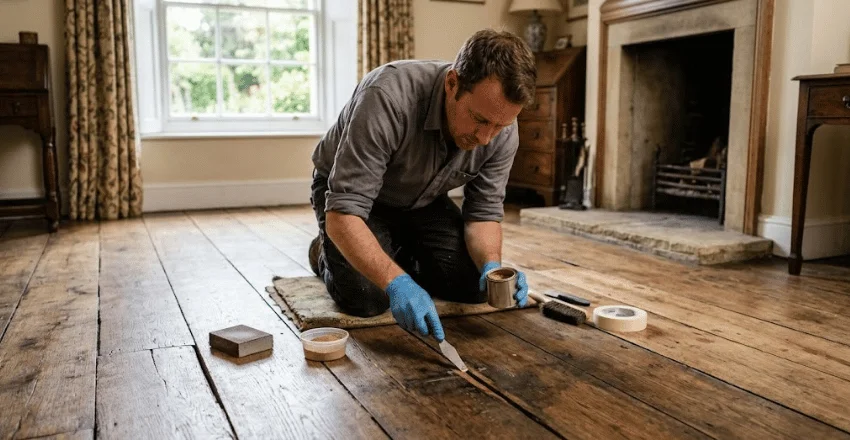
Small seasonal gaps may open and close as indoor humidity changes. Filling every fine line can fail if the timber keeps moving. Persistent wide gaps or draughts deserve closer inspection before you fill them.
Resin-and-dust fillers can suit some narrow gaps during sanding. Timber slivers can suit wider, stable joints when the floor is prepared correctly. Correct movement, damp, or loose boards before cosmetic filling.
Historic England notes that gaps in suspended timber floors can contribute to draughts and heat loss. It also warns that older floors need careful treatment during insulation work. Subfloor ventilation should remain effective after any draught-proofing or insulation project.
Underfloor Heating and Timber
Engineered wood usually handles temperature changes better because its layered core limits movement. Nu-Heat says both engineered and solid wood can work with underfloor heating. Board width, thickness, acclimatisation, and installation method still matter.
Always check the flooring manufacturer’s heating limits before purchase. Warm the system gradually after fitting, following the supplier’s instructions. A product sold for conventional floors may not be approved for heated floors.
Finishes and Everyday Care
Oil gives a natural look and allows local maintenance on many timber floors. Lacquer creates a more sealed surface and can simplify routine cleaning. Painted boards suit some interiors, but future stripping usually takes more work.
If you are planning a wider room refresh, coordinate floor tone with furniture finishes and wall colour. Wrytra’s furniture paint guide can help you choose coatings that match nearby pieces. Testing colours together reduces the risk of clashing undertones.
- Vacuum or sweep grit before it scratches the surface.
- Wipe spills promptly instead of leaving moisture around joints.
- Use felt pads beneath chairs and movable furniture.
- Place rugs in high-wear routes without trapping persistent damp.
- Avoid soaking the floor during routine cleaning.
Room layout also changes how much timber remains visible and exposed to wear. Rugs, storage, and furniture can protect busy routes while shaping the room visually. Wrytra’s small living room guide offers related ideas for compact layouts and floor space.
How to Choose the Right Approach
Start by deciding whether you need structural repair, a decorative upgrade, or both. Check the subfloor, moisture, heating, and board thickness before comparing finishes. Then compare the cost of repair and restoration with full replacement.
Use this decision order:
- Confirm whether the boards are structural or decorative.
- Find the cause of movement, damp, staining, or noise.
- Check whether damaged sections can be repaired locally.
- Confirm remaining thickness before planning heavy sanding.
- Check heating compatibility and moisture limits for new timber.
- Compare complete quotes, including preparation and finishing.
- Choose the finish after the technical decisions are settled.
For more practical renovation ideas, browse Wrytra’s Home Improvement guides before planning the next stage. They cover decorating, layout, storage, garden work, and household maintenance. Pairing flooring decisions with the wider room plan can prevent expensive changes later.
Frequently Asked Questions
Are floorboards worth restoring?
They are often worth restoring when the timber is dry, stable, and thick enough for treatment. Repairing local damage can preserve character while avoiding unnecessary replacement. Widespread rot, repeated damp, or structural weakness can make replacement the safer option.
How much does floor sanding cost in the UK?
Recent 2026 UK guides commonly place straightforward professional sanding around £20–£45 per square metre. Room condition, finish, repairs, location, and access can increase the quote. Ask whether the quote includes filling, edge work, sealing coats, and repairs.
Can old timber boards work with underfloor heating?
Sometimes, but the answer depends on species, width, thickness, moisture, and the heating system. Engineered wood is often easier to specify because it moves less. Always follow the flooring supplier and heating designer’s temperature limits.
Should I fill gaps before sanding?
You may fill small, stable gaps during restoration, depending on the method. Seasonal gaps can reopen after you apply rigid filler. Fix loose boards and moisture problems before deciding how to treat the joints.
Why do wooden boards squeak?
Squeaks usually involve movement between timber components or fixings. The noise may come from a loose board, joist contact, or adjacent pieces. Find the movement first, then choose a fixing method that avoids hidden services.