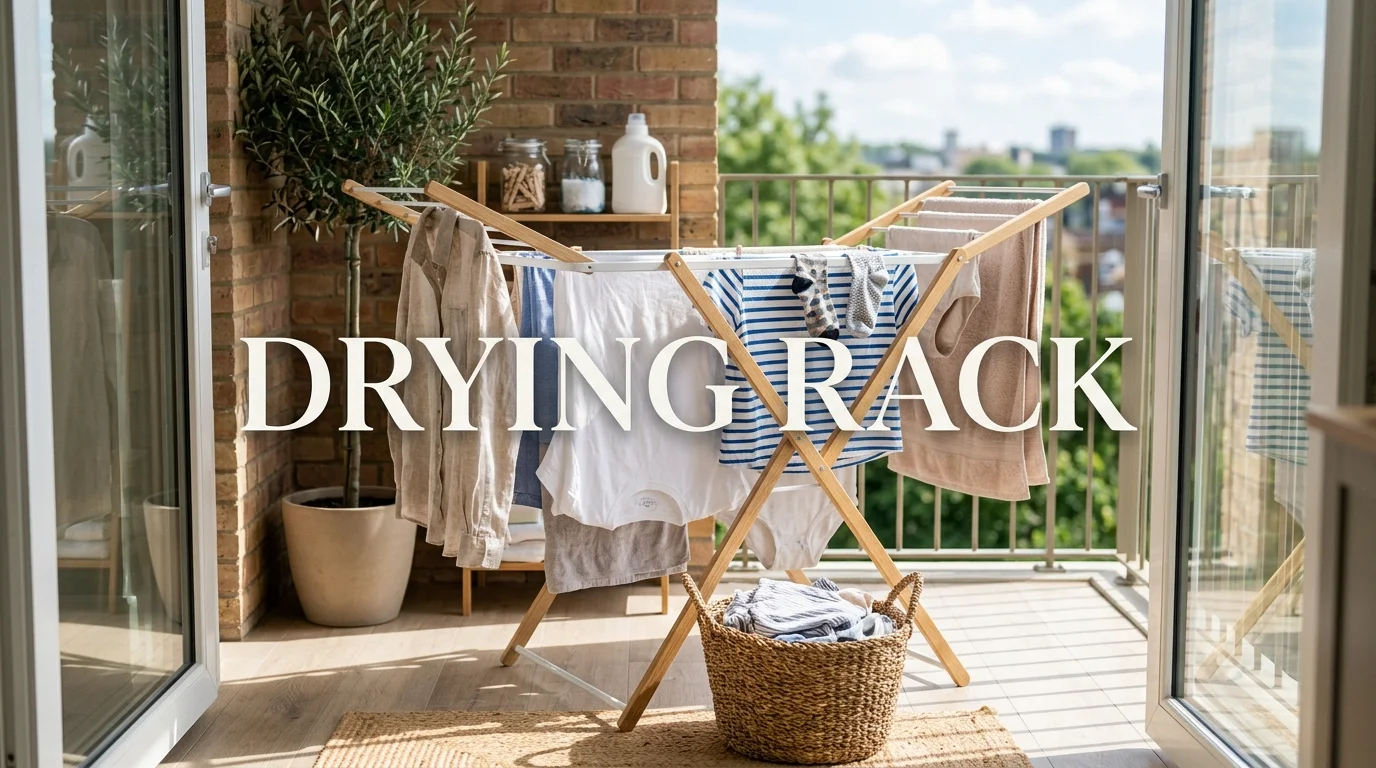
A drying rack can make indoor laundry easier without taking up permanent floor space like another appliance. In the UK, the same product is often called a clothes airer or clothes horse. The right choice depends on your load size, available space, ventilation, and storage options.
For most UK homes, start with a stable folding airer that fits one normal wash and stores flat. Choose a tower model when floor space is tight. Consider a heated model when winter drying is consistently slow. Check power use, room ventilation, and garment spacing before paying extra.
| Type | Best suited to | Main advantages | Main trade-offs |
|---|---|---|---|
| Winged folding airer | Towels, trousers, mixed loads | Easy loading, adjustable wings, flat storage | Needs a wide open footprint |
| Three-tier tower | Flats and narrow rooms | High capacity for limited floor area | Closely packed clothes can slow airflow |
| Heated clothes airer | Regular winter indoor drying | Warmer rails can shorten drying time | Costs more and still releases moisture indoors |
| Wall-mounted airer | Utility rooms and tiny homes | Keeps the floor clear | Requires secure fixing and offers fixed capacity |
| Over-door or radiator airer | Small loads and quick items | Compact and inexpensive | Limited space for full wash loads |
Key takeaway: measure the open footprint before comparing line length or price. A larger capacity is useful only when air can move between garments. Storage matters too, because an airer becomes temporary furniture whenever it is in use.
What UK Shoppers Are Comparing in 2026
UK retailers sell a broad mix of folding, winged, tower, wall-mounted, and heated airers. Dunelm currently lists all these formats, including compact and multi-tier options. IKEA also sells simple indoor and outdoor models that fold away after use.
Prices vary sharply by design and capacity. In September 2026, IKEA lists basic full-size models from £7 to £35. Dunelm lists non-heated three-tier models from about £12, while heated designs run much higher.
How to Choose a Drying Rack for Your UK Home
Use these seven checks before you compare individual models. They focus on space, capacity, stability, and airflow. Check them in this order:
- Measure the exact floor area the airer will take up when fully open.
- Measure the storage gap where it will live after the laundry is dry.
- Match drying length to your usual wash load, not your largest occasional load.
- Check the maximum load if you often dry jeans, towels, bedding, or knitwear.
- Choose wide spacing and stable joints over a crowded frame with more rails.
- Decide whether faster winter drying justifies the cost of a heated model.
- Plan ventilation before drying clothes indoors, especially in colder months.
These checks prevent a common buying mistake: choosing the highest capacity on paper. Usable capacity depends on garment size and spacing between wet items. A crowded frame may hold more laundry but take longer to dry.
Open dimensions deserve special attention in smaller homes. A winged model may fold to a slim shape yet stretch far across a room. If space is tight, Wrytra’s small living room planning advice can help you protect clear walking routes.
Winged, Tower, Heated, or Wall-Mounted?
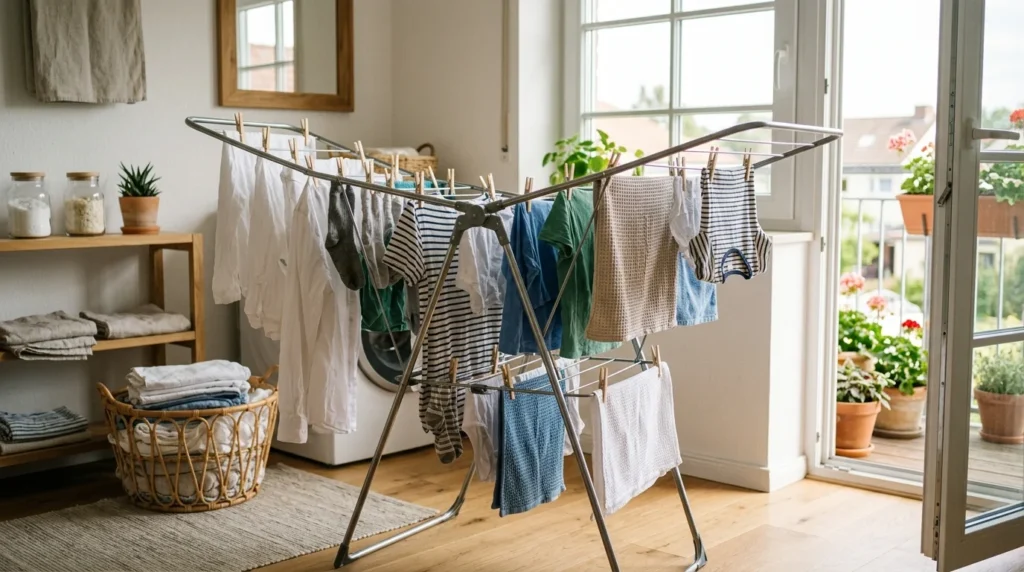
Winged airers suit households that dry towels, trousers, shirts, and mixed loads together. Their horizontal layout makes it easier to spread out larger items. They also tend to fold flat, although their open width can be considerable.
Tower airers use height instead of width, which makes them attractive in flats. They can offer substantial line length on a compact base. Leave gaps between garments, because packed tiers can restrict airflow around lower items.
Heated airers warm the rails or the air around the washing. Which? Reports that tested heated airers averaged about 7p per hour under its stated electricity assumption. The same testing found that capacity and drying time still determine whether they are economical for a household.
Wall-mounted and over-door models solve a different problem. They free floor space and work well for small or frequent loads. They are less suitable when you regularly need to dry bedding or a full family wash.
How Much Drying Space Do You Need?
Drying length is usually shown in metres, but the number alone can mislead. A long line split across closely spaced rails may be awkward for bulky garments. Also check rail spacing, hanger points, and usable height.
For one or two people, a compact or mid-sized airer may cover routine loads. Families often benefit from more line length or a larger frame. Choose enough spare capacity to leave gaps, rather than packing every rail tightly.
Heated Versus Non-Heated Airers
A non-heated airer has no running cost beyond the heating or ventilation already used in your home. Drying speed depends on room temperature, humidity, fabric thickness, and airflow. This makes standard models simple, quiet, and suitable for everyday use.
A heated clothes airer can make winter drying more predictable. It may be useful when clothes stay damp for long periods in a cool home. Compare wattage, timer features, covers, and capacity before deciding whether the extra purchase cost makes sense.
Do not assume electric heat solves a moisture problem. Water leaving wet clothes still enters the room air. Good ventilation remains important whether the rails are warm or cold.
Drying Clothes Indoors Without Encouraging Condensation
Indoor laundry adds moisture to the air, so the drying room matters. UK government ventilation guidance says trapped household moisture can become condensation on cold surfaces. It also links poor ventilation with damp and mould growth.
Keep background vents clear and use suitable ventilation while clothes are drying. Oxford City Council advises drying outside when possible. For indoor drying, it recommends a ventilated room and discourages placing wet laundry directly on radiators.
Don’t crowd clothes together to speed things up. Spread sleeves, trouser legs, and thick fabrics so air can reach more surface area. Turning heavier items during the drying period can also expose damp sections.
Practical Formats for Small Flats
A tower airer is often the most practical first option for a small flat. It uses vertical space and can provide useful capacity without stretching across the room. Some designs also allow individual shelves to fold away for longer garments.
Wall-mounted models work well when you have a suitable utility wall. Over-door designs suit lighter loads and occasional use. Wrytra’s toy storage ideas show the same small-home principle: vertical solutions protect valuable floor area.
Materials, Stability, and Outdoor Use
Powder-coated steel and aluminium are common because they balance weight and strength. Outdoor use requires more attention to corrosion resistance and manufacturer instructions. Never assume an indoor-only model can stay outside in wet weather.
Check hinges, feet, locking points, and rail finish before focusing on extras. Smooth rails reduce the risk of snagging delicate fabric. Wide feet and a firm frame also help when wet towels create uneven weight.
Our Recommendation for Most UK Homes
For most households, a sturdy non-heated winged or three-tier airer is the sensible starting point. Choose winged designs for larger garments and tower designs for limited floor space. Pay for heating only when your normal indoor conditions make drying unreasonably slow.
The best purchase is the model that fits your room, wash routine, and storage space. Avoid buying on line length alone. A slightly smaller frame with better spacing may be easier to use every week.
After clothes are dry, finish the job before putting them back in the wardrobe. Wrytra’s crease release spray guide covers a quick option for light wrinkles. You can also browse Wrytra’s Home Improvement section for more practical household guides.
Frequently Asked Questions
What is the best drying rack for a small UK flat?
A three-tier tower is usually a practical choice because it uses height efficiently. Wall-mounted designs can save even more floor space when you can secure them properly. Measure both the open footprint and folded depth before buying.
Are heated clothes airers cheaper than tumble dryers?
They can cost less per hour, but total cost depends on load size and drying time. Which? found heated airers useful for smaller loads, while large loads can require repeated drying sessions. Compare energy use against your own laundry volume rather than hourly cost alone.
Can I use a clothes airer outside?
Some models are specifically sold for indoor and outdoor use. IKEA, for example, labels several current models for both settings. Follow the manufacturer’s instructions and bring suitable folding models inside before prolonged wet weather.
How can I make clothes dry faster on an airer?
Start with a strong washing-machine spin that is suitable for the fabric. Leave gaps between garments and place the airer where air can circulate safely. Turn thick items and avoid stacking wet layers on top of each other.
How much should I spend on a clothes airer?
Basic models can cost under £20, while premium and heated versions can cost much more. Current UK listings show a wide spread based on capacity, materials, and heating features. Set your budget after deciding the type and capacity you need.
Choose the Right Airer Before You Buy
Measure your drying space and storage gap before opening retailer tabs. Then shortlist the type that fits your normal wash load and indoor conditions. This simple order keeps size, capacity, and ventilation ahead of features you may never use.