

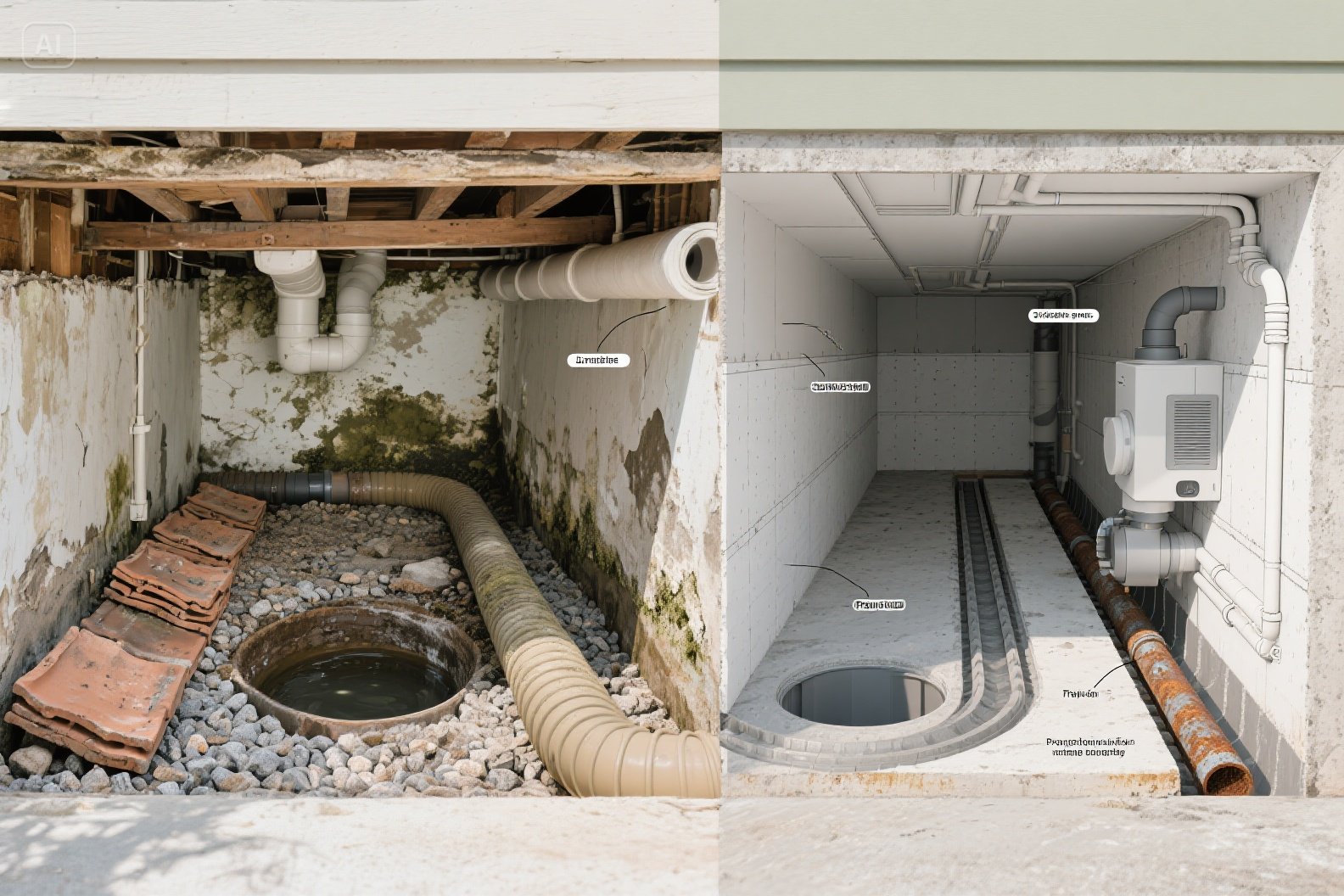
Old Basement Drainage Systems
Old basement drainage systems were commonly installed in older homes using clay or concrete tiles placed around the foundation to guide water away. These systems relied on gravity and minimal materials, often lacking proper sealing or strong sump pumps. Over time, they become vulnerable to cracks, blockages, and pump failures. Signs of trouble include musty odors, mold, water stains, and basement flooding.
Ignoring these problems can lead to structural damage and costly repairs. Upgrading Drainage Systems with modern solutions, such as French drains, sump pump replacements, or exterior waterproofing, offers better moisture control and protects the home. Proper maintenance, early detection, and expert help ensure long-lasting results and a dry, livable basement space in any season.
| Basics | Ultra-Concise Summary |
| Design | Clay tiles drained water out. |
| Weakness | No sealant or strong pumps. |
| Pipe Issues | Cracked or clogged lines. |
| Debris | Blocks drainage. |
| Pump Failure | Breaks in storms. |
| Flooding | Water collects inside. |
| Signs | Mold, stains, musty air. |
| Act Fast | Stops bigger damage. |
| Upgrade | Stronger, cleaner, safer. |
| Basement Use | Becomes livable. |
| French Drains | Inside floor system. |
| Exterior Fix | Dig, seal, protect. |
| Cost | Varies by method. |
| DIY | Gutter + pump checks. |
| Pros | Better, lasting results. |
| Maintenance | Clean, slope, test pump. |
How Were These Systems Built Initially?
Old basement drainage systems were built by placing clay or concrete drain tiles around the base of the home’s foundation. These tiles, laid in gravel, helped move water away and reduce hydrostatic pressure. Water would usually drain toward a sump pit or an outlet. Though effective for their time, these systems often lacked waterproof barriers or reliable pumps, and the materials used are prone to cracking, clogging, and deterioration over many decades of use.
Common Problems with Old Basement Drainage Systems
Clogged or Damaged Drain Lines
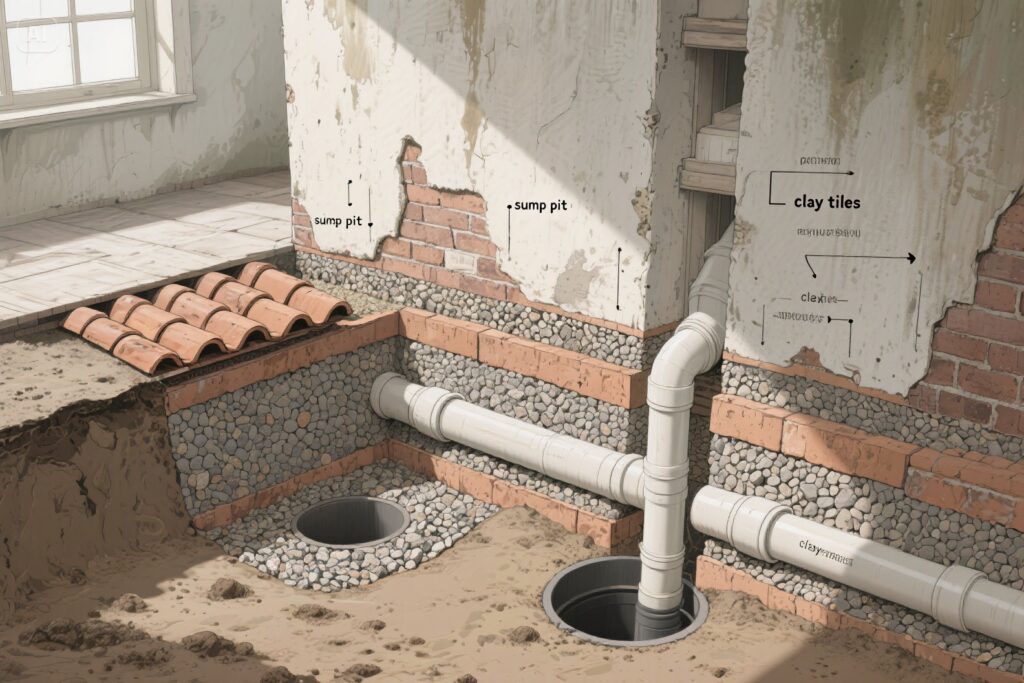
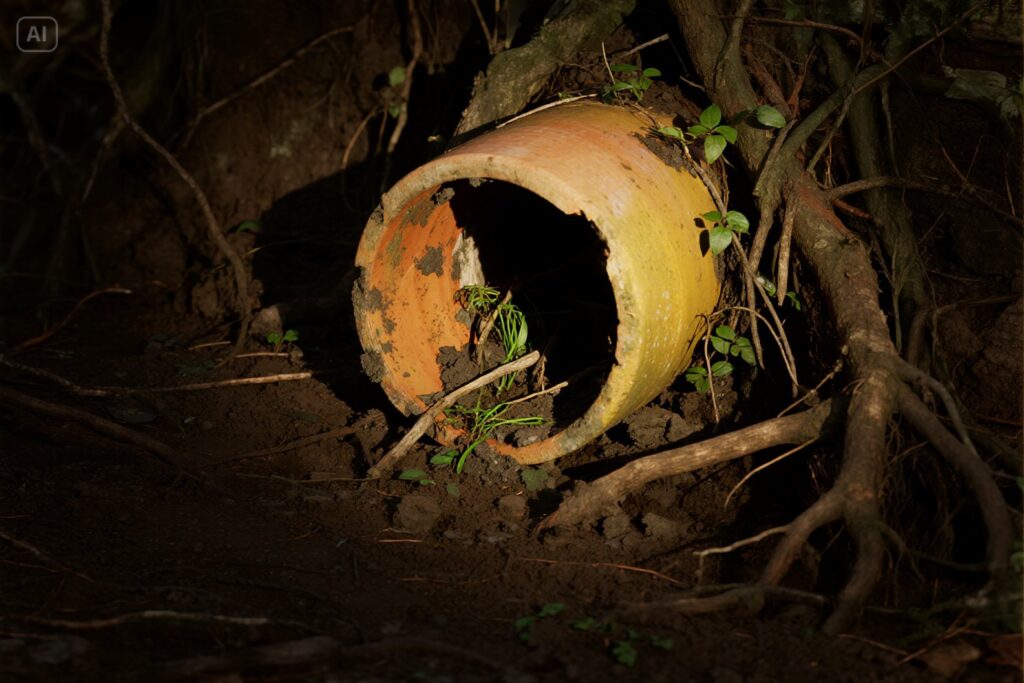
Over the years, drainage systems often become clogged with soil, roots, or debris. Drain tiles made from clay or concrete are especially vulnerable to breakage and root intrusion. When water cannot flow properly, it begins to build pressure, eventually leading to seepage or leaks in the basement. Blocked drainage lines are one of the most common and frustrating causes of basement water problems in older homes today.
Malfunctioning Sump Pumps
Many old basement drainage systems include outdated sump pumps that may not perform efficiently. These pumps often fail during heavy rain due to electrical problems, rust, or age. Without a functioning sump pump, water has no exit route and begins to accumulate inside the basement. Frequent flooding or pooling water during storms is often a clear indication that the sump pump within your drainage system needs repair or replacement.
Signs That Your Old System Is Failing
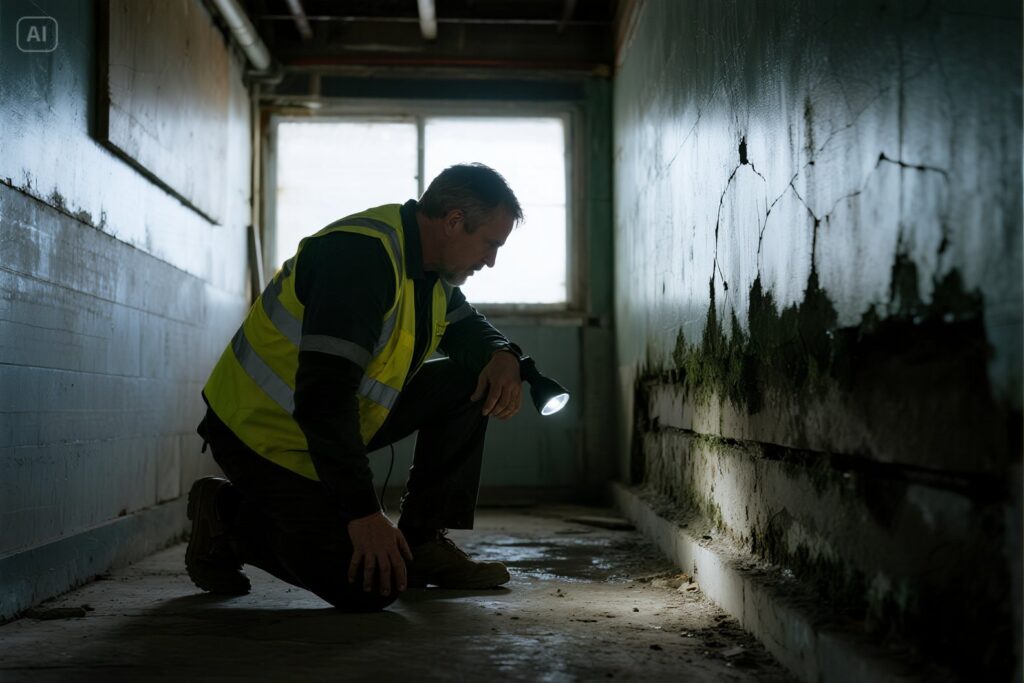
Failing drainage systems often exhibit several warning signs. You may notice water stains at the base of basement walls, persistent musty odors, or patches of mold and mildew. In more severe cases, visible puddles or even minor flooding may occur after rain. Peeling paint, efflorescence, and cracks in walls also suggest water intrusion. Recognizing these early signs allows you to act quickly before the problem worsens and leads to costly repairs.
How Weather Affects Old Basement Drainage Systems
Weather conditions play a major role in how old basement drainage systems perform. Heavy rainfall, melting snow, and long wet seasons can overwhelm outdated drainage setups, especially if the pipes are already cracked or partially blocked. During colder months, freezing temperatures can cause clay or concrete drain tiles to expand and crack, worsening water seepage. In summer, dry soil can shift, creating gaps around the foundation that allow water to enter when rain returns.
Understanding how seasonal changes impact drainage systems helps homeowners prepare in advance and reduce the risk of basement flooding or long-term structural damage.
Why Updating the System Is Important?
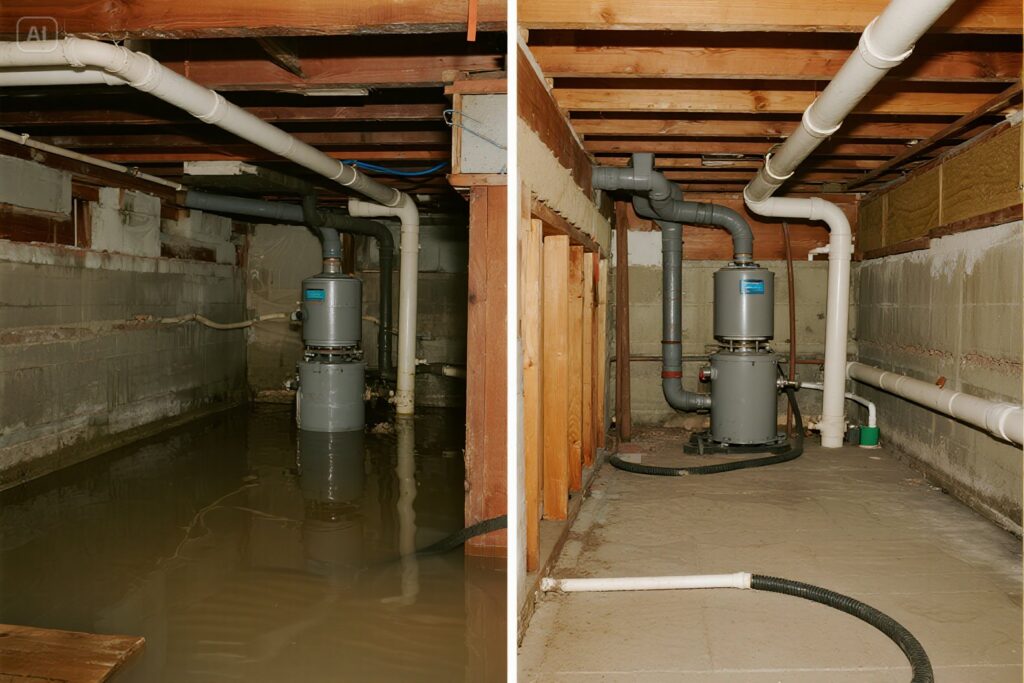
- Upgrading old basement drainage systems offers several key benefits for homeowners.
- Newer systems are more efficient, durable, and capable of handling larger volumes of water.
- They prevent moisture-related damage, such as mold, mildew, or wall rot, which can harm both your home’s structure and indoor air quality.
- Modern drainage also increases property value, protects your foundation, and turns damp basements into usable spaces.
- Investing in a reliable system ensures peace of mind year-round.
Types of Modern Solutions
Interior French Drains
This solution involves cutting a channel along the perimeter of the basement floor and inserting a perforated pipe into gravel. The pipe collects water and directs it to a sump pump, keeping the basement dry. It’s an ideal option for finished basements and is relatively less invasive. French drains are one of the most cost-effective ways to improve old basement drainage systems without fully excavating the foundation’s exterior.
Exterior Waterproofing Systems
Exterior solutions require excavating around the home’s foundation to install new drain tiles and apply waterproof coatings. A membrane or sealant is used to block moisture from penetrating the walls. Though expensive, it provides maximum protection. This method is ideal for homes with severe water problems or ongoing basement leaks. It significantly improves water resistance and updates the entire drainage infrastructure outside your home.
Cost Factors to Consider When Replacing Systems
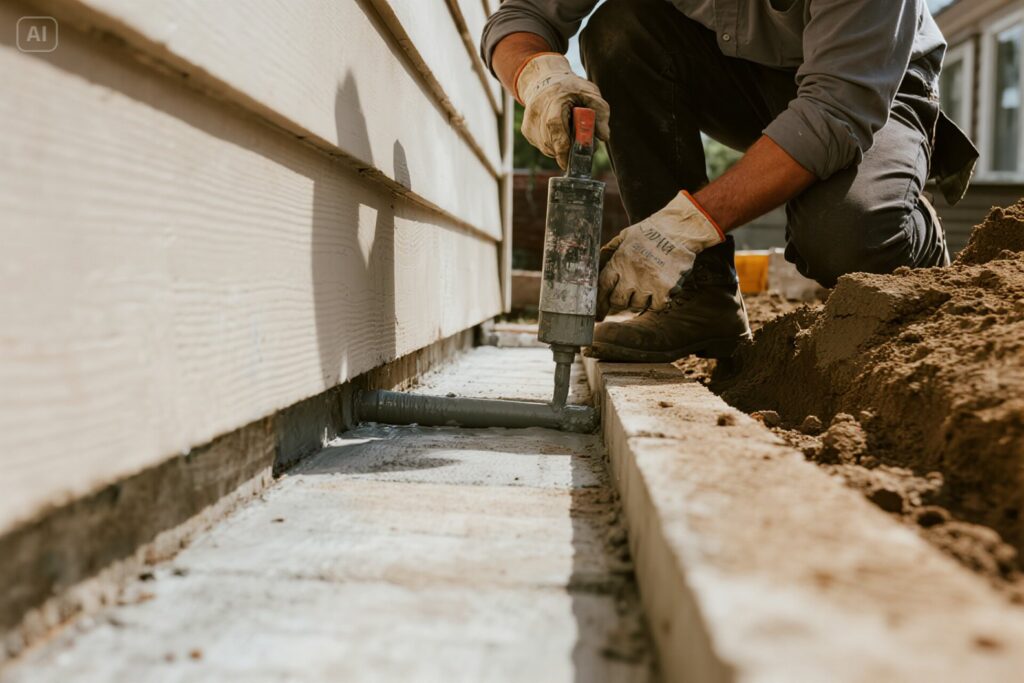
Replacing drainage systems can vary in cost based on multiple factors. The type of solution—whether interior or exterior—significantly affects the price. Exterior waterproofing typically requires excavation and is often more expensive, whereas interior drains are less expensive and quicker to install. Additional expenses might include new sump pumps, pipe replacements, labor, and materials. Getting several professional estimates ensures accurate budgeting. The long-term value of a dry basement often outweighs the initial investment.
DIY vs. Hiring Professionals
DIY Drainage Repairs
Basic maintenance of old basement drainage systems, such as cleaning gutters or checking sump pumps, can often be performed by homeowners. DIY fixes may help in reducing minor water issues temporarily. However, most significant problems, such as wall leaks, pipe damage, or complete system upgrades, require more than basic tools. Attempting complex repairs without knowledge could lead to more severe damage, especially if structural elements are accidentally disturbed or improperly sealed.
Hiring Professional Contractors
Professionals bring expertise, proper tools, and knowledge of building codes to handle complex drainage projects. Hiring a contractor ensures that the system is correctly installed and will last longer. They assess the source of water issues, suggest suitable upgrades, and offer warranties. This level of confidence is rarely possible with DIY solutions. In most cases, replacing or upgrading drainage systems is best left to experienced professionals who can guarantee performance and safety.
Preventative Maintenance Tips
- Proper care can extend the life of old basement drainage systems.
- Keep gutters and downspouts clean and aimed away from the foundation.
- Inspect sump pumps regularly to ensure they function correctly.
- Make sure your yard slopes away from the house to prevent surface water accumulation.
- Check basement walls and corners after rainstorms for damp spots.
- Annual inspections and minor repairs can prevent larger problems and help maintain a dry, healthy, and usable basement environment.
Conclusion
Old Basement Drainage Systems served their purpose but often face issues like clogs, cracks, and pump failures over time. Recognizing warning signs early and upgrading to modern drainage solutions can help protect your home from water damage and improve the usability of your basement. Regular maintenance and professional assistance ensure these systems work effectively. Investing in updated drainage not only preserves the foundation but also enhances your home’s value and comfort for years to come.
Want to know about Polystyrene Ceiling Tiles Explained: Benefits, Drawbacks, Costs, Durability Check out our Home Improvement category.
FAQs
They often fail due to cracked pipes, blockages from debris or roots, and outdated sump pumps that stop working during heavy rains.
Warning signs include musty smells, mold growth, water stains, peeling paint, and visible basement water or dampness after rain.
Repairs include clearing clogged pipes, replacing broken tiles, fixing sump pumps, and upgrading drainage components to modern, more effective designs.
Simple maintenance tasks, such as cleaning gutters, can be handled as a DIY project, but major repairs and replacements should be left to experienced contractors for optimal results.

