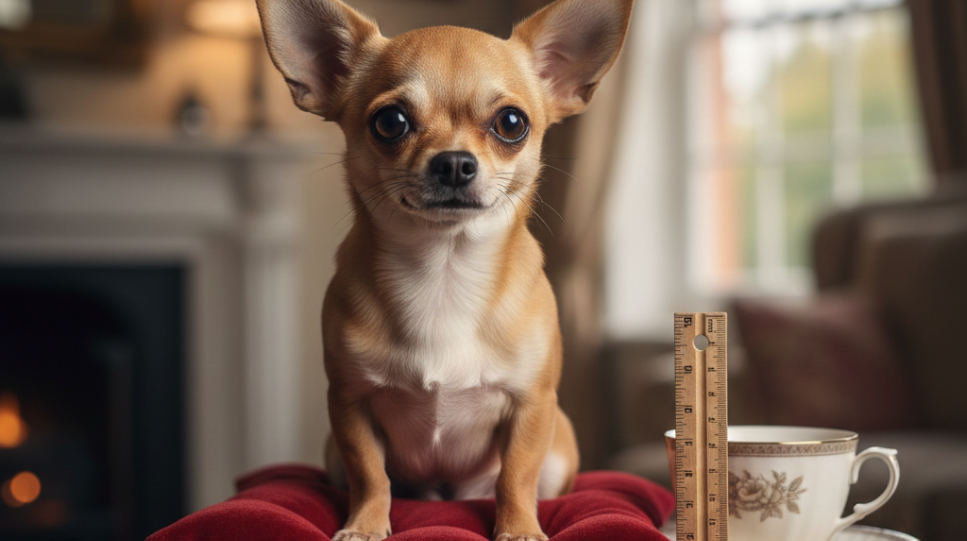
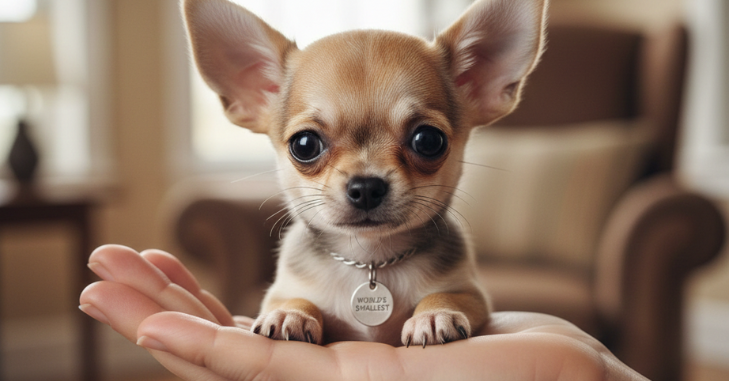
The Chihuahua is the smallest dog breed in the world. The Kennel Club breed standard puts the ideal weight at 1.8kg to 2.7kg (4–6lb), with a shoulder height of roughly 15cm to 23cm — smaller than most domestic cats. No other recognised breed is consistently lighter, although the Russian Toy, the Pomeranian, the Yorkshire Terrier and the Prague Ratter all overlap at the bottom of the Chihuahua’s range and individual dogs of those breeds are often smaller than an individual Chihuahua.
Size, though, is the least useful thing to know when choosing one. Tiny dogs carry a distinct set of health risks, cost more per kilo to insure and treat than large breeds, and need considerably more careful handling than their reputation as handbag accessories suggests. This guide compares the genuinely small breeds by measured weight and height, sets out realistic UK costs, and covers the practical care that keeps a 2kg dog healthy into its mid-teens.
The Smallest Dog Breeds Compared
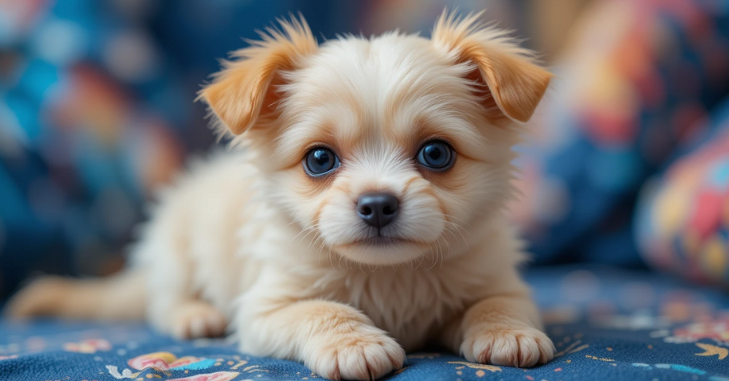
The figures below reflect Kennel Club breed standards and commonly cited healthy ranges. Individual dogs vary, and a dog outside these ranges is not necessarily unhealthy — but a dog dramatically below them, sold as a “teacup”, usually is.
| Breed | Typical weight | Height at shoulder | Typical lifespan | Coat |
| Chihuahua | 1.8–2.7kg | 15–23cm | 12–18 years | Smooth or long |
| Russian Toy | 1.4–2.7kg | 20–28cm | 12–14 years | Smooth or long |
| Pomeranian | 1.8–2.5kg | 18–22cm | 12–16 years | Thick double coat |
| Prague Ratter | 1.5–3.5kg | 20–23cm | 12–14 years | Short and smooth |
| Yorkshire Terrier | Up to 3.1kg | 20–23cm | 13–16 years | Long, fine, silky |
| Maltese | Up to 3.2kg | 20–25cm | 12–15 years | Long white silk |
| Japanese Chin | 1.8–3.2kg | 20–27cm | 12–14 years | Silky, profuse |
| Toy Poodle | 3–4kg | Under 28cm | 12–16 years | Curly, low-shedding |
| Papillon | 1.5–4.5kg | 20–28cm | 13–16 years | Long, fringed ears |
| Affenpinscher | 3–4.5kg | 24–28cm | 12–14 years | Rough and wiry |
| Miniature Dachshund | Up to 5kg | 13–18cm | 12–16 years | Smooth, long or wire |
| Brussels Griffon | 2.2–5kg | 18–20cm | 12–15 years | Rough or smooth |
Two entries need a note. The Prague Ratter, or Pražský Krysařík, has one of the lowest breed-standard weights anywhere but is uncommon in Britain and sits on the Kennel Club’s import register rather than among the fully recognised natives. And the Miniature Dachshund is the shortest dog on the list by height while being one of the heaviest by weight — a reminder that “small” measured at the shoulder and “small” on the scales are different questions.
Why the Chihuahua Takes the Title
Weight is the deciding factor, and the Chihuahua’s standard is the only one that caps at 2.7kg while also permitting dogs under 2kg as entirely typical. The breed traces to Mexico, where dogs of a similar type appear in Toltec and Aztec artefacts, and it takes its name from the Mexican state where nineteenth-century travellers first bought them in numbers.
The breed comes in two coat varieties — smooth and long — which the Kennel Club judges separately but which are otherwise the same dog. Both share the distinctive apple-domed skull, the oversized upright ears and the large, round, slightly protruding eyes. Some Chihuahua puppies are born with a molera, a soft spot on the skull comparable to a human fontanelle; in most it closes, and in some it remains open for life without causing problems, though it does mean the head needs protecting from knocks.
Record-holders sit well below the standard. Guinness World Records has recognised several Chihuahuas as the world’s shortest living dog, including Pearl, measured at just over 9cm at the shoulder. These are outliers, not a target, and dogs at that scale need considerable veterinary support.
The “Teacup” Problem
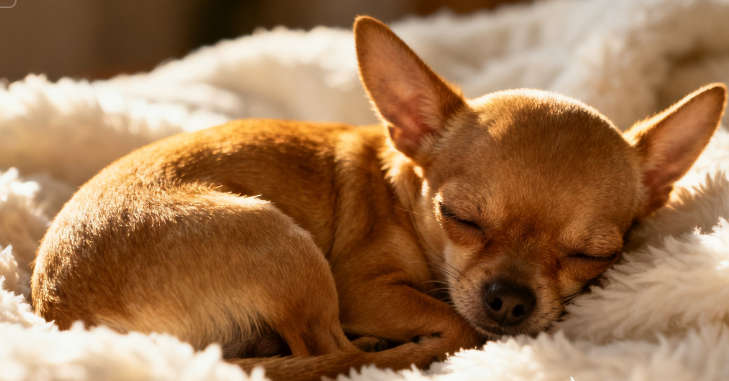
“Teacup”, “micro” and “pocket” are marketing terms, not breed classifications. No kennel club anywhere recognises them, and no legitimate breed standard describes a Chihuahua under about 1.8kg as desirable. Dogs sold under those labels are usually produced by breeding from undersized parents, deliberately selecting runts, or in some cases by underfeeding puppies — and they are priced at a premium precisely because buyers believe smaller is better.
The consequences are well documented in veterinary practice. Very undersized toy dogs are prone to hypoglycaemia that can be life-threatening in puppyhood, fragile bones that fracture from a jump off a sofa, heart defects, hydrocephalus, collapsing tracheas, liver shunts, and teeth so crowded into a miniature jaw that extractions become inevitable. Insurers frequently rate them higher or exclude related conditions, and lifespans are typically shorter than for a correctly sized dog of the same breed.
If a seller advertises a teacup, the reasonable response is to walk away. A well-bred Chihuahua at 2.4kg is already a very small dog.
Health Conditions to Understand Before You Buy
Toy breeds are not delicate in temperament, but they are genuinely fragile in structure. These are the conditions that come up most often:
- Patellar luxation. The kneecap slips out of its groove, producing a characteristic skipping step. It is common across toy breeds, graded 1 to 4, and moderate to severe cases often need surgery costing in the region of £1,500 to £3,000 per knee.
- Tracheal collapse. The windpipe’s cartilage rings weaken and flatten, producing a honking cough. Yorkshire Terriers and Pomeranians are particularly affected. Walking on a harness rather than a collar reduces the pressure that aggravates it.
- Dental disease. A full set of 42 adult teeth crammed into a tiny jaw means overcrowding, plaque retention and early periodontal disease. This is the single most predictable health cost of owning a toy dog.
- Hypoglycaemia. Toy puppies have almost no fat reserve and can crash into low blood sugar if a meal is missed. Frequent small meals through the first few months are standard advice.
- Hydrocephalus. Fluid on the brain, associated with the domed skull shape, most often seen in Chihuahuas.
- Legg-Calvé-Perthes disease. Degeneration of the hip joint’s head, typically appearing in young small-breed dogs.
- Eye injuries. Prominent eyes sit close to the ground and to furniture. Corneal ulcers are common and need same-day veterinary attention.
- Brachycephalic breathing problems. Flat-faced toys such as the Pekingese, Pug and Japanese Chin can suffer restricted airways, worsened in heat and during exercise.
A responsible breeder will discuss all of this openly, show you the mother with the litter, and provide evidence of relevant health screening on the parents. Under Lucy’s Law, which came into force in England in 2020, puppies must be sold either directly by the breeder or by a rehoming centre — never by a third-party dealer.
What a Small Dog Actually Costs in the UK
Small dogs eat less, which is the only category where they are cheaper. Everything else scales with veterinary complexity rather than body weight.
| Cost | Typical UK figure | Notes |
| Puppy purchase | £800–£2,500 | Kennel Club registered, health-tested parents |
| Initial kit | £150–£300 | Crate, harness, bedding, bowls, carrier |
| First vaccinations | £70–£120 | Primary course, often part-covered by breeder |
| Microchipping | £10–£25 | Legally required; often done by the breeder |
| Neutering | £150–£350 | Varies by sex, practice and region |
| Food | £15–£25 per month | Small-breed formula; very modest quantities |
| Insurance | £15–£40 per month | Lifetime cover; rises steeply with age |
| Annual booster and check-up | £50–£80 | Plus routine parasite treatment at £120–£180 a year |
| Dental scale and polish | £250–£600 per procedure | Often needed every 1–3 years under anaesthetic |
| Grooming (long-coated breeds) | £30–£50 per session | Every 6–8 weeks for Yorkies, Maltese, Poms |
A realistic first year lands somewhere between £2,000 and £4,000 including the purchase price, with ongoing costs of roughly £800 to £1,500 a year before any unplanned treatment. Lifetime insurance taken out while the dog is young and healthy is the single most useful financial decision, because conditions that appear later are excluded once they are known.
Living With a Very Small Dog
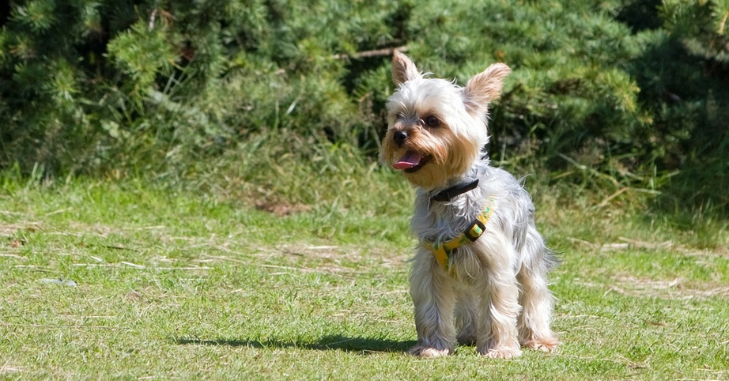
The most common mistake owners make is treating a toy dog as an accessory rather than a dog. Behaviour problems in small breeds are overwhelmingly a training issue, not a size issue — jumping, barking and snapping get tolerated in a 2kg dog in a way they never would in a 30kg one, and the dog learns accordingly.
- Walk them properly. Most toy breeds need 30 to 60 minutes a day, split into two walks. Carrying a healthy adult dog everywhere denies it exercise, stimulation and the chance to meet other dogs.
- Use a harness, never a collar for lead attachment. Pressure on a toy dog’s throat is a direct contributor to tracheal problems.
- Socialise early and widely. The window is roughly 3 to 16 weeks. Small dogs that have not met other dogs, traffic, children and household noise in that period frequently become fearful adults.
- Brush the teeth daily. Introduced gradually from puppyhood with a dog-specific paste, this delays dental disease more effectively than any chew or additive.
- Manage furniture and stairs. A jump from a sofa is proportionally like an adult leaping from a first-floor window. Ramps and steps are worth the small cost.
- Keep them warm. A high surface-area-to-volume ratio means toy dogs lose heat quickly. In a British winter, a fitted coat on walks is practical rather than indulgent.
- Supervise around young children. Toy breeds are easily injured by an unintentional fall or squeeze, and a dog that has been hurt learns to snap defensively.
Choosing Between the Small Breeds
Weight tells you very little about whether a breed suits your household. Temperament and grooming load matter far more day to day.
- Quietest options: Japanese Chin, Maltese and Toy Poodle are generally less vocal than Pomeranians, Chihuahuas and Yorkshire Terriers, all of which are quick to alarm-bark.
- Lowest grooming: smooth-coated Chihuahuas and Prague Ratters need almost nothing beyond an occasional wipe. Maltese, Yorkies and Pomeranians need daily attention plus regular professional grooming.
- Best with children: the sturdier end — Miniature Dachshund, Papillon, Toy Poodle — tolerates family life better than the very lightest breeds, though supervision remains essential.
- Easiest to train: Papillons and Toy Poodles consistently rank among the most trainable of all breeds, small or otherwise, and both do well in obedience and agility.
- Most independent: Chihuahuas and Affenpinschers form intense bonds with one or two people and can be aloof with everyone else.
Whichever breed appeals, consider a rescue as well as a breeder. Toy breeds appear regularly in UK rescue, often because owners underestimated the training, grooming or dental costs — and an adult dog comes with a known temperament, which a puppy never does.
Why Some Dogs Are So Small
The size range in domestic dogs is the widest of any land mammal species — a Chihuahua and an Irish Wolfhound differ by a factor of roughly fifty in body mass while remaining the same species. Genetic research has traced a large share of that variation to a small number of genes, with a variant near IGF1, the gene coding for insulin-like growth factor 1, showing up consistently in small breeds and almost never in large ones. Later work found that the small-size variant is ancient, predating modern breed formation by thousands of years, which suggests small dogs were not invented by Victorian breeders so much as selected from variation that already existed.
What breeders did do was concentrate it. Toy breeds were developed almost everywhere that people kept dogs indoors — Chihuahuas in Mexico, Pekingese and Japanese Chin in imperial East Asian courts, Maltese around the Mediterranean, Yorkshire Terriers in the mills and mines of northern England, where they were bred to kill rats in confined spaces before becoming companion dogs. Those different origins explain why toy breeds vary so much in temperament despite converging on a similar size.
Feeding a Toy Breed
Portion control matters more in a small dog than in almost any other size class, because the margins are tiny. A 2.5kg Chihuahua needs roughly 150 to 220 calories a day depending on age and activity — which is to say a single cheese cube or a slice of ham can represent a tenth of its daily intake. Obesity in toy breeds is common, hard to spot under a long coat, and directly worsens patellar and joint problems.
- Weigh food rather than scooping it. A kitchen scale removes the guesswork that a measuring cup introduces.
- Feed a small-breed formula. The kibble size matters for jaws that small, and the calorie density is calculated for a faster metabolism.
- Split into two or three meals. Puppies under about four months often need four, to guard against hypoglycaemia.
- Count treats into the daily total. Training treats should be broken into pieces the size of a grain of rice; a toy dog neither notices nor needs more.
- Check body condition monthly. You should feel the ribs easily under a thin layer of fat and see a waist from above.
Frequently Asked Questions
What is the smallest dog breed in the world?
The Chihuahua, with a Kennel Club standard weight of 1.8kg to 2.7kg and a shoulder height of about 15cm to 23cm. The Russian Toy, Pomeranian and Prague Ratter overlap at the lower end, but no recognised breed is consistently lighter.
Are teacup dogs a real breed?
No. “Teacup”, “micro” and “pocket” are sales descriptions with no recognition from any kennel club. Dogs bred deliberately below the breed standard carry raised risks of hypoglycaemia, bone fractures, heart defects and shortened lifespans, and they often cost more to insure.
How long do small dogs live?
Longer than large breeds, generally. Most toy breeds live 12 to 16 years, and Chihuahuas commonly reach 15 to 18 with good dental care, correct weight and lifetime insurance in place from puppyhood.
Do small dogs still need walks?
Yes. Most toy breeds need 30 to 60 minutes of daily exercise across two walks, plus mental stimulation. Indoor activity alone leads to weight gain, boredom-driven barking and poor socialisation.
Which small breed is best for a flat?
All of them fit physically, so the deciding factor is noise. Japanese Chin, Maltese and Toy Poodle tend to be quieter than Pomeranians, Yorkshire Terriers and Chihuahuas, which alarm-bark readily and can be a problem with close neighbours.
Are small dogs good with children?
They can be, with supervision and the right breed. Very light breeds are easily injured by an accidental knock or drop, and a dog that has been hurt may snap. Sturdier small breeds such as the Miniature Dachshund, Papillon and Toy Poodle usually cope better with family life.
More from our animal coverage: read about pet insurance options, whether declawing cats is bad, and our guide to drawing a dog in Kleki, or browse the full Pets category.