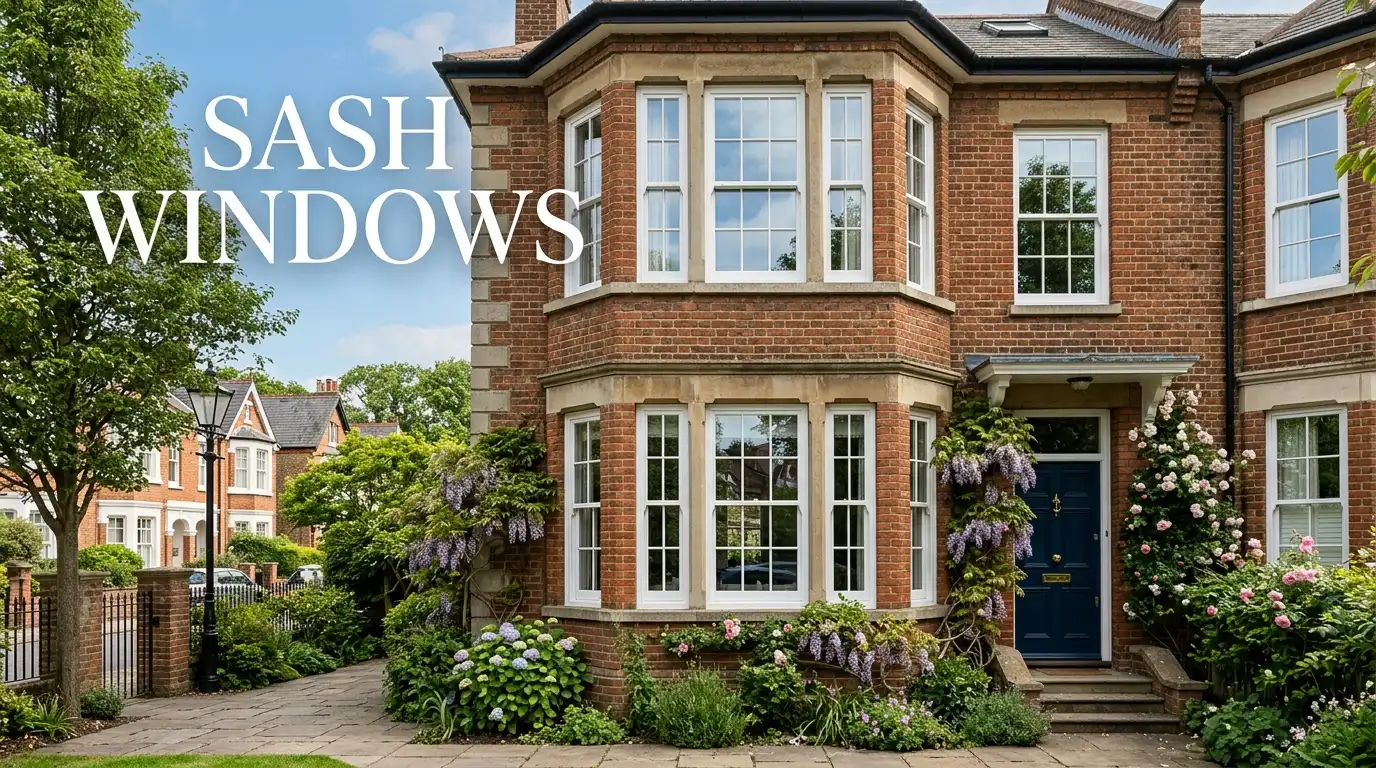
Sash windows suit period homes because their proportions, sliding action, and glazing patterns support traditional British architecture. They can also work in newer homes when owners want a classic vertical window style. The main decisions involve condition, frame material, glazing, maintenance, planning controls, and budget.
| Key point | What UK homeowners should know |
|---|---|
| How they open | One or two glazed sashes slide vertically inside a fixed outer frame |
| Traditional mechanism | Cords, pulleys, and counterweights balance the moving sashes |
| Modern mechanism | Some newer units use spring or other balance systems |
| Main frame choices | Timber, uPVC, and aluminium |
| 2026 replacement cost | Roughly £600 to £3,000 per window, depending on material and specification |
| Energy upgrades | Draught-proofing, secondary glazing, slim double glazing, or full replacement |
| Heritage homes | Listed status and local conservation controls can limit alterations |
| Best first step | Assess the existing frame before assuming replacement is necessary |
A sash window uses one or two glazed frames that slide vertically inside a fixed outer frame. Traditional versions use cords, pulleys, and counterweights, while many modern units use spring balances. Homeowners can repair originals, add draught-proofing or secondary glazing, or choose new timber, uPVC, or aluminium units.
Key Takeaways
- Repair can be cheaper and more sympathetic when original timber remains sound.
- uPVC usually has the lowest replacement cost and needs little routine upkeep.
- Timber suits period character and can be repaired repeatedly with good maintenance.
- Aluminium offers slim frames and low maintenance, but its appearance is more contemporary.
- Secondary glazing and draught-proofing can improve comfort without removing original frames.
- Check heritage restrictions before ordering new units or changing glazing.
How Sash Windows Work
A traditional box sash contains an upper sash, a lower sash, or both as moving sections. Cords pass over pulleys and connect each moving frame to hidden counterweights. Those weights balance the glass and timber, so the window can stay open at different heights.
Opening the lower section admits cooler air near floor level. Lowering the upper section lets warmer indoor air escape from higher in the room. This two-way opening can provide useful natural ventilation without a frame projecting outdoors.
Period Styles and Glazing Patterns
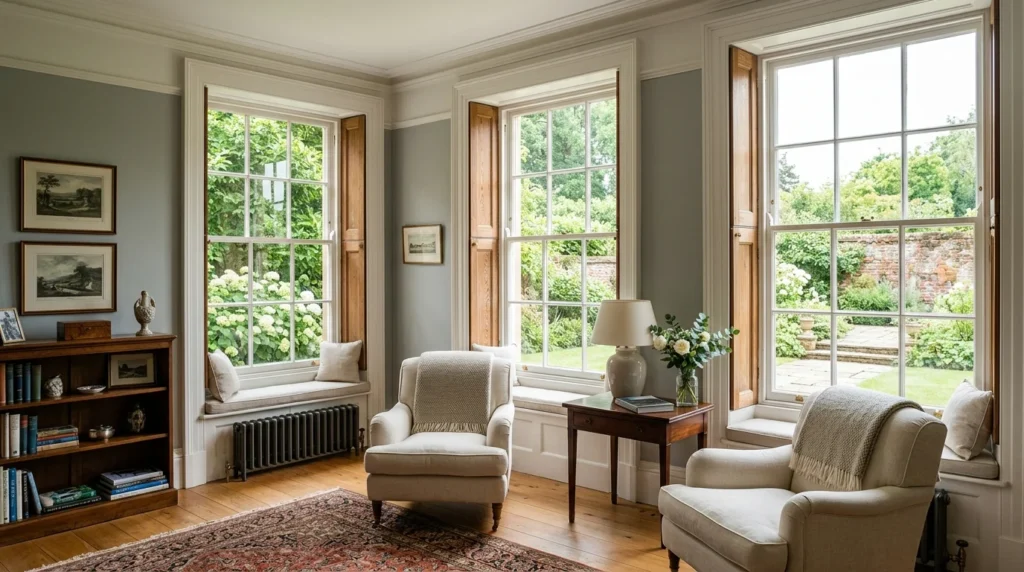
Georgian designs commonly use several small panes divided by narrow glazing bars. Victorian designs often have fewer, larger panes because glass manufacturing improved during that period. Edwardian examples can combine smaller upper panes with a larger lower pane.
These patterns are useful references, not strict rules for every property. Alterations, later replacements, and regional building traditions can change what survives today. Matching proportions matters more than copying a period label without checking the building itself.
What Does a Sash Window Cost in the UK?
Current 2026 guides show a wide spread because material, size, glazing, access, and detailing all affect the quote. Checkatrade lists an average replacement figure of about £1,300 per window. Its June 2026 ranges place uPVC below timber, with aluminium usually sitting between them.
| Option | 2026 guide price per window | Typical reason to choose it |
|---|---|---|
| Restoration | £80–£488 | Existing frame is basically sound |
| Cord replacement | £120–£160 | A broken cord affects operation |
| Draught-proofing | £200–£400 | Frame works but leaks air or rattles |
| uPVC replacement | £600–£1,200 | Lower upfront cost and low maintenance |
| Aluminium replacement | £800–£1,500 | Slim profiles and low maintenance |
| Timber replacement | £1,000–£3,000 | Period appearance, repairability, heritage needs |
Source: Checkatrade’s UK cost guide, updated June 2026.
Treat these figures as budgeting ranges, not fixed prices. Bespoke glazing bars, scaffolding, difficult access, and conservation requirements can raise the final cost. Get several written quotes with the same specification before comparing installers.
Repair or Replace the Existing Window?
Original timber can look tired while remaining structurally useful. Historic England advises retaining and repairing historic windows where they contribute to a building’s significance. Localised decay, failed cords, loose joints, and worn beads can often be addressed without complete removal.
Repair deserves serious consideration when the box frame is stable, and most timber remains sound. A specialist can splice damaged sections, renew cords, ease sticking sashes, and add discreet draught seals. This approach can preserve original material while improving everyday operation.
Replacement becomes more reasonable when decay affects large structural sections or repeated repairs no longer stop the movement. It can also suit later, unsympathetic windows that add little to the property’s character. A condition survey helps separate cosmetic wear from damage that genuinely justifies replacement.
Improving Energy Efficiency Without Losing Character
Older single glazing can create cold surfaces, draughts, and uncomfortable rooms during winter. Energy Saving Trust recommends considering glazing upgrades, draught control, and professional installation where appropriate. The right option depends on the frame’s condition and any heritage restrictions.
Draught-proofing targets gaps around moving sections without replacing the glass. For sliding frames, brush strips usually suit the movement better than simple foam strips. Controlled ventilation must remain available, because sealing every airflow route can increase condensation risks.
Secondary glazing adds another glazed layer inside the existing window. Historic England says suitable secondary glazing can reduce heat loss by more than 60 percent. It can be useful where original joinery should remain visible and largely untouched.
Slim double glazing can sometimes be fitted into existing or replacement timber frames. The added thickness may affect glazing bars, rebates, weights, and historic detailing. Listed properties need careful assessment because glazing changes can require consent.
Timber, uPVC, or Aluminium?
Material choice changes appearance, maintenance, repairability, and price. Timber remains the closest match for traditional joinery and can accept local repairs over time. uPVC and aluminium reduce painting needs, but their frame profiles and finishes create a different visual effect.
| Material | Main strengths | Main drawbacks | Often suits |
|---|---|---|---|
| Timber | Traditional appearance, repairable, flexible detailing | Higher cost, periodic painting | Period homes and heritage work |
| uPVC | Lower cost, low maintenance, good modern glazing options | Thicker profiles, limited repair options | Unlisted homes prioritising budget |
| Aluminium | Slim profiles, stable, low maintenance | More contemporary appearance | Modern homes or mixed-style renovations |
Choose the material after checking the building, not before. A low-maintenance frame can be a poor choice if local rules require traditional detailing. A premium timber unit can also be unnecessary when a sound original only needs repair.
Colour should support the wider exterior rather than follow a trend in isolation. Nearby brick, render, fencing, and doors all change how a painted frame looks. Wrytra’s grey fence paint guidance also shows how daylight and surrounding materials shift grey undertones.
Listed Buildings and Conservation Areas
Pay attention to planning rules before you pay any deposit. Historic England states that replacement work on listed buildings in England can require listed building consent. Conservation areas may also have Article 4 Directions that restrict changes normally covered by permitted development.
Rules differ across UK nations and local authorities, so check the system that applies to your property. The Planning Portal advises contacting the local planning authority when listed or designated status affects proposed work. Early advice can prevent expensive orders for a specification that later needs changing.
For qualifying replacement work, a FENSA-approved installer can issue evidence of Building Regulations compliance and council registration. Other compliance routes are available, and different arrangements apply outside FENSA’s scope. Ask the installer who will handle certification before accepting the quotation.
Common Problems and Sensible Maintenance
Rattling usually points to movement between the sash and surrounding beads. Sticking can result from paint build-up, swelling, distortion, or poorly balanced mechanisms. Broken cords, worn pulleys, failed putty, and local timber decay are also common repair issues.
Maintenance Checklist
- Open and close each moving section slowly.
- Check cords, balances, locks, catches, and restrictors.
- Look for peeling paint, open joints, soft timber, and failed sealant.
- Inspect the sill and lower rails, where water exposure is often greatest.
- Clean drainage paths and keep ventilation openings clear.
- Repair coating failures before bare timber remains exposed for long periods.
Paint systems should match exterior timber and the existing coating. Preparation matters because new paint cannot stabilise loose or decayed material underneath. Wrytra’s furniture paint guide explains the same core principle: match preparation and coating to the substrate.
Are They Worth Choosing?
The design makes most sense when it supports the building’s proportions and character. It also suits situations where vertical opening avoids conflict with paths, balconies, or exterior furniture. Modern glazing and draught control can address many comfort problems associated with neglected older units.
The trade-off is cost and mechanical complexity. A standard casement can be cheaper, while traditional timber requires periodic coating and repair. The stronger approach is matching the window type to the property rather than choosing it for fashion alone.
Interior planning matters too because window size affects daylight, furniture placement, and how spacious a room feels. Wrytra’s small living room ideas show how light colours, layout, and reflective surfaces can improve compact spaces. Window choices should support those wider room decisions, not stand alone.
Frequently Asked Questions
Are Sash Windows Draughty?
Older units can become draughty when timber shrinks, seals wear, or gaps develop around moving parts. That does not mean the design must remain uncomfortable. Brush seals, repair work, glazing upgrades, and secondary glazing can improve comfort substantially.
Can a Sash Window Be Double Glazed?
Yes, new units can use double glazing, and some existing timber frames can accept slim insulated units. The feasibility depends on frame depth, glazing bars, weights, and the condition of the joinery. You may need heritage consent before changing historic glazing.
Is It Better to Repair or Replace an Original Window?
Repair is often sensible when the box frame and most timber remain sound. Replacement becomes more reasonable when structural decay is extensive, or the existing unit lacks heritage value. A specialist condition survey provides better evidence than judging by peeling paint alone.
Do I Need Planning Permission for Replacement?
Many ordinary homes can replace similar-looking windows without a separate planning application. Listed buildings and some designated areas can face tighter controls, including listed building consent or Article 4 restrictions. Always confirm local requirements before ordering made-to-measure units.
How Long Can a Timber Sash Window Last?
Well-made timber joinery has no fixed expiry date. Regular painting, prompt local repairs, and keeping water out can extend service life for many decades. Existing historic examples show why condition matters more than age alone.
Plan the Project Around the Existing Building
Start with a condition survey, then decide whether repair, glazing improvement, or replacement solves the actual problem. Compare like-for-like quotations and confirm any planning or certification duties before ordering. For more renovation ideas, browse Wrytra’s Home Improvement guides and plan the window work alongside the rest of the property.