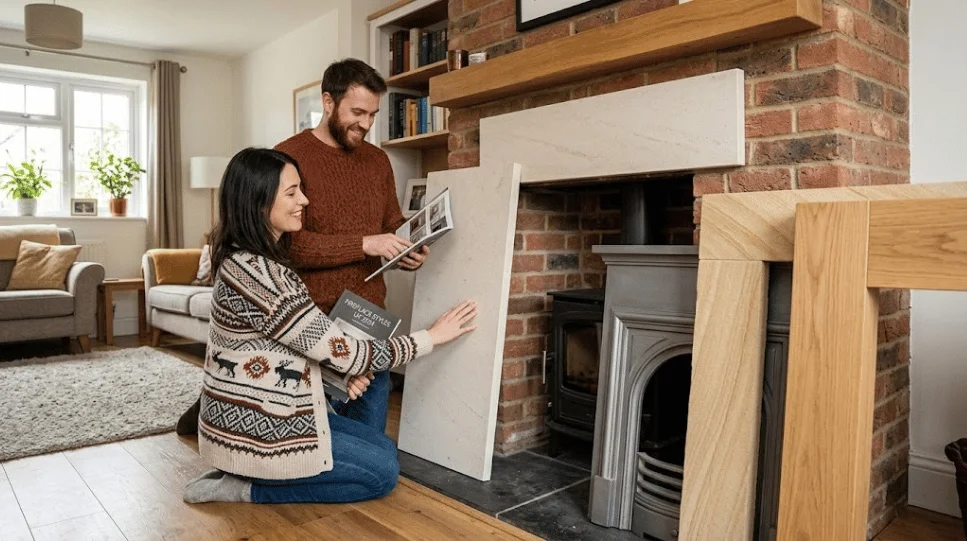
A fireplace surround can change the character of a living room while giving the fire a more finished appearance. The right design should suit your room, fireplace type, available space, and practical safety requirements. Material matters too, especially when the surround sits near a working gas fire, open fire, or stove.
Quick answer: Choose a surround by checking your fire type, opening dimensions, room proportions, material, and required heat clearances. Wood and MDF suit many decorative or electric installations. Stone, marble, slate, and other non-combustible materials can suit working fires, subject to appliance instructions and applicable UK requirements.
| Consideration | What to check | Why it matters |
|---|---|---|
| Fire type | Electric, gas, stove, or open fire | Determines material and clearance requirements |
| Measurements | Opening, overall width, height, depth | Prevents poor fit and awkward proportions |
| Material | Wood, MDF, marble, limestone, slate, cast iron | Affects appearance, weight, heat resistance, and care |
| Room size | Wall width, ceiling height, furniture | Helps the fireplace look proportionate |
| Style | Traditional, period, modern, minimalist | Connects the fireplace with the room |
| Installation | Weight, fixings, wall condition | Heavy surrounds need secure installation |
| Safety | Manufacturer clearances and applicable regulations | Reduces heat and fire risks |
What Is a Fireplace Surround?
A surround is the decorative structure framing the fireplace opening or fire appliance. It commonly includes two vertical sides and a horizontal mantel or shelf. Some designs combine the surround with a hearth, back panel, or complete fireplace suite.
The surround has a strong visual effect because fireplaces naturally attract attention. Its width, height, colour, and material can change how large the whole wall appears. A well-proportioned design should complement the fire rather than compete with it.
A surround is different from the hearth beneath a working fireplace. The hearth has an important protective role in many installations involving combustion appliances. UK requirements can vary with the appliance and installation, so decorative appearance cannot be the only consideration.
Choosing the Best Surround Material
Material is one of the first decisions worth making because it affects both appearance and practical suitability. Common UK choices include timber, MDF, marble, limestone, slate, and cast iron. Each creates a different finish and has different installation considerations.
Wood and MDF
Wood can bring warmth and traditional character to a living room. Oak and painted timber can work with period interiors or softer contemporary schemes. MDF provides another option when you want a smooth painted finish at a lower price.
Combustible materials require particular care around appliances that produce substantial heat. Always follow the fire manufacturer’s stated distances from combustible surfaces. A decorative electric installation may have different requirements from a stove or open fire.
Painted surrounds can also connect with other furniture around the room. Wrytra’s furniture paint guide explains how finish, preparation, and surface type affect painted furniture. That advice can help when refreshing a mantel with a suitable paint finish.
Marble and Limestone
Marble creates a polished look and works in both traditional and contemporary interiors. Natural veining means individual pieces can vary noticeably in pattern and tone. Its weight also makes correct support and installation particularly important.
Limestone generally offers a softer and more understated appearance. Neutral colours work well with timber floors, warm whites, and muted wall colours. Natural stone can also make a fireplace feel like a permanent architectural feature.
Stone Federation guidance covers secure installation methods for natural and artificial stone surrounds. Heavy stone components must be properly fixed, not treated as freestanding decoration. Professional fitting is sensible where the weight or wall construction creates uncertainty.
Slate and Cast Iron
Slate provides a darker, simpler finish that can work particularly well with traditional fireplaces and stoves. Its restrained appearance also suits modern rooms with limited decoration. Surface texture can add character without introducing elaborate detailing.
Cast iron is strongly associated with Victorian and other period fireplace designs. Original and reproduction surrounds can provide detailed patterns that suit older British properties. The correct combination depends on the fireplace opening and intended fire type.
Owners of listed buildings should take extra care before altering historic fireplaces. Historic England advises that listed building consent may be required for some fireplace alterations. Checking before removal can prevent the loss of an important original feature.
How to Measure for a New Surround
Measure the fireplace before choosing a design, even when several models appear visually similar. Record the opening width and height, plus the available chimney breast or wall width. Check overall height carefully if a television, mirror, shelving, or artwork will sit above it.
Next, compare the internal opening with the dimensions of your fire, insert, or fireplace chamber. Also check the manufacturer’s required clearances rather than relying on appearance. A surround that physically fits may still be unsuitable for the appliance.
Finally, consider the overall proportions from normal viewing positions in the room. An oversized mantel can make a compact lounge feel crowded. A narrow design on a broad chimney breast can look undersized even when every measurement technically fits.
Fireplace Surround Ideas for Different UK Homes
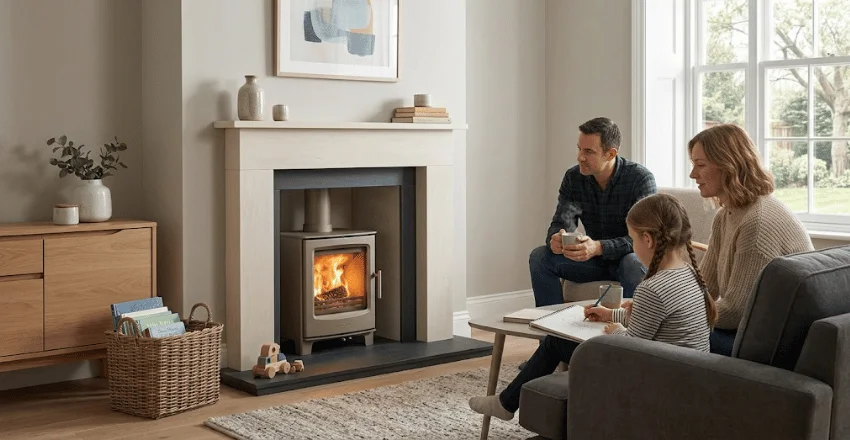
Period properties often benefit from materials and proportions that acknowledge the building’s existing character. Cast iron, timber, limestone, slate, and marble can all work depending on the property’s age. Assess original features before replacement, as restoration may preserve more character.
Modern rooms usually suit simpler profiles with clean horizontal and vertical lines. Pale stone can create a quiet architectural feature, while darker slate produces stronger contrast. A restrained surround also gives furniture and artwork more visual space.
Compact living rooms need particular attention to scale. Slim profiles and lighter colours can reduce the fire’s visual weight. Wrytra’s Home Improvement section also contains ideas for planning furniture, colour, storage, and smaller living spaces.
Family living spaces benefit from keeping decoration controlled around a strong focal point. Closed storage can stop the fireplace wall competing with everyday clutter. Wrytra’s toy storage ideas offer practical ways to keep shared rooms organised.
Surround Safety and UK Requirements
Safety becomes more important when the fireplace contains a gas appliance, solid-fuel appliance, stove, or open fire. Heat can affect nearby materials even when the surround itself appears substantial. Manufacturer instructions should therefore guide material choices and minimum clearances.
In England, Approved Document J provides guidance concerning combustion appliances, hearths, fireplaces, flues, and chimneys. Requirements elsewhere in the UK can differ, so check the rules applying to your location. Appliance-specific instructions may also require greater clearances than a general design guide suggests.
Stone surrounds need secure fixing because their weight can create a serious hazard if installation fails. Stone Federation Great Britain has published installation guidance addressing this issue. Secure heavy components using methods appropriate for the surround and supporting wall.
Don’t assume every decorative mantel suits every working fire. Retail products can have restrictions concerning appliance type and heat exposure. Check the manufacturer’s specifications before ordering rather than adapting an unsuitable product later.
How Much Does a Fireplace Surround Cost in the UK?
Prices vary substantially because the category includes simple MDF mantels, natural stone surrounds, bespoke work, and restored antiques. Current mainstream retail examples can begin around the low hundreds of pounds. Premium stone, custom fabrication, and restored period pieces can cost considerably more.
Installation creates another cost to consider when comparing products. Lightweight self-assembly models can be simpler to fit than large stone components. Wall repairs, hearth work, chimney alterations, and professional appliance installation can increase the final project cost.
Set your budget around the complete fireplace, not just the surround. Include the hearth, insert, fire appliance, delivery, installation, and any decorating work. This gives a more useful figure than comparing mantel prices in isolation.
Common Mistakes to Avoid
Buying before measuring is one of the easiest ways to create problems. A design can look correctly proportioned online but overwhelm the actual room. Check internal and external dimensions before ordering.
Choosing appearance before appliance compatibility is another avoidable mistake. A timber surround may look perfect beside a stove but fail the required combustible-material clearances. Confirm the fire manufacturer’s instructions before settling on materials.
Poor fixing can also turn a beautiful surround into a safety concern. This matters particularly with stone and other heavy components. Use the manufacturer’s fixing system, or a competent installer, when the job requires specialist knowledge.
Finally, avoid adding heat-sensitive decorative finishes near a working fireplace without checking their suitability. This includes wall coverings and lightweight decorative materials around the fireplace area. Wrytra’s guide to polystyrene ceiling tiles also explains why fire performance deserves attention when selecting interior materials.
How to Choose the Right Design for Your Room
Start with the existing architecture instead of selecting a surround in isolation. Look at ceiling height, chimney-breast width, flooring, doors, skirting boards, and major furniture. These features provide useful clues about suitable scale and detailing.
Next, decide whether the fireplace should blend into the room or become its strongest feature. Pale stone and simple painted designs can create a quieter effect. Veined marble, dark slate, or detailed cast iron can command more attention.
Keep the mantel styling consistent with that decision once installation is complete. Too many small decorative objects can weaken a clean architectural design. A mirror, artwork, or limited group of objects often provides enough visual balance.
Is a New Surround Worth It?
Replacing a dated surround can update a room without redesigning every surface around it. The change is especially effective when the fireplace already occupies the main visual wall. Material and proportion usually matter more than decorative complexity.
A new surround can also help reconnect a fireplace with the property’s style. Period-inspired designs can restore character lost during previous renovations. Simple contemporary surrounds can make older mismatched installations feel more coherent.
The strongest result comes from treating the fire, surround, hearth, wall, and room as one composition. Check practical requirements first and make decorative decisions within those limits. That approach reduces expensive changes after installation begins.
Frequently Asked Questions
What is the best material for a fireplace surround?
The best material depends on the appliance, room style, budget, and maintenance preferences. Wood and MDF suit many decorative applications, while stone and slate offer non-combustible options. Always confirm suitability against the fire manufacturer’s installation instructions.
Can I put a wooden surround around a log burner?
Possibly, but only if you can maintain the required distance from combustible materials. That clearance depends on the stove, flue arrangement, and installation design. Never choose a timber mantel using appearance alone.
How wide should a fire surround be?
No single width works for every room or fireplace opening. Measure the opening, chimney breast, available wall, and the surround’s external dimensions. The final design should also leave enough visual space around nearby furniture.
Can I install a surround myself?
Some lightweight decorative surrounds are designed for straightforward assembly and wall mounting. Heavy stone surrounds require much greater care because secure fixing is essential. Work involving gas, solid fuel, flues, or structural alterations may require appropriately qualified professionals.
Do I need permission to change an old fireplace?
Most straightforward decorative changes will not involve a listed building. Listed properties can be different because fireplaces may contribute to their historic character. Seek appropriate advice before removing or materially altering an important original feature.
Make the Fireplace Fit the Whole Room
A successful fireplace starts with measurements, appliance compatibility, and safe material selection. Style comes next, with the room’s age and proportions guiding the final design. Taking these decisions in order makes costly mismatches less likely.
Compare samples in the room before committing to colour or stone. Check dimensions again before ordering and retain the appliance installation instructions. For working fireplaces, use professional advice whenever clearances, flues, gas, or structural work create uncertainty.
The result should look intentional, not added after the room was designed. A well-chosen surround connects the fire with the wall, flooring, furniture, and architecture. That makes it both a practical frame and a lasting focal point.