
Hiring a WordPress SEO agency is mostly a question of matching the provider to the size of your site. A four-page brochure site does not need a £4,000 monthly retainer. A 900-page shop carrying a decade of old plugins probably does. This guide compares the four real options on price, scope, and commitment, then gives a straight recommendation.
A WordPress SEO agency is a team that improves how your WordPress site ranks, working on the theme, the plugins, the permalink structure, and the content together. In the UK, most charge between £750 and £4,000 a month. Specialists handle the CMS internals themselves rather than sending every fix over to your developer.
The Four Options Compared
Most UK businesses choose between four providers. Agency sites almost all say “custom pricing” and leave it there, so the table below gives real UK monthly price ranges in pounds for each type of provider. Treat them as typical market quotes rather than figures from a published survey. Nearly all of them exclude VAT.
| Option | Typical UK cost per month | What they cover | Usual commitment | Suits |
| Specialist WordPress shop | £1,000 to £3,500 | Works inside the site: theme, plugins, hosting, schema, content | 3 to 6 months, then rolling | Sites where the CMS itself is the bottleneck |
| Full-service digital agency | £1,500 to £5,000 | Search alongside paid, social, and design, often across several teams. | 12 months | Brands that want one supplier for everything |
| Freelance consultant | £400 to £1,500 | One person, strong on strategy, lighter on delivery volume | Rolling monthly or day rate | Small sites and tight budgets |
| In-house hire | £3,000 to £5,000 all in | Full control, though you also buy the tools and the training. | Permanent | Sites publishing weekly, or several sites at once |
What a WordPress SEO Agency Actually Does

Three jobs sit under that title. Technical work comes first, making the site fast, crawlable, and free of the duplicate URLs WordPress creates by default. Content is second: WordPress SEO agency mapping pages to real search demand, then writing or rewriting them. Authority is third, which usually means digital PR, outreach, or supplier listings.
A decent month should produce something you can see in the admin area. Not a slide deck.
- Fixes pushed to a staging copy, tested, then released to the live site
- Two or three pages rewritten or merged, with the old URLs redirected
- Schema markup added through the SEO plugin rather than pasted into the theme
- A short written note explaining what moved and why it moved
Ask for the numbers behind all of it. Rankings alone will not tell you whether the spend is doing anything. Agree up front on the digital advertising metrics that matter, then hold the team to them.
Key Takeaways
- Expect £750 to £4,000 a month in the UK, plus VAT, for ongoing work on a WordPress site.
- A specialist earns the premium only if your bottleneck is the site itself: speed, plugins, or structure.
- Under roughly 30 pages, a freelancer is the honest answer.
- Get staging access, a redirect plan, and ownership of your own analytics agreed upon before you sign.
- Six months is a fair first commitment. Twelve is not, unless the monthly rate drops for it.
What WordPress SEO Costs in the UK
Retainers are the norm, and they buy time rather than a fixed deliverable. A one-off audit for a mid-sized site runs from £1,000 to £3,000. A good one arrives with a prioritized fix list your developer can work straight through. Day rates sit between £350 and £900. Digital PR and link acquisition are usually quoted separately, often £500 to £2,500 a month on top.
Two warnings on price. Anything under about £400 a month is almost always automated reporting with a token blog post attached, because nobody can staff real work at that number. Anything above £5,000 should come with named people, a written plan for the quarter and a call every fortnight.
Budget across channels rather than pouring everything into one. If a marketplace already brings in most of your orders, weigh Amazon online marketing and advertising against a full year of organic work before you commit.
The WordPress Work Generic Agencies Skip

Core Web Vitals on Shared UK Hosting
Slow WordPress sites are usually slow at the server, not in the theme. Cheap shared hosting from a UK reseller can add half a second of server response time before a single image starts loading. A specialist checks time to first byte first, then says plainly whether caching will fix it or whether you need to move hosts. Generic agencies tend to recommend a caching plugin and stop there.
Plugin Bloat
Plugin count matters less than what each plugin loads on every page. A site running 12 plugins can beat one running 30 if the 12 are lean. Sliders, heavy page builders, related posts widgets, and abandoned form tools are the usual suspects. Ask any candidate to name the three plugins they would remove from your site and what they would put in their place.
Yoast or Rank Math
Either is fine. Both handle titles, meta descriptions, schema, and XML sitemaps well enough for almost every site. Rank Math bundles more into its free version, while Yoast is calmer and better documented. Configuration matters far more than the choice. Noindex the empty archives. Switch off the author archive on a one-person blog. Stop the plugin from fighting your theme over canonical tags.
Permalinks, categories, and tags
WordPress will happily publish hundreds of thin archive pages. Tags used once and never again. Category pages holding two posts. Date archives nobody has ever opened. A specialist prunes those, settles on a clean post name permalink structure, and redirects anything that changes. Altering permalinks on a live site without redirects is the quickest way to lose traffic you already had.
Staging and Safe Migrations
No responsible team edits a live theme. Work belongs on a staging copy, gets tested there, then goes across. Ask how they roll back a bad release. If the answer involves a backup plugin and crossed fingers, keep looking.
Contracts, Notice Periods, and What You Should Own

Contract length is where the real money gets decided. A rolling monthly deal costs more per month and keeps the pressure on, which suits a first engagement. A twelve-month commitment should buy you a lower rate, not simply tie you in. Watch the notice period too, because 90 days on a rolling contract is not really rolling.
Own your own assets. Three things belong in your name, without exception:
- Google Analytics and Search Console properties, with the agency added as a user
- The hosting account and the domain registration
- Every piece of content written for you, with no license conditions attached
Seven Questions to Ask Before You Sign
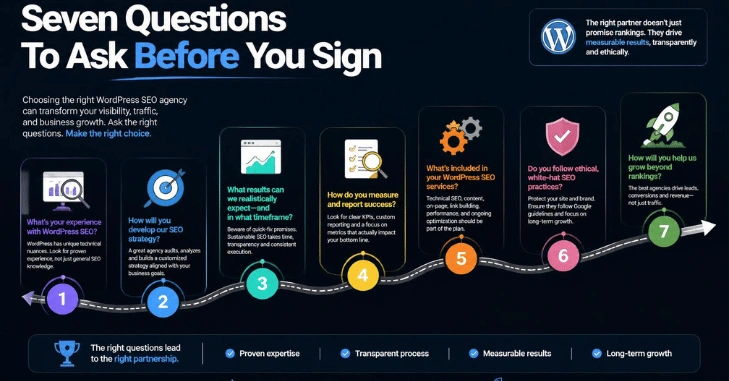
Send these by email and read the replies slowly. Vague answers now predict vague reporting later. The job itself keeps shifting. Search work still turns up on most lists of AI-proof jobs, because judgement beats automation on the decisions that carry risk.
- Which WordPress sites have you worked on, and may I speak to one of those clients?
- Do you work on a staging site, and who pushes changes to live?
- What would you change in the first 30 days, before any content is written?
- Which SEO plugin do you prefer, and why that one for my site specifically?
- Who writes the content, and are they briefed by the person doing the analysis?
- What is the notice period, and what happens to the work if I leave?
- Which three numbers will you report on every single month?
Our Recommendation
WordPress SEO Agency: Choose by bottleneck, not by budget. If your site is slow, tangled, or built on a page builder carrying 40 plugins, a specialist shop will pay for itself within the first quarter. Nobody else will touch your hosting.
If the site is technically healthy and the real problem is 15 pages and no content plan, a full-service agency or a strong freelancer gives better value. For most UK small businesses, that means a freelancer at £600 to £1,200 a month for six months, then an honest review of what changed. Move up a tier only when the freelancer runs out of hours, which is a good problem.
Leave the in-house hire until you publish weekly and run more than one site. One person rarely covers technical work, writing, and outreach to the standard three specialists’ reach between them. The math only works once the volume is there.
Frequently Asked Questions
Yes. Out of the box, it produces clean HTML, editable titles, and a sitemap once you add a plugin. Trouble arrives later, when themes, builders, and years of plugins pile up on top of each other.
If your problems are content and links, any competent team will manage. If they are speed, site structure, or a messy migration, hire a WordPress SEO agency that can edit the site rather than email your developer about it.
Three to six months for most sites. Technical fixes can move rankings within weeks. New content and new links take longer, and competitive UK sectors often need a full year.
For a small local site, yes. Install one plugin, write proper titles, sort your permalinks, and publish something useful each month. Bring in help once the site grows past what you can hold in your head.
Guaranteed rankings. Mystery link packages—anyone who will not name the people doing the work. Long lock-ins with no exit clause are the other one to walk away from.
Shortlist three providers, send them the seven questions above, and compare the replies side by side. The one that describes your site accurately before pitching anything is usually the one worth trusting.