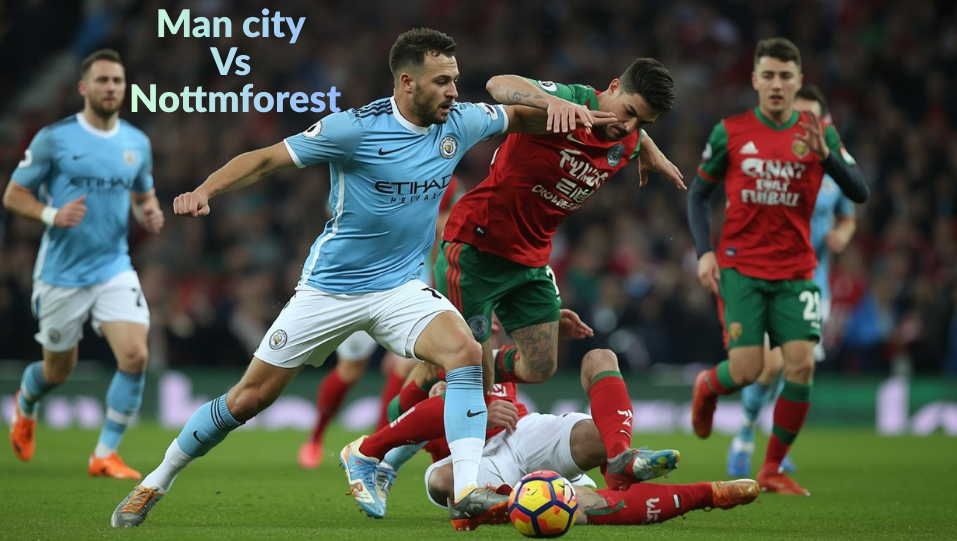
The matchup between Man City vs Nottm Forest is always a fascinating test of contrasting styles, tactical ingenuity, and competitive spirit. On paper, Manchester City often enters as the dominant force, boasting elite talent, deep squad depth, and an established tactical identity. At the same time, Nottingham Forest often adopts a gritty, resilient approach to unsettle more prestigious opponents.
In this comprehensive breakdown, we explore game strategies, key player performances, tactical insights, historical context, recent form trends, and expert forecasts ahead of the upcoming clash. Whether you are a die-hard supporter or a neutral fan of exciting football, this article will give you a full understanding of what to expect from this intriguing fixture.
| Aspect | Manchester City | Nottingham Forest | Notes / Insights |
| Game Strategy | Possession-based, positional play, high pressing | Compact defense, low block, counterattacks | City controls tempo; Forest relies on defensive organization and quick transitions. |
| Formation | Fluid 4-3-3 / 4-2-3-1 | 4-4-2 / 4-5-1 | City rotates front line; Forest focuses on defensive structure |
| Key Players | Creative midfield maestro, dynamic forwards, overlapping fullbacks | Defensive anchors, midfield disruptors, pacey forwards | Each team has players who can change the game in their respective roles |
| Tactical Insights | High ball retention, interchanging triangles, and wide overloads | Man-oriented marking, quick counters, direct balls | City seeks to dominate possession; Forest aims to exploit gaps efficiently |
| Recent Form / Momentum | Strong attacking numbers, tight defense, and control of midfield battles | Compact defending, strategic risk minimization, occasional breakaways | Current momentum favors City’s dominance; Forest relies on resilience |
| Strengths | Tactical versatility, creative midfield, and high pressing efficiency | Compact defense, counterattacking speed, set-piece organization | City dominates possession; Forest excels in transition and defense |
| Weaknesses | Vulnerable to rapid transitions, the high line occasionally breached | Limited sustained possession, rare goal creation | Key vulnerabilities that may decide match outcomes |
| Historical Rivalry | Frequent Premier League clashes; City typically dominant | Occasional giant-killing surprises; passionate fanbase | Rivalry context adds intensity to the match |
| Expert Predictions | Likely possession control, multiple scoring opportunities | Will defend deep, aim to capitalize on counters | City are the favorites, but Forest could exploit mistakes |
Historical Rivalry and Head-to-Head Context

Though not the most storied rivalry in English football, matchups between Manchester City and Nottingham Forest often provide captivating narratives. City’s rise to domestic and European prominence in the past decade has shifted the dynamic, but Forest’s fighting spirit ensures they are never an easy opponent.
Head-to-head dynamics:
- City’s dominance in recent years
- Forest’s moments of resilience and surprise results
- Strategic contrasts between established power and underdog mentality
Key Historical Elements
- Tree emblem and heritage: Nottingham Forest dates back to 1865, while Manchester City has grown into a global powerhouse with major trophies.
- League fluctuations: Forest’s stints in the lower divisions meant fewer clashes, yet whenever they meet in the top flight, the match carries significant intrigue.
While overall records favor City, past encounters have included memorable upsets, defensive masterclasses by Forest, and moments where tactical discipline forced elite teams into narrow wins.
Man City vs Nottm Forest: Game Strategies
At the heart of any analysis lies how each team sets up and implements its game plan. This section highlights formation structures, defensive principles, pressing triggers, and transitional play styles.
Manchester City: Possession and Positional Play
The City’s strategy under its current management revolves around possession dominance and fluid ball progression. The team maintains a high possession percentage, builds from the back, creates overloads in wide areas, and utilizes false-nine movement along with a rotational front line. By controlling the tempo from kick-off, City forces opponents to chase while defending in structured phases.
The city’s tactical advantages include superior ball retention, interchanging midfield triangles, and quick vertical progress through central zones, all of which allow it to dominate matches and break down organized defenses effectively.
Nottingham Forest: Organization, Compactness, and Counter Threats
Nottingham Forest typically prioritizes defensive organization and compact lines, inviting pressure but aiming to exploit transitional moments. Their tactical approach includes low-block defending, man-oriented marking in key areas, quick counterattacks once possession is regained, and direct balls to facilitate rapid forward progression.
While these defensive setups can appear reactive at first glance, Forest’s plan is systematic: limiting spaces, daring opponents to break them down, capitalizing on errors, and making the most of counterattacking opportunities.
Tactical Insights: What Separates the Two Approaches

The clash between these two tactical philosophies creates an engaging on-pitch narrative.
Possession vs. Transition
| Tactical Component | Manchester City | Nottingham Forest |
| Average Possession | High (dominant) | Low (strategic) |
| Build‑Up Style | Elaborate & patient | Quick & direct |
| Defensive Shape | High press | Compact block |
| Primary Threat | Passing patterns | Rapid counters |
| Risk Appetite | High control | Conservative structure |
City’s approach revolves around prolonged possession and progressive buildup, using short passing and movement to destabilize compact defenses. On the other hand, Forest prefers to minimize risk, maintain shape, and invite the opponent to make mistakes before striking quickly in transition.
Pressing and Defensive Actions
- City employs triggered pressing after losing the ball, often within specific zones.
- Forest’s pressing is situational, usually aimed at quickly regaining possession before retreating into shape.
Key Player Performances to Watch
This section highlights players who can be decisive in shaping the outcome of this contest.
Manchester City: Potential Game Changers
Manchester City boasts several players capable of altering the flow of the match. Their creative midfield maestro orchestrates attacks, unlocks defenses, and maintains the team’s tempo throughout the game.
The dynamic forward line is skilled at exploiting small gaps, rotating fluidly, and confusing defenders. At the same time, fullbacks provide crucial width, deliver precise crosses, and execute overlapping runs that stretch the opposition line. Collectively, these players enable City to dominate possession and create scoring opportunities.
Nottingham Forest: Standout Contributors
Nottingham Forest relies on key individuals who can shift the momentum during critical moments. Defensive anchors play a vital role in maintaining a compact structure and protecting channels, ensuring the team remains difficult to break down.
Midfield disruptors focus on breaking up play and initiating immediate counter transitions, while pacey forwards exploit space behind defensive lines with direct runs, creating goal-scoring opportunities. Each of these players brings unique strengths that can significantly influence Forest’s execution of its game plan.
Recent Form and Momentum

- City enters with a series of consistent performances
- Often dominates possession
- Creates high-quality chances through methodical buildup and incisive final third play
- Strong attacking numbers
- Tight defensive organization
- Few goals conceded
- Frequent control of midfield battles
- Results reflect grit and resilience rather than attacking dominance
- Defensively organized but limited scoring opportunities
- Goals often come from transitional moments or set pieces
- Compact defending
- Strategic risk minimization
- Occasional breakaway efficiency
- Comparing these patterns demonstrates how momentum and form can dictate strategic choices on match day.
Match Scenarios and What to Expect
Different phases of the match may unfold in predictable patterns based on the teams’ tactical identities. In the early phases, Manchester City is likely to dominate possession, while Nottingham Forest will focus on absorbing pressure and testing City’s positional discipline.
During the middle phase, midfield battles intensify as City probes for gaps, and Forest may push slightly higher if their initial defensive lines remain solid. In the final minutes, if City is leading, Forest may adopt a more adventurous approach to chase the game. Still, if the score remains tight, they are likely to compact further and seek opportunities to counterattack.
Expert Predictions and Tactical Forecasts
When analysts break down the matchup, several key aspects determine realistic expectations.
Likely Outcomes Based on Tactical Profiles
- City’s control of ball progression could yield multiple scoring chances.
- Forest’s transitional threat may cause trouble if the City’s defensive line is high.
Scenario breakdowns include:
- City dominates possession and wins comfortably
- City scores early, Forest adapts to counterattack
- Forest earns a surprise point through disciplined defending
Experts often weigh both team cohesion and tactical discipline when making their predictions.
How Coaches Influence the Tactical Narrative
The managerial battle plays a major role in shaping each team’s strategy.
City’s Leadership
- Focus on gameplay continuity
- Emphasis on ball retention and tactical control
- Rotational depth to maintain energy across competitions
Forest’s Leadership
- Strong focus on teamwork and defensive unity
- Adaptability to different opponents
- Tactics that maximize strengths with limited possession
Each leadership style speaks to broader philosophies: the City’s emphasis on brand identity versus Forest’s emphasis on structural resilience and opportunistic attacking.
Strengths and Weaknesses: A Side-by-Side Look
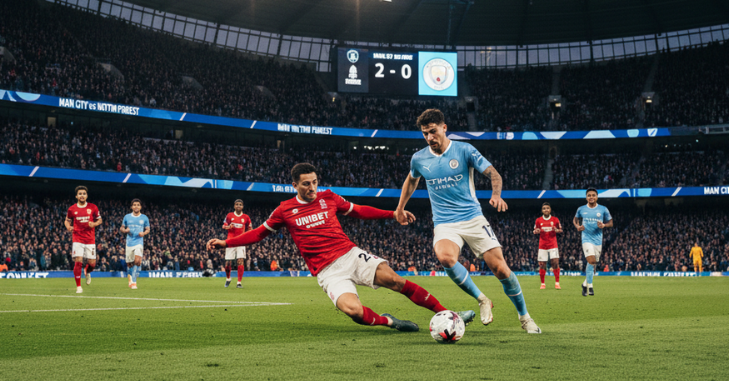
A quick comparative look at the strengths and weaknesses of both teams reveals potential advantages and vulnerabilities that could shape the match. Manchester City’s strengths include a strong, creative midfield, tactical versatility, and high pressing efficiency, which allow them to dominate possession and control the game. Nottingham Forest, on the other hand, relies on a compact defensive structure, speed in counterattacks, and well-organized set pieces to challenge opponents and exploit transitional moments.
When examining weaknesses, Manchester City can be vulnerable to rapid transitions if caught out defensively, and quick attackers occasionally breach their high defensive line. Nottingham Forest struggles to maintain sustained possession, and its opportunities to create goals are often limited, requiring precise execution to capitalize on chances. Understanding these dynamics helps fans and analysts appreciate how the match could unfold and which team might gain the upper hand in critical moments.
Key Battlegrounds on the Pitch
Certain transitions and areas of play are especially decisive:
- Midfield control – dictating tempo
- Wide areas – stretching compact defenses
- Set pieces – countering structured formations
- Quick counters – exploiting transitional vulnerabilities
Who wins these battles will often dictate the overall match narrative.
Match Comparison Summary
| Element | Manchester City | Nottingham Forest |
| Typical Possession | Very High | Low–Moderate |
| Primary Style | Possession & Build‑Up | Counter & Compact |
| Expected Goals | High | Lower |
| Defensive Approach | High Press & Organized Lines | Deep Block |
| Creative Threat | Very High | Moderate |
| Rapid Transition | Moderate | High |
| Set Piece Focus | Medium | High |
| Recent Consistency | Strong | Variable |
Final Thoughts
Breaking down this fixture involves more than simply noting who has stronger players. Tactical identities, recent form, matchup specifics, coaching philosophies, and in-game adaptability all contribute to the final result. While one team may be favored based on statistics and reputation, football remains unpredictable, especially when underdogs employ disciplined, tactical approaches.
In essence, this clash between structured possession and organized defense offers a fascinating showcase of both teams’ broader football identities. Whether you’re expecting a dominant display or an upset, understanding these elements heightens your appreciation for this exciting contest.
Want to know about Best Places in Italy: A Complete Travel Guide to Rome’s Ancient Ruins, Venice’s Canals, Florence’s Renaissance Art, Tuscany’s Vineyards, and the Amalfi Coast’s Breathtaking Views Check out our Travel category.
FAQs
Midfield control is essential. If City dominates central areas, they can create sustained pressure. If Forest disrupts passing lanes and wins second balls, they increase their chances of staying competitive.
For City, creative midfielders and dynamic forwards often drive attacking play. For Forest, defensive anchors and pacey forwards play a crucial role in maintaining structure and launching counterattacks.
Manchester City often controls possession and dictates tempo. However, Nottingham Forest’s compact defensive setup can frustrate opponents and create chances through rapid transitions.
The fixture is compelling because it highlights contrasting football philosophies. Manchester City typically emphasizes possession, tactical control, and attacking depth, while Nottingham Forest relies on defensive organization, resilience, and counterattacking opportunities.