


Good handwriting is more than legible letters; it requires motor control, visual guidance, and cognitive planning. For beginners and students, developing neat, consistent writing can be challenging because it requires fine motor skills, spatial awareness, and repeated practice. Handwriting lines provide essential visual boundaries for letter height, alignment, and spacing, guiding proper formation and supporting readability.
They also reinforce motor memory, encourage word spacing, and build cognitive awareness for structured writing. This guide explores the types, uses, techniques, and guidelines of handwriting lines and their role in writing development for learners of all levels.
| Category | Description | Ideal Users | Benefits |
| Single Lines | One straight line per row | Older students, adults | Maintains alignment, basic guidance |
| Double Lines | Two solid lines with a dotted middle line | Early learners | Guides letter height, supports lowercase letters |
| Triple Lines | Baseline, midline, and top line | Young children | Teaches proper letter proportions, ascenders, and descenders |
| Dashed / Dotted Lines | Solid top and bottom lines with dashed middle | Beginners | Reinforces consistency in uppercase and lowercase letters |
| Specialty / Grid Lines | Grids or boxes for cursive or advanced practice | Advanced learners, calligraphy students | Supports advanced writing, spacing, and letter connections |
| Standard Spacing | 8–12 mm | Early learners | Allows room for larger letters and motor control practice |
| Adjusted Spacing | 6–8 mm | Older students | Encourages precision and faster writing |
| Techniques / Guidelines | Proper pencil grip, posture, tracing, consistent practice, gradual reduction of guidance | All learners | Builds muscle memory, independence, and confidence |
What Are Handwriting Lines?

Handwriting lines are pre-printed lines on paper designed to help writers, especially beginners and students, form letters correctly and consistently. They provide visual cues for letter height, baseline alignment, and letter and word spacing.
Importance
- Help maintain consistent letter size
- Improve legibility and neatness
- Encourage proper spacing between words and letters
- Support learning for students with motor skill challenges
Handwriting lines are used in classrooms, tutoring sessions, and at home to help children and beginners practice writing in a structured way.
Types of Handwriting Lines
There are several types of handwriting lines, each designed for different levels of writing development.
1. Single Lines
Single lines consist of one straight line per row and are often used in notebooks for older students or adults. They help maintain straight text but provide minimal guidance for letter height.
2. Double Lines
Double lines feature two horizontal lines per row with a middle guideline, making them ideal for beginners learning letter proportions. For example, a dotted middle line indicates the height of lowercase letters.
3. Triple Lines
Triple lines include a baseline, midline, and top line. They are commonly found in early handwriting workbooks and provide clear boundaries for ascenders (b, d, h) and descenders (g, j, p).
4. Dashed or Dotted Lines
Dashed or dotted lines have solid top and bottom lines with a dashed middle line. They help beginners understand proper letter height and encourage consistency in both uppercase and lowercase letters.
5. Specialty Lines
Specialty lines, such as grids or boxes, are typically used in advanced handwriting or calligraphy exercises.
Understanding Line Spacing

Line spacing is critical for effective handwriting development, as it directly affects letter formation, readability, and overall presentation. For early learners, a standard line spacing of 8–12 mm is typically used, providing enough room for larger letters and supporting motor control practice.
Older students often use narrower spacing, around 6–8 mm, which allows for more precise letter formation and encourages faster writing while maintaining neatness. When choosing line spacing, beginners benefit from wider spacing for easier control, older students can work with narrower spacing for efficiency, and students with fine motor difficulties may require extra spacing to support proper letter formation and comfort while writing.
Uses of Handwriting Lines
- Letter formation: Helps learners understand where letters start and end
- Word spacing: Encourages consistent spacing between words
- Alignment: Keeps text straight and avoids slanting
- Cursive practice: Guides fluid letter connections
- Motor skill development: Supports hand-eye coordination and fine motor control
Techniques for Writing
Using handwriting lines effectively requires proper techniques to improve handwriting skills.
Proper Pencil Grip
Holding the pencil correctly is essential. Students should hold the pencil lightly between the thumb, index, and middle fingers, avoiding tight grips that can cause fatigue and reduce control.
Correct Posture
Good posture supports handwriting. Sit upright with feet flat on the floor, and keep the paper at a slight angle for comfortable writing. This helps maintain consistency and prevents strain during practice.
Starting with Tracing
Beginners benefit from tracing letters on dotted lines. This technique builds muscle memory, reinforces correct letter formation, and develops control over strokes.
Consistent Practice
Short, daily practice sessions of 10–15 minutes are ideal. Focus on forming one letter or word at a time to ensure accuracy and reinforce proper technique.
Gradual Reduction of Guidance
As students progress, they move from dotted or triple-lined paper to standard lined paper. Gradually reducing guidance encourages independent handwriting development and builds confidence in writing without visual cues.
Guidelines for Using Handwriting Lines

Following guidelines ensures handwriting lines are used effectively:
- Begin with wide-spaced lines for beginners
- Introduce double or triple lines gradually
- Use dashed lines for difficult letters
- Encourage proper alignment with baseline rules
- Avoid rushing—accuracy before speed
Writing Development and Handwriting Lines
Handwriting lines are not just about neatness they play a key role in writing development for beginners and students.
Cognitive Development
- Strengthens visual-motor coordination
- Supports spatial awareness on paper
Language Skills
- Improves spelling recognition
- Encourages proper sentence structure
Confidence Building
- Provides a clear structure, reducing frustration
- Allows students to see tangible improvement
Common Mistakes Beginners Make
- Ignoring the baseline, causing letters to float
- Writing too large or too small for the line spacing
- Slanting letters inconsistently
- Relying too heavily on tracing and not practicing freehand
Correcting these mistakes requires consistent practice, feedback, and a gradual reduction in the use of guided lines.
Types of Handwriting Lines and Their Uses
| Type of Line | Description | Ideal Use | Benefits |
| Single Line | One horizontal line per row | Older beginners, adults | Basic alignment, minimal guidance |
| Double Line | Top and bottom solid lines with a middle dotted line | Early learners | Guides lowercase letters and spacing |
| Triple Line | Baseline, midline, top line | Young children | Teaches proper letter height, ascenders, and descenders |
| Dashed / Dotted Lines | Solid top/bottom, dashed middle | Beginners | Reinforces letter formation and consistency |
| Specialty / Grid Lines | Boxes or grids | Cursive or advanced practice | Supports advanced writing, calligraphy, and spacing |
Tips for Teachers and Parents
- Choose the right line type for the student’s level
- Encourage consistent practice with daily worksheets
- Use positive reinforcement for neatness and effort
- Rotate between tracing and freehand exercises
- Monitor posture, pencil grip, and spacing
Benefits of Using Handwriting Lines
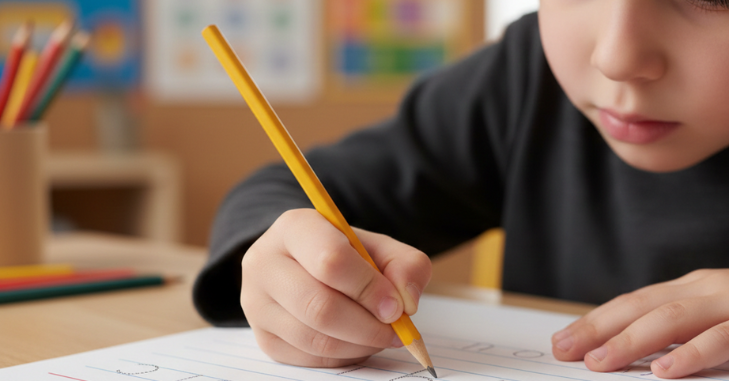
Using handwriting lines offers several important benefits for beginners and students. They improve legibility and neatness, supporting the development of clear, readable writing. Handwriting lines also aid in motor skill development, helping learners gain better control over their hand movements.
By providing structure for both print and cursive writing, they encourage independence, allowing students to write confidently without constant guidance. Additionally, consistent use of handwriting boosts confidence and reduces frustration, making the learning process more enjoyable and effective.
Advanced Techniques for Students
- Introduce variable spacing lines for speed training
- Combine handwriting lines with calligraphy guides for style
- Encourage students to write longer texts using structured lines
- Practice slant control using diagonal guidelines
Conclusion
Handwriting lines are essential tools for beginners and students learning to write. They guide proper letter formation, spacing, alignment, and development of fine motor skills. By understanding line types, line spacing, and proper techniques, learners can develop neat, legible, and confident handwriting.
Teachers, parents, and students can use handwriting lines to build structured practice routines, track progress, and transition from guided to independent writing effectively. With consistent practice, handwriting lines become more than a tool; they become a foundation for lifelong writing skills.
Want to know about Spelling Test Generator Tools: A Complete Guide to Key Features, Educational Benefits, and Effective Classroom Use Check out our Education category.
FAQs
Tracing letters on dotted lines builds muscle memory, reinforces correct letter formation, and develops control, making it easier for beginners to transition to independent writing.
Sit upright with feet flat on the floor, keeping the paper at a slight angle. Proper posture supports control and alignment and reduces strain during writing practice.
Students should hold the pencil lightly between the thumb, index, and middle fingers. Avoiding a tight grip reduces fatigue and improves control over letter formation.
Line spacing impacts letter size, spacing between letters and words, readability, and motor control. Wider spacing is ideal for beginners, while narrower spacing suits older students or those improving speed and precision.

