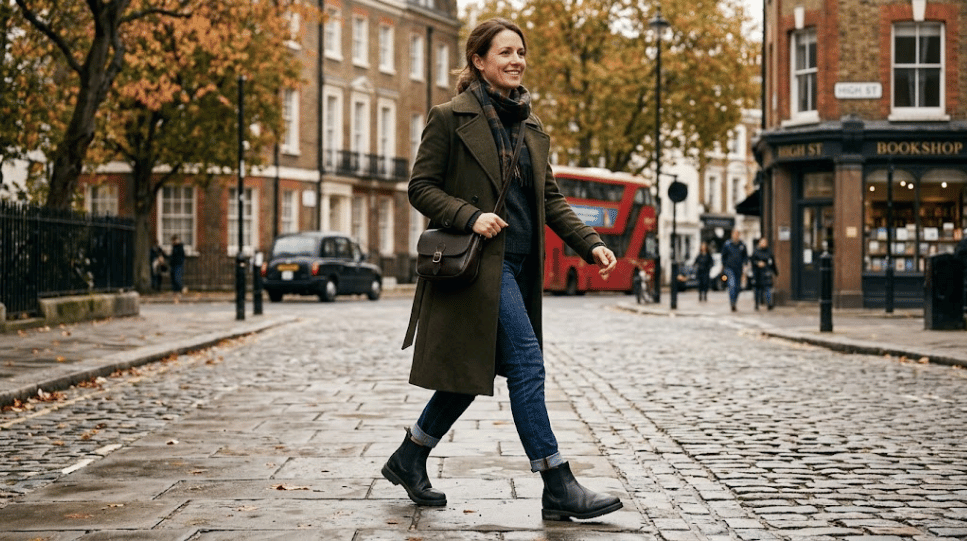
Black ankle boots are among the easiest shoes to build into a UK wardrobe. They work with denim, tailoring, dresses, skirts, and colder-weather layers. The right pair can cover workdays, weekends, evenings, and much of the year.
Quick answer: Choose a shape that suits the trousers and skirts you already wear most often. Prioritise a comfortable heel height, a secure ankle fit, practical soles, and materials suited to British weather. A simple black pair with balanced proportions will usually give you more outfits than a highly decorative design.
Black Boots at a Glance
| Style | Best for | Works well with | Main consideration |
|---|---|---|---|
| Chelsea | Everyday wear | Straight jeans, trousers, knitwear | Check elastic feels secure |
| Pointed toe | Smart outfits | Tailoring, wide trousers, midi skirts | Allow enough toe room |
| Block heel | Day-to-evening | Dresses, skirts, cropped trousers | Choose a walkable height |
| Chunky sole | Casual dressing | Denim, leggings, relaxed dresses | Avoid excessive weight |
| Western-inspired | Fashion-led outfits | Jeans, skirts, simple knitwear | Keep other details restrained |
| Slim flat boot | Work and commuting | Tailored trousers, denim, long coats | Look for cushioning and grip |
Which Black Ankle Boots Should You Choose?

Start with your normal routine rather than the most eye-catching design. Someone walking to work needs different footwear from someone buying mainly for evenings. Let comfort, weather resistance, and styling flexibility guide the decision.
For a first pair, a clean Chelsea or low block-heel shape is usually practical. Both can move between casual and smarter clothes without demanding a specific outfit. Neutral hardware also makes repeated styling easier.
A pointed pair creates a sharper finish and works particularly well with tailoring. Wider or square toes can feel more relaxed and contemporary. Your preferred trouser shapes should influence the final choice.
Comparing the Main Styles
| Type | Advantages | Possible drawbacks | Best choice for |
|---|---|---|---|
| Chelsea | Easy to wear, versatile, simple | Can feel plain | Everyday wardrobes |
| Pointed | Polished, visually lengthening | Narrow shapes may pinch | Work and evenings |
| Block heel | Stable, dressier than flats | Less comfortable for long walks | Mixed day and evening wear |
| Chunky | Strong grip, casual character | Can look heavy | Wet weather and relaxed outfits |
| Western | Distinctive, works with denim | Less neutral than classic shapes | Trend-focused styling |
Our recommendation: choose a simple Chelsea or low block-heel design when versatility matters most. These shapes work across the widest range of everyday UK outfits. Add a pointed or Western pair later if you want something more expressive.
How Should the Boots Fit?
Good fit should feel secure without squeezing your foot or ankle. Your heel should not lift excessively as you walk. Your toes should also have enough room to move naturally.
Try footwear with the socks or tights you expect to wear most often. Thick winter socks can noticeably change the fit of a close-fitting pair. Testing both feet matters because many people have slight size differences.
Pay attention to the opening around your ankle as well. A loose opening may rub during longer walks. An overly tight shaft can become uncomfortable when sitting or climbing stairs.
Choose the Right Heel for Your Routine
Flat and low-heeled pairs are the easiest choice for frequent walking. They suit commuting, shopping, travel, and casual weekends. Look for cushioning if you spend several hours on your feet.
Block heels offer a useful middle ground between comfort and polish. A modest heel can sharpen jeans or a midi dress without feeling highly formal. A broad base also tends to feel steadier than a narrow heel.
Higher heels make more sense when appearance matters more than long-distance comfort. Reserve them for dinners, events, or shorter journeys if necessary. Buying for your real routine prevents an attractive pair from staying unworn.
Leather, Suede or Synthetic Materials?
Leather can suit people who want a structured finish and straightforward maintenance. It can be polished and often works well with smarter wardrobes. Always follow the manufacturer’s care instructions for the specific finish.
Suede gives footwear a softer, more textured appearance. It works particularly well with knitwear, denim, and autumn colours. Wet conditions require more care, so check weather protection before leaving home.
Synthetic materials vary considerably in appearance, flexibility, and durability. They can provide lower-cost alternatives to leather or suede. Check lining, sole construction, fastening quality, and care instructions rather than judging material alone.
How to Style Black Ankle Boots With Jeans
Straight-leg jeans are one of the easiest partners for this footwear. Let the hem meet the top naturally without creating excessive bunching. A small gap can also work with cropped denim.
Wide-leg jeans benefit from a cleaner or slightly pointed shape beneath the fabric. The narrower front creates contrast against the volume above. Wrytra’s guide to double denim styling offers more ideas for balancing denim proportions.
Skinny jeans can work with chunkier or Chelsea-style footwear. Tucking them inside creates a clean lower line. Add a longer knit or structured coat when you want more balance above.
Wearing Them With Dresses and Skirts
A midi skirt and boots create an easy autumn combination. Keep some definition around the ankle when the skirt has plenty of volume. A fitted shaft usually creates a cleaner transition than a wide opening.
Metallic and satin skirts also work with simple black footwear. The dark colour grounds reflective fabric and keeps the outfit from feeling overly formal. Wrytra’s silver skirt styling guide includes several ways to use boots with brighter textures.
Mini skirts create more contrast between the hem and footwear. Opaque tights can make the combination more practical during colder months. A longer coat adds warmth while maintaining a simple silhouette.
Styling Them With Trousers for Work
Tailored trousers usually look strongest with a clean toe and restrained sole. Pointed and almond shapes can make the outfit feel more polished. Avoid oversized hardware if your workplace dress code is conservative.
Cropped trousers allow the footwear itself to become more visible. Keep the gap above the boot relatively small during colder weather. A fine sock can create a practical transition without adding visual bulk.
Wide trousers can also work when the hem clears the floor safely. A slight heel may prevent longer fabric from dragging. Test the full outfit before leaving home because trouser length changes with heel height.
Build Casual Weekend Outfits
For simple weekend dressing, combine a black pair with straight denim and knitwear. Add a trench, wool coat, or shorter jacket depending on the weather. The dark footwear anchors lighter blue denim especially well.
A tie-front blouse can create a softer contrast against substantial footwear. Keep the jeans or trousers simple so both details have enough visual space. Wrytra’s tie-front top styling guide covers useful proportion ideas for this combination.
Relaxed outfits do not require chunky soles. A slim flat pair can look equally casual with loose denim and an oversized jumper. Choose the silhouette that feels consistent with the rest of your wardrobe.
What Works Best in UK Weather?
British autumn and winter conditions make outsole grip worth checking before purchase. Smooth fashion soles may feel less secure on wet pavements. Look at the tread pattern rather than assuming every boot offers similar traction.
Rain also affects material choice and maintenance. Suede usually needs more protection than many smooth finishes. Never assume a pair is waterproof unless the manufacturer specifically says so.
Keep a suitable protector and cleaning product at home if your material requires them. Remove surface dirt before it becomes embedded. Regular basic care can keep dark footwear looking presentable for longer.
Common Buying Mistakes to Avoid
Buying only for appearance can lead to poor cost-per-wear. Consider walking distance, sock thickness, weather, and your most common clothes. A beautiful pair offers little value if it rarely leaves the wardrobe.
Another mistake is ignoring trouser length during fitting. Boots can change where hems fall, especially when heels are involved. Try the footwear with several outfits before removing labels when returns are allowed.
Do not assume every black pair performs the same role. A pointed heel and a chunky Chelsea create completely different proportions. Decide whether you need versatility, comfort, polish, or a stronger fashion statement first.
How to Make One Pair Work Harder
Build several outfits around the same footwear before purchasing anything else. Test jeans, tailored trousers, a skirt, and one dress. This reveals whether the shape is genuinely versatile for your wardrobe.
Accessories can shift the same combination without changing the shoes. A structured bag makes the look smarter, while a softer tote feels more casual. Wrytra’s designer bracelet buying guide can also help with restrained jewellery choices.
Colour makes repeat styling easier as well. Black works naturally with grey, cream, navy, denim, burgundy, and many brighter shades. That flexibility explains why one carefully chosen pair can cover so many situations.
Frequently Asked Questions About Black Ankle Boots
Are black ankle boots still fashionable in 2026?
Yes, the basic shape remains a recurring wardrobe staple rather than a single-season trend. Details such as toe shape, heel height, and sole thickness change more frequently. A restrained design can therefore outlast more exaggerated versions.
What trousers look best with ankle-height boots?
Straight, cropped, slim, and wide trousers can all work with the right boot shape. Wider trousers often benefit from a cleaner toe underneath. Cropped styles make the boot more visible, so proportions matter more.
Can you wear them with dresses?
Yes, they work with mini, midi, and many maxi dresses. Sleeker shapes create a more polished effect, while chunkier soles add contrast. Consider hem length and ankle width together when checking proportions.
Are leather or suede boots better for UK weather?
Neither material is automatically waterproof, so always check the product description. Smooth leather finishes may be easier to clean after light rain. Suede can still work well when properly protected and cared for.
What heel height is best for everyday wear?
A flat, low, or modest block heel usually suits regular walking best. Your comfort also depends on cushioning, sole flexibility, and overall fit. Try walking on different surfaces before deciding.
The Best Pair Is the One That Fits Your Wardrobe
The most useful boots are rarely the most complicated ones. Choose comfort, proportions, material, and heel height around clothes you already own. That approach gives you more realistic outfits from the first week.
Start with a neutral shape if this is your only pair. Add stronger textures, hardware, or unusual toes once your everyday needs are covered. A considered purchase should earn its place through repeated wear.
Before buying, test your chosen pair with at least three existing outfits. Check the fit while standing, walking, and sitting. If it works across those situations, you have a far better chance of wearing it regularly.
—–