Why the Right Foundation Brush Matters
A flawless base begins with the correct tool. While foundation formulas, liquid, powder, and cream play a considerable role in coverage, the brush you use is equally important. The best foundation brush ensures seamless blending, minimizes product waste, and helps achieve a professional-looking finish at home.
Whether you want a dewy glow or a matte, airbrushed effect, matching your brush type to your foundation formula can completely transform your makeup routine. The best foundation brush for liquid, powder, and cream foundations can transform your beauty routine, making your makeup look smoother, last longer, and blend seamlessly with your skin.
With so many options on the market, choosing the right one may feel overwhelming, but understanding how each brush works with different foundation types can help you make the perfect choice.
Foundation Brush Types and Their Best Uses
| Brush Type | Best Use/Foundation Type |
|---|---|
| Flat Foundation Brush | Applying liquid foundation with light to medium coverage |
| Buffing Brush | Blending liquid foundation for an airbrushed finish |
| Angled Brush | Reaching contours with liquid foundation |
| Kabuki Brush | Building coverage with powder foundation |
| Large Fluffy Brush | Light dusting of powder or setting powder |
| Tapered Powder Brush | Targeted application for combination skin |
| Stippling Brush | Blending cream foundation for a natural finish |
| Flat-Top Kabuki Brush | Full coverage with cream foundation |
| Dome-Shaped Brush | Even distribution of cream foundation |
| Dual-Fiber Brush | Lightweight application for liquid or cream |
| Precision Brush | Applying foundation around nose and eyes |
| Contour Brush | Blending cream or powder along cheekbones |
| Round Buffing Brush | Smooth blending of liquid formulas |
| Fan Brush | Light application of powder or highlighting |
| Small Flat Brush | Spot concealing with cream foundation |
| Oval Brush | Flawless blending of liquid or cream |
| Detail Brush | Applying foundation in hard-to-reach areas |
| Powder Puff Brush | Pressing powder foundation for matte finish |
| Mini Kabuki Brush | On-the-go powder foundation touch-ups |
| Large Dome Powder Brush | Even coverage with loose powder |
| Dense Angled Kabuki Brush | Full coverage with liquid or cream |
| Petite Stippling Brush | Sheer coverage for cream foundation |
| Blending Sponge + Brush Duo | Versatile use for liquid and cream foundations |
| Retractable Brush | Travel-friendly for powder or liquid touch-ups |
| Multi-Purpose Face Brush | Works with liquid, powder, and cream formulas |
Best Foundation Brush for Liquid
Liquid foundation is one of the most popular choices because of its versatility and ability to provide sheer to full coverage. The key to applying it smoothly lies in the brush’s density and shape.
Flat Foundation Brush
- Why it works: Flat brushes are excellent for painting on liquid foundation with precision. They help spread the product evenly without absorbing too much.
- Best for: Beginners who prefer light to medium coverage.
- Pro tip: Use downward strokes to avoid streaks and blend edges with a damp sponge for a natural finish.
Buffing Brush
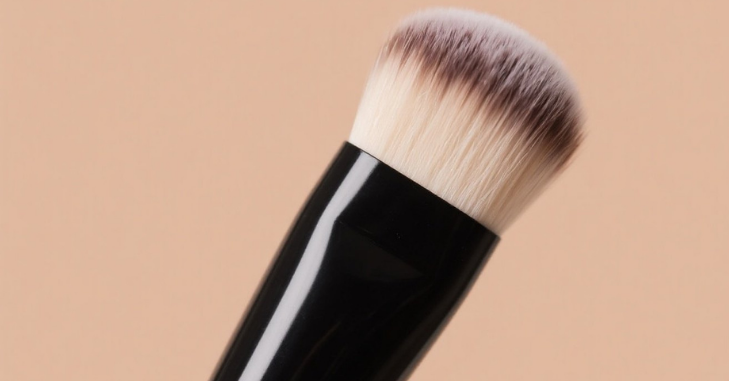
- Why it works: Buffing brushes have dense, rounded bristles that blend foundation seamlessly into the skin.
- Best for: Full coverage that still looks natural.
- Pro tip: Work in circular motions for a flawless, airbrushed look.
Angled Brush
- Why it works: Its slanted design makes it easier to reach around the nose, jawline, and hairline.
- Best for: Building coverage in tricky areas.
- Pro tip: Apply foundation in short, upward strokes to lift and sculpt the face while blending.
Best Foundation Brushes for Powder Foundation
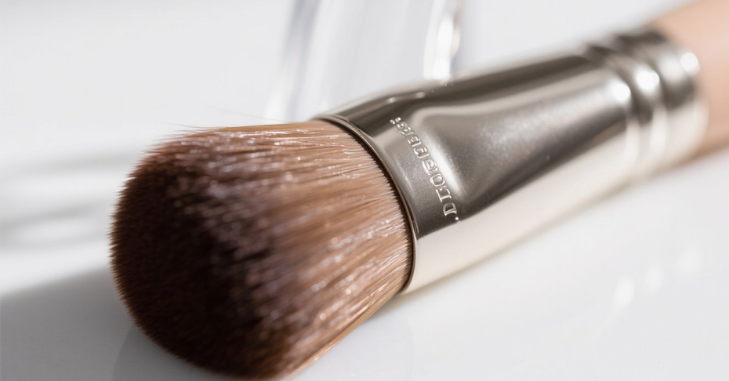
Powder foundations, whether pressed or loose, require brushes that can pick up product effectively and spread it evenly without caking.
Kabuki Brush
- Why it works: With its dense, dome-shaped bristles, the kabuki brush is ideal for buffing powder foundation into the skin.
- Best for: Medium to full coverage with a smooth finish.
- Pro tip: Swirl the brush in the product, tap off excess, and buff in circular motions for buildable coverage.
Large Fluffy Brush
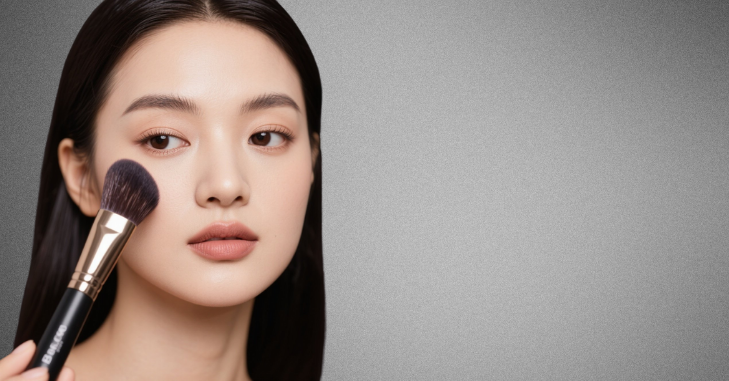
- Why it works: This brush has soft, less dense bristles, making it perfect for a light dusting of powder foundation or setting powder.
- Best for: Oily skin types that need all-over setting without heaviness.
- Pro tip: Use sweeping motions instead of pressing to prevent disturbing your liquid or cream base.
Tapered Powder Brush
- Why it works: The tapered design allows for targeted application, such as under the eyes or around the nose.
- Best for: Combination skin where certain areas need more coverage than others.
- Pro tip: Lightly press the brush into areas that need more coverage, then blend outward for a seamless look.
Best Foundation Brushes for Cream Foundation
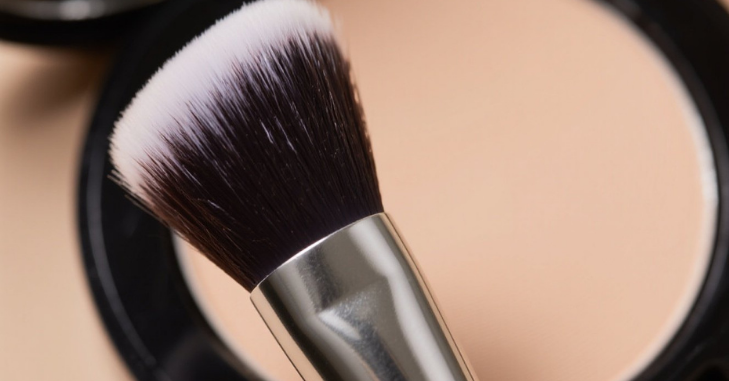
Cream foundations are thicker in texture, so they require brushes that can handle heavier formulas without leaving streaks.
Stippling Brush
- Why it works: Stippling brushes feature two layers of bristles, short dense ones and longer feathery ones, that work together to blend cream foundation beautifully.
- Best for: A lightweight, natural finish even with heavier formulas.
- Pro tip: Use a dabbing or stippling motion rather than swiping to avoid streaking.
Flat-Top Kabuki Brush
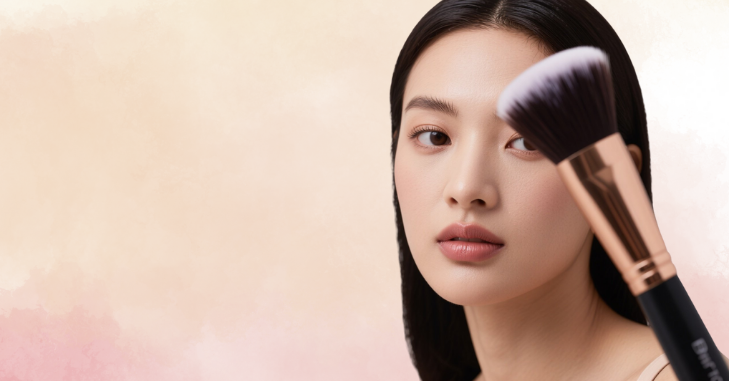
- Why it works: This brush has tightly packed bristles with a flat top, making it great for pressing cream foundation into the skin.
- Best for: Full coverage with a smooth, polished look.
- Pro tip: Start with a small amount of foundation and build up as needed, buffing in circular motions.
Dome-Shaped Brush
- Why it works: Dome brushes offer precision and can handle cream foundations by evenly distributing product.
- Best for: Blending cream foundation around the contours of the face.
- Pro tip: Focus on pressing the brush into the skin instead of dragging it to achieve a natural blend.
How to Choose the Best Foundation Brush for Your Routine
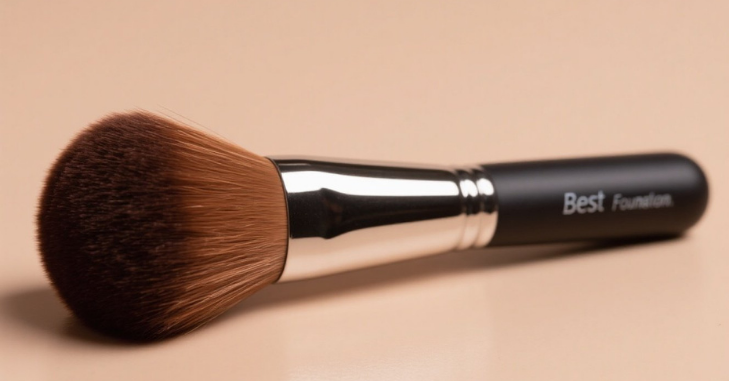
Choosing the best foundation brush depends on more than just the formula you use. Factors like skin type, coverage preference, and makeup style also play a role.
Consider Your Skin Type
- Oily skin: Powder foundation with a kabuki or fluffy brush works best to control shine.
- Dry skin: Liquid or cream formulas applied with a buffing or stippling brush give a smoother finish.
- Combination skin: A mix of brushes may be needed, use a buffing brush for liquid foundation on drier areas and a fluffy brush for powder on oily zones.
Think About Coverage Preference
- Light coverage: Fluffy or stippling brushes disperse product lightly.
- Medium coverage: Dome-shaped and angled brushes provide control without heaviness.
- Complete coverage: Dense kabuki or flat-top brushes press foundation into the skin for maximum payoff.
Match Brush Shape to Application Needs
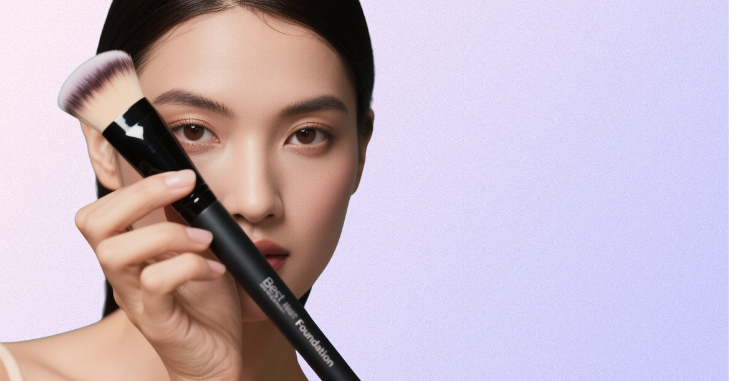
- Flat brushes: Best for painting and precision.
- Round/dome brushes: Great for blending and buffing.
- Angled brushes: Ideal for reaching contours and sculpting.
Brush Care and Maintenance
Even the best foundation brush will underperform if not adequately maintained. Dirty brushes can cause streaky application and even skin breakouts.
- Clean regularly: Wash brushes once a week with a gentle brush cleanser or baby shampoo.
- Dry correctly: Lay them flat to dry to prevent water from loosening the glue that holds the bristles.
- Over time, brushes may shed or lose shape; replace them every 6–12 months, depending on usage.
Choosing Brushes Based on Application Technique
Another important factor in selecting the best foundation brush is the application technique, as different tools respond better to specific motions on the skin. Brushes designed for buffing work best with circular motions that help blend liquid foundation smoothly into the skin for an airbrushed finish, while stippling brushes perform better with tapping or dabbing movements that build coverage without disturbing base makeup.
Flat brushes, on the other hand, are more effective with painting or swiping motions, especially when applying foundation in thin, even layers. Understanding how each brush interacts with your foundation not only improves blending but also reduces product waste and helps achieve a more natural, long-lasting finish.
Expert Tips for Flawless Foundation Application
- Start with less product: You can always build up coverage, but removing excess is harder.
- Work in natural light: This helps you see streaks or uneven blending more clearly.
- Blend down the neck: To avoid a mask-like effect, always blend foundation past the jawline.
- Pair with the right primer: A good primer enhances how the foundation applies and lasts throughout the day.
- Use pressing motions for longevity: Especially with cream and liquid formulas, pressing helps foundation adhere better.
Conclusion
Finding the best foundation brush doesn’t have to be complicated; it’s all about matching the tool to your preferred foundation type and finish. Liquid foundations pair beautifully with buffing or angled brushes, powders shine with kabuki or fluffy designs, and creams blend best with stippling or dome-shaped brushes.
Beyond the brush itself, proper care, cleaning, and application techniques will ensure your tools deliver flawless results every time. By investing in the right brush and learning how to use it effectively, you can elevate your beauty routine and enjoy a smooth, natural-looking complexion day after day.
If you want to read an interesting article about it, explore our “Fashion” category.
Frequently Asked Questions (FAQs)
The best foundation brush for liquid formulas is a buffing brush or an angled brush, as both provide even coverage and help blend the product seamlessly into the skin. For light to medium coverage, a flat foundation brush also works well.
For achieving full coverage, a flat-top kabuki brush or a tightly packed buffing brush is the ideal choice. These brushes work by pressing foundation onto the skin, delivering maximum coverage while maintaining a smooth, non-cakey finish.
If your foundation looks streaky, patchy, or uneven, you may be using the wrong brush. Another sign is if the brush absorbs too much product instead of applying it to your skin.