

How To Avoid Second Home Council Tax? This is a common concern for UK property owners, as second homes often face higher council tax due to local authority premiums. While owning a second property, whether as a holiday retreat, rental investment, or future residence, offers flexibility and financial potential, it also brings added tax responsibilities that can significantly increase annual expenses.
Council tax for second homes is determined by occupancy status, use, and local council regulations, which vary by region. Understanding these rules is important, as some owners may qualify for lawful reductions or exemptions.
By exploring available strategies such as registering a property as a primary residence, converting it into a holiday let, applying for council tax exemptions, or restructuring occupancy arrangements, owners can proactively manage their financial obligations while remaining fully compliant with the law.
| Strategy | Description | Key Requirements | Potential Benefits |
| Register as Primary Residence | Reclassifying the second home as your main residence to avoid second home premiums | Proof of regular occupancy, utility bills, and council verification | Standard council tax rate instead of higher charges |
| Convert to Holiday Let | Changing the property’s status to commercial holiday accommodation | Available for rent at least 140 days per year, short-term lets | Business rates may replace council tax, and potential relief eligibility |
| Apply for Council Tax Exemptions | Claiming exemptions offered by local councils | Eligibility criteria such as vacancy, care leaver status, or armed forces ownership | Temporary or full exemption from council tax |
| Use Multiple Occupancy (HMO) | Registering the property as a House in Multiple Occupation | Licensing, safety compliance, multiple tenants | Possible council tax restructuring and rental income |
| Seek Professional Advice | Consulting experts for tailored tax strategies | Property details, council policies, and legal compliance | Optimised savings and reduced legal risks |
How To Avoid Second Home Council Tax?
Owning a second home can offer a refuge from daily stresses, but it also comes with financial responsibilities, including council tax payments. In the UK, properties designated as second homes typically incur higher council tax rates than those classified as primary residences. However, several strategies can help property owners mitigate or entirely avoid these charges.
Understanding Council Tax for Second Homes
Council tax is a local taxation system in England, Scotland, and Wales. It funds local services, including waste management, education, and public safety. Properties are assigned to one of eight bands (A to H) based on their estimated market value as of April 1, 1991. Typically, when a property is classified as a “second home,” it attracts a higher council tax rate.
Second homes that incur higher council tax charges include non-occupied homes, which are furnished properties that are not permanently occupied, holiday lets rented out as short-term accommodations, and buy-to-let properties purchased primarily for rental income. Understanding the implications of council tax banding and occupancy is crucial for property owners looking to reduce their financial burdens.
Registering as a Primary Residence
Registeration
One of the most straightforward strategies to avoid second home council tax is to register your second property as a primary residence. This approach is especially relevant for individuals who spend a significant amount of time at the property.
Steps
To register as a primary residence, you need to take specific steps. First, gather documents that prove your residency, such as utility bills, bank statements, or tenancy agreements that indicate your occupancy. Next, be prepared to demonstrate how often you occupy the property, as longer, more consistent stays increase your chances of successful registration.
Afterwards, it is important to contact your local council to update your records officially, ensuring that the property’s classification is altered accordingly.
Eligibility Requirements
While this approach seems straightforward, you should evaluate your eligibility before proceeding. Local councils have specific guidelines, and failure to meet these may lead to complications in your registration process. Additionally, be prepared for inspections; councils may conduct inquiries to verify your claims about your occupancy of the property.
Converting to Holiday Let Status
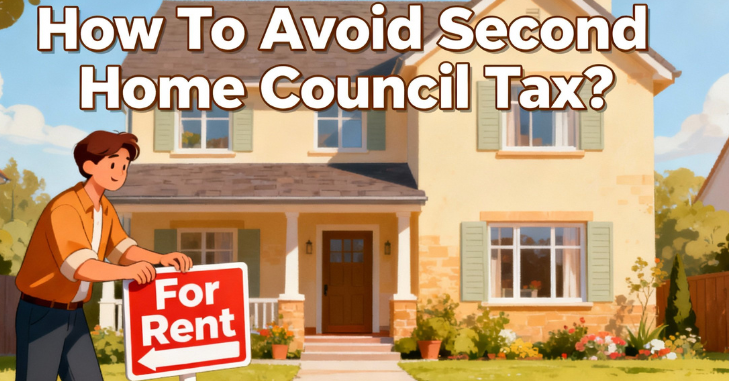
If your second home serves primarily as a holiday let, you might take advantage of this classification, which may exempt the property from council tax. A property qualifies as a holiday let if it is available for commercial use and meets certain conditions, primarily being rented out for short stays (usually less than 28 days) for at least 140 days over a tax year.
To convert your property to holiday let status, there are some essential steps to follow. First, ensure that the property is well-furnished and equipped for guests, meeting the expectations of short-term renters. Next, familiarise yourself with local regulations, including any required short-term rental licenses or planning permissions. It is also advisable to apply to pay business rates instead of council tax if your property is genuinely used as a holiday accommodation, as this can lead to significant cost savings.
The benefits of choosing this approach include the potential for lower costs through business rates and the added flexibility in using the property when it is not rented out. However, it is crucial to maintain accurate rental records and ensure compliance with local regulations to avoid complications related to taxes or safety standards.
Applying for Council Tax Exemptions
Local councils offer several exemptions that property owners can utilise to alleviate their council tax liabilities. Familiarising yourself with these exemptions can lead to substantial savings.
Common Types
The types of exemptions available can vary by local council, but may include provisions for empty properties, which are unoccupied and unfurnished, usually eligible for an exemption period of up to six months. Additionally, care leavers under the age of 25 may qualify for exemption, and properties owned by members of the armed forces may also be eligible for specific exemptions under certain conditions.
How to Apply?
It is crucial to get in touch with your local council to find out if there are any exemptions that might be applicable to your circumstances before submitting an application. Documentation is crucial for this process; you should gather evidence demonstrating why your property qualifies, such as financial statements or proof of occupancy status. Regularly reviewing local council updates is also advisable, as regulations may change and new exemptions could become available.
Utilizing Multiple Occupancy
- You might want to register your second home as a House in Multiple Occupation (HMO) if you live there with other people. This status can alter how council tax is applied, potentially leading to reductions.If three or more tenants occupy a property, creating multiple households, it is considered an HMO.
- Although this classification has its own set of rules, it may have an impact on the property’s council tax obligations. To establish HMO status, meet all relevant safety and health standards set by housing authorities and obtain the necessary licenses from your local council, as many regions require this for HMOs.
- It is essential to comply with landlord-tenant laws concerning deposits and rental agreements. In addition to the potential for rental income from renting out individual rooms, registering as an HMO may result in lower council tax rates.
Seeking Professional Advice
It can be difficult to navigate the complexities of council tax laws and exemptions. Seeking professional advice can provide significant benefits and help clarify your options. You may find value in consulting various experts. Tax advisors can offer guidance tailored to your specific financial circumstances, while local councils are essential sources for the most accurate information regarding your property.
If you employ a property manager for your holiday let, they may possess valuable insights based on their experiences and can assist you in maximising your property’s profitability. Professional consultants can ensure compliance with relevant laws, help you exploit available options, and devise effective strategies for reducing costs associated with second home ownership.
Conclusion
While owning a second home comes with numerous responsibilities, including council tax obligations, there are various strategies available to help property owners manage and even avoid these costs effectively. Property owners can take proactive measures by learning how to register their second home as a primary residence, turn it into a vacation rental, apply for relevant council tax exemptions, use multiple occupancy arrangements, and consult a professional.
Being informed will empower you to navigate your financial responsibilities successfully, ultimately allowing for a more enjoyable and less burdensome second home experience.
FAQs
The concept of residence is not precisely defined in electoral law; instead, it has been shaped by court decisions over time. Unlike council tax regulations, individuals are not required to designate a main residence for electoral purposes. Judicial rulings have established that a person may be considered resident at more than one address.
As a long-term investment, a second home is likely to increase in value over time, offering the returns you anticipate. It can also serve as a holiday retreat for your own use or be made available to friends and family for their vacations.
The main difference depends on the property’s intended use and location. A holiday home is usually situated in a designated holiday park and is specifically meant for leisure stays during weekends or vacations.
Electoral law does not provide a detailed definition of residence; instead, it has been shaped over time by court decisions. Unlike council tax rules, you are not required to designate a main residence for voting purposes. Courts have determined that a person can be considered resident at more than one address.

