The bench press form is a foundational exercise for building upper-body strength, targeting the chest, shoulders, and triceps, and engaging stabilizing muscles such as the lats and core. While it effectively increases muscle mass, power, and overall fitness, improper technique can cause injuries, limit strength gains, and reduce rep efficiency. Mastering correct form is essential for beginners and experienced lifters alike, as it ensures safety, maximizes muscle activation, and promotes balanced development.
Proper setup, grip, and bar path are critical to optimizing performance, while breathing technique and controlled tempo further enhance results. Small adjustments, such as shoulder positioning and foot placement, can significantly improve both safety and strength. Understanding the biomechanics of the lift helps prevent common mistakes, such as flaring the elbows or excessive arching.
This guide provides step-by-step techniques, highlights common errors, offers expert tips, and delivers actionable insights to help lifters progress safely and unlock the full benefits of the bench press. With consistent practice and attention to detail, anyone can improve strength, build muscle, and reduce injury risk, making the bench press a cornerstone of effective training programs.
| Section | Key Focus | Tips | Common Mistakes |
| Setup | Feet, Back, Grip, Bar | Feet flat, slight arch, hands shoulder-width, bar over chest | Feet lifted, extreme grips, wrong bar position |
| Bar Path | Lift & Descent | Controlled lift, slight arc to mid-chest, elbows 45–75° | Jerky lift, elbows flared, unstable wrists. |
| Lowering | Chest & Elbows | Inhale, lower slowly, elbows slightly tucked | Bouncing bar, flared elbows |
| Pressing | Upward Drive | Exhale, push with chest/triceps, maintain stability | Using only arms, losing arch or foot stability |
| Safety | Spotting & Protection | Use spotter, engage lats, warm-up, progress gradually | Ignoring spotter, skipping warm-up, rapid weight increase |
Why Proper Bench Press Form Matters

Correct technique in the bench press is not just about lifting more Weight; it impacts:
- Muscle Engagement – Proper form maximizes activation of the chest, triceps, and shoulders.
- Injury Prevention – Reduces strain on the shoulders, wrists, and lower back.
- Performance Efficiency – Lifting efficiently allows progression in strength and endurance.
- Longevity in Training – Safe technique minimizes wear and tear over the years of lifting.
Even small adjustments in grip, elbow angle, or back positioning can drastically improve your bench press performance.
Step-by-Step Bench Press Form
1. Setup and Positioning
Proper setup lays the foundation for a safe and effective lift. Feet should be flat on the ground to provide stability, avoiding leg elevation. Maintain a slight natural arch in the back while keeping your shoulders pressed firmly into the bench for support. Grip width should be slightly wider than shoulder-width, avoiding grips that are too narrow or excessively wide.
2. Unracking and Bar Path
When unracking the bar, use a controlled movement to lift it off the rack. The bar should follow a slight arc as it descends to mid-chest, keeping your wrists straight and your elbows at 45–75° from the torso. This controlled path maximizes muscle engagement while reducing the risk of shoulder and wrist injury.
3. Lowering the Bar
During the descent, inhale deeply and lower the bar slowly toward your chest. Avoid bouncing the bar off your chest, as control is crucial for both safety and efficiency. Keep your elbows tucked slightly to protect the shoulder joint, ensuring the motion remains smooth and controlled throughout the lift.
4. Pressing Upwards
Exhale and push the bar upward in a controlled manner, focusing on contracting the chest and triceps rather than relying solely on arm strength. Maintain the back arch and foot stability during the press to preserve form and maximize power output. Proper execution during this phase reinforces safety and promotes balanced muscle development.
Key Muscles Engaged During Bench Press
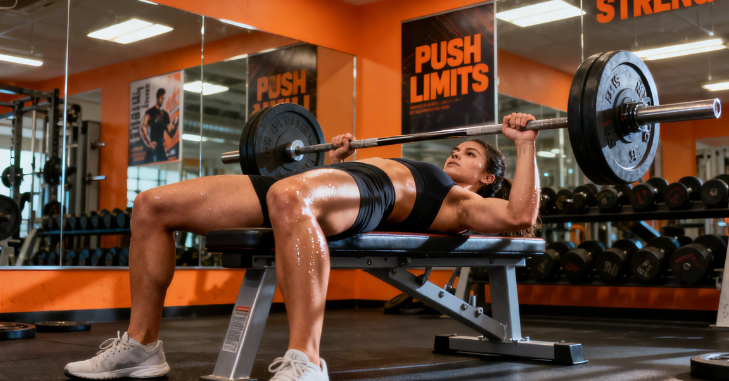
Understanding muscle activation helps refine technique and target growth:
- Pectoralis Major – Primary chest muscle, responsible for horizontal adduction.
- Triceps Brachii – Assists in extending the elbows.
- Anterior Deltoids – Stabilize the shoulders and support bar movement.
- Latissimus Dorsi & Core – Stabilize the torso and maintain balance.
Common Bench Press Form Mistakes
Even experienced lifters fall into bad habits. Avoid these common errors:
- Flaring Elbows – Increases shoulder stress.
- Bouncing the Bar – Reduces muscle engagement and increases injury risk.
- Excessive Back Arch – Can strain the lower back if overdone.
- Lifting Feet Off the ground reduces stability and pressing power.
- Incorrect Grip Width – Too narrow strains triceps; too wide strains shoulders.
Pro Tips for Perfect Bench Press Form

Experts recommend making small adjustments to enhance your bench press form and results. Always use a spotter, especially when lifting heavy weights, to ensure safety. Pay close attention to the bar path, keeping it slightly diagonal from the chest to over the shoulders for optimal movement.
Engaging your lats during the lift helps maintain stability and reduces stress on the shoulder joints. Proper warm-ups are essential to prepare muscles and joints for heavier loads, and gradually increasing Weight ensures that form is maintained while minimizing the risk of injury.
Bench Press Variations for Balanced Development
Incorporating variations enhances growth and reduces plateaus:
Incline Bench Press
- Targets the upper chest and shoulders.
Decline Bench Press
- Focuses on the lower chest.
Close-Grip Bench Press
- Emphasizes triceps and inner chest.
Dumbbell Bench Press
- Allows natural range of motion, reduces joint stress.
Equipment and Setup Essentials
Using the right tools ensures safe lifting:
- Flat Bench – Standard option for most workouts.
- Power Rack or Spotter Arms – Enhances safety for heavy lifts.
- Weight Collars – Prevent plates from sliding.
- Quality Barbell – Knurling for grip stability.
Common Angles and Positions
| Element | Recommended Range/Position | Notes |
| Grip Width | Slightly wider than shoulder width | Avoid extreme widths to reduce shoulder stress |
| Elbow Angle | 45–75° from torso | Protects shoulders and optimizes pressing power |
| Bar Path | Slight arc from mid-chest to over shoulders | Helps engage chest and triceps efficiently |
| Back Arch | Slight natural arch | Avoid over-arching the lower back |
| Feet Position | Flat on the floor | Provides stability and force transfer |
| Bar Lowering Speed | 2–3 seconds | Control is better than speed |
| Breathing | Inhale down, exhale up | Maintains core stability and lifting efficiency |
Safety Considerations
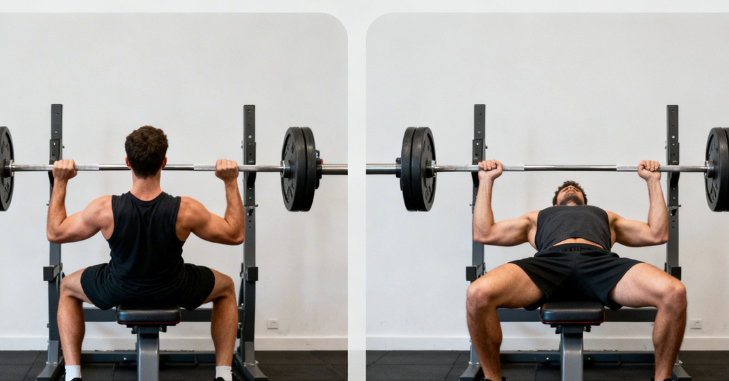
Maintaining proper form during the bench press is essential to prevent injuries. Avoid lifting weights that are too heavy until you master the proper technique. Begin each session with lighter warm-up sets to prepare your joints and muscles for the workload ahead.
Keep your wrists neutral and avoid bending them backward, while maintaining shoulder blade retraction to ensure stability throughout the lift. For maximum loads, always use a spotter to safeguard against accidents and ensure safe execution.
Progression and Strength Gains
Improving the bench press requires consistent tracking:
- Increase Weight Gradually – 2–5% increments to maintain form.
- Track Reps and Sets – Identify performance trends.
- Use Periodization: alternate between heavy, medium, and light days.
- Incorporate accessory work to strengthen the triceps, shoulders, and lats.
Conclusion
Mastering bench press form is a journey that blends technique, muscle engagement, and discipline. By focusing on proper setup, a well-defined bar path, controlled movement, and avoiding common mistakes, lifters can maximize strength gains while minimizing injury risk. Incorporating variations, equipment, and progression strategies ensures well-rounded development.
Whether you are a beginner or advanced lifter, perfecting your form is the cornerstone of long-term success in strength training. With patience, consistency, and attention to detail, your bench press performance can reach its full potential.
Want to know about Why Am I Hungry All the Time? Common Causes, Hidden Triggers, Nutritional Deficiencies, Hormonal Imbalances, and How to Feel Full, Energized, and Satisfied Check out our Fitness category.
FAQs
Keep your elbows slightly tucked, retract your scapulae, and avoid flaring your elbows outward. Engaging your lats also adds shoulder stability.
A slight natural arch is recommended. It helps engage the chest and protect the shoulders while maintaining stability. Avoid over-arching, which can cause back strain.
Hands should be slightly wider than shoulder-width. Too narrow or too wide can strain your joints and reduce effectiveness.
Proper form ensures maximal muscle activation, prevents injuries, and enables steady strength progression. Without correct technique, you risk shoulder, wrist, and elbow injuries.